
A Summary of Gautama Buddha’s Original Teachings

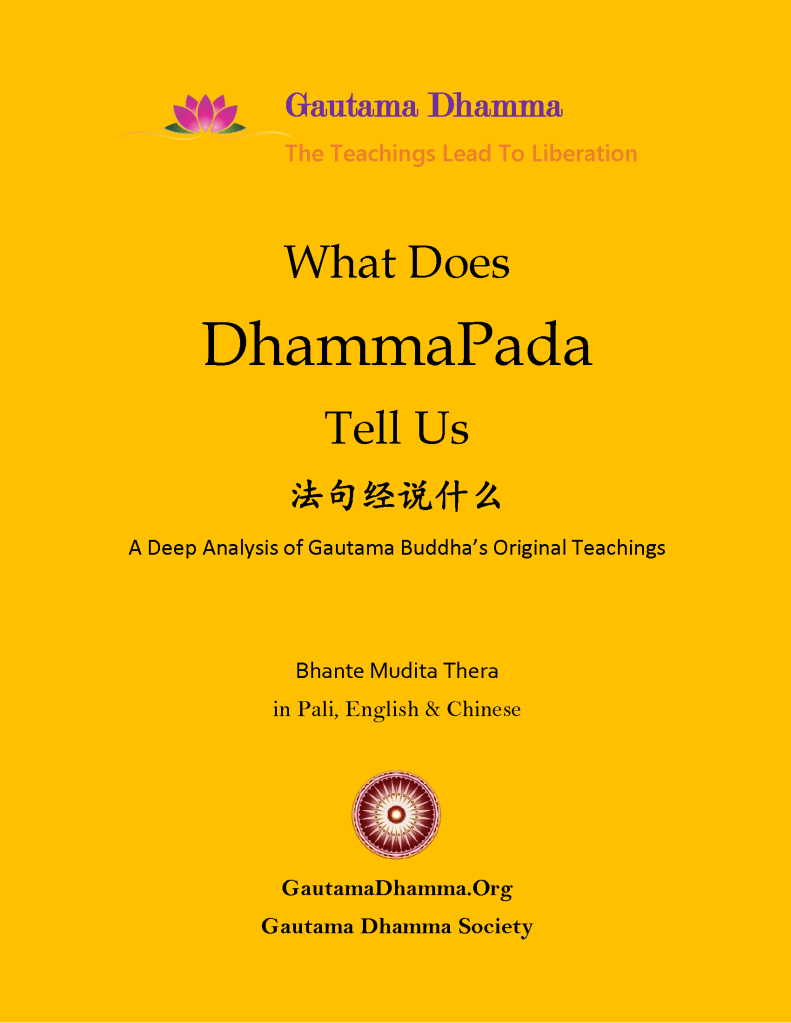
The DhammaPada book is available for purchase on Amazon. This book is a timeless treasure with the most accurate translation to date. It is considered a direct transmission of Buddha’s original and true wisdom, offering profound insights into the nature of existence and the path to liberation. Obtain a print copy for yourself to reflect on it on daily basis.
1. The Centrality of the Mind in Experience (Buddha’s Emphasis on Mental Culture):
- Mind as the source of all experience: Echoing Gautama Buddha’s emphasis on the mind’s role, the Dhammapada begins by stating that our thoughts and mental states are the primary force shaping our actions and experiences. This aligns with the Buddha’s teachings on Dependent Origination, where mental processes are key links in the chain of cause and effect. “Will is the forerunner of all dhamma. Will is their chief; they are all produced by will.” (Verse 1)
- Mental discipline as the path to liberation: Consistent with Gautama Buddha’s focus on self-mastery, the Dhammapada stresses the importance of cultivating a disciplined and controlled mind as essential for achieving happiness and liberation from suffering.
2. The Inexorable Law of Cause and Effect (Kamma – A Core Buddhist Principle):
- Actions have consequences (Kamma): The Dhammapada reinforces Gautama Buddha’s teaching on Kamma, explaining that every action, whether of body, speech, or mind, has consequences that will inevitably manifest. This reflects Gautama Buddha’s analysis of how our actions create the conditions for future experiences. “By oneself is evil done; by oneself is one defiled; by oneself is evil avoided; by oneself is one purified. Purity and impurity depend on oneself; no one can purify another.” (Verse 165)
- Individual responsibility (A Key Aspect of Buddha’s Doctrine): In line with Gautama Buddha’s emphasis on self-reliance, the Dhammapada underscores that individuals are solely responsible for their actions and the resulting consequences.
3. The Universal Principle of Impermanence for all Dhamma (Anicca – A Fundamental Buddhist Teaching):
- Impermanence of all dhamma (phenomena): The Dhammapada reflects Gautama Buddha’s profound insight into the nature of the reality we are living in, highlighting that all things in the world (dhamma) are subject to change, arising and passing away. Recognizing this impermanence (Anicca) for all dhamma is crucial for developing detachment from the world and wisdom, as taught by the Buddha. “Everything arise from the mind and their worldly manifest are impermanent; when one sees this with wisdom, then one becomes dispassionate towards the worldly life; this is the path to purity.” (Verse 277)
4. The Path to Liberation (Nibbana – The Ultimate Goal in Buddhism):
- The Eightfold Path (The Buddha’s Prescription for Ending Suffering): The Dhammapada implicitly guides the reader towards the Eightfold Path, Gautama Buddha’s practical guide to ending suffering and attaining Nibbana. This path encompasses Right Understanding, Right Thought, Right Speech, Right Action, Right Livelihood, Right Effort, Right Mindfulness, and Right Concentration.
- Overcoming craving and attachment (The Cause of our Involuntary Reincarnation, as Taught by Gautama Buddha): The teachings of the Dhammapada align with Gautama Buddha’s concept of dukkha as inherent in the world, leading to the birth, aging, and sufferings for all worldly existence. The root cause of our perpetual cycle of birth, aging and death in this world is our attachment and craving for worldly possessions. By transcending these desires, one can attain liberation from this cycle and reach Nibbana-dhātu, a state of eternal bliss and freedom from suffering. Nibbana-dhātu represents the ultimate goal of Gautama Buddha’s teachings, offering a permanent sanctuary free from the burdens of aging and death.
5. Ethical Conduct (Sila – A Cornerstone of Buddhist Practice):
- Importance of morality (Sila): The Dhammapada emphasizes the importance of ethical conduct (Sila), aligning with Gautama Buddha’s teachings on moral discipline as a foundation for spiritual progress. This includes principles like non-violence, honesty, and self-control. “Avoid all evil, cultivate good, and purify your mind — this is the teaching of the Buddhas.” (Verse 183)
- Compassion and loving-kindness (Essential Qualities in Gautama Buddha’s Teachings): Cultivating compassion (Karuna) and loving-kindness (Metta) towards all beings, as advocated by Gautama Buddha, is highlighted in the Dhammapada as essential for spiritual growth.
6. Wisdom and Self-Awareness (Panna – The Culmination of the Buddhist Path):
- Importance of wisdom (Panna): The Dhammapada stresses the development of wisdom (Panna) and insight into the true nature of reality, echoing Gautama Buddha’s emphasis on wisdom as the key to liberation.
- Self-awareness and introspection (Essential Tools for Self-Transformation in Buddhism): Examining one’s own thoughts and actions, as encouraged in the Dhammapada, reflects Gautama Buddha’s teaching on the importance of self-awareness and introspection for self-improvement and spiritual progress.
In essence, the Dhammapada serves as a concise and practical guide to Gautama Buddha’s original teachings, offering a path to living a moral, meaningful life, cultivating mental discipline, and ultimately achieving liberation from suffering. It emphasizes personal responsibility, the power of the mind, and the importance of wisdom and compassion, all of which are central to Gautama Buddha’s doctrine.

Video: Dhammapada Pali Chanting

Excerpts of Dhammapada
1. Manopubbaṅgamā dhammā, manoseṭṭhā manomayā,
Manasā ce paduṭṭhena, bhāsati vā karoti vā,
Tato naṃ dukkhamanveti, cakkaṃ’va vahato padaṃ.
Will is the forerunner of all dhamma. Will is their chief; they are all produced by will. With impure will one speaks or acts, suffering follows, like the wheel follows the hoof of the ox. 诸法意先导,意主意所造 。若以染污意,或语或行业,是则苦随彼,如轮随兽足 。
2. Manopubbaṅgamā dhammā, manoseṭṭhā manomayā,
Manasā ce pasannena, bhāsati vā karoti vā,
Tato naṃ sukhamanveti, chāyā’va anapāyinī.
Will is the forerunner of all dhamma. Will is their chief; they are all produced by will. With pure intention one speaks or acts, Happiness follows, like one’s own shadow that never leaves. 诸法意先导,意主意所造。若以清净意,或语或行业,是则乐随彼,如影不离形。
3. Akkocchi maṃ avadhi maṃ, ajini maṃ ahāsi me;
Ye taṃ upanayhantim, veraṃ tesaṃ na sammati.
“He has abused, beaten, ill-treated and robbed me”, those who harbor and entertain such thoughts will not cease the hatred in them. 「彼骂我打我,败我劫夺我」,若人怀此念,怨恨不能息。
4. Akkocchi maṃ avadhi maṃ, ajini maṃ ahāsi me;
Ye taṃ na upanayhanti, veraṃ tesūpasammati.
“He has abused, beaten, ill-treated and robbed me”, those who don’t harbor and entertain such thoughts will cease the hatred in them. 「彼骂我打我,败我劫夺我」,若人舍此念,怨恨自平息。
5. Na hi verena verāni, sammantī’dha kudācanaṃ;
Averena ca sammanti, esa dhammo sanantano.
In this world, hatred can never be appeased by hatred. Only non-hatred will do, this is an eternal dhmma (law). 于此世界中,怨永不止怨,以非怨止怨,此是永恒法。
6. Pare ca na vijānanti, mayamettha yamāmase;
Ye ca tattha vijānanti, tato sammanti medhagā.
Most people do not understand that here we are all subject to death; those who understand this, their conflicts subside. 彼人不了知, 吾等终将死。若彼等知此,则诤论止息。
7. Subhānupassiṃ viharantaṃ, indriyesu asaṃvutaṃ,
Bhojanamhi amattaññuṃ, kusītaṃ hīnavīriyaṃ,
Taṃ ve pasahati māro, vāto rukkhaṃ’va dubbalaṃ.
Whoever lives contemplating pleasant worldly things, with senses unrestrained, in food immoderate, lazy, having poor strength, will be defeated by māra, like a weak tree. 心住世间乐 ,不摄护诸根 ,饮食不知量 ,懈惰少力量,将败于死神,如风吹弱树。
8. Asubhānupassiṃ viharantaṃ, indriyesu susaṃvutaṃ,
Bhojanamhi ca mattaññuṃ, saddhaṃ āraddhavīriyaṃ,
Taṃ ve nappasahati māro, vāto selaṃ’va pabbataṃ.
Whoever lives contemplating the unsatisfactory impure nature of the world, with senses restrained, in food moderate, full of faith, having firm strength, will not be defeated by māra, like a solid rock. 世间非乐住,善摄护诸根,饮食知节量,具信力量强,死神不胜彼,如风吹石山。
9. Anikkasāvo kāsāvaṃ, yo vatthaṃ paridahissati;
Apeto damasaccena, na so kāsāvam arahati.
Whoever with an orange robe but is not stainless yet, when putting on his robe, should be aware that without dhamma of the truth, he is not worthy of the orange robe. 若人穿袈裟,不离诸垢秽,不具真实法,不应得袈裟。
10. Yo ca vantakasāv’assa, sīlesu susamāhito;
Upeto damasaccena, sa ve kāsāvam arahati.
He who has purged all stains, well-established in sīla, has the dhamma of the truth, is worthy of the orange robe. 若人离诸垢 ,能善持戒律,又具真实法,彼应得袈裟。
11. Asāre sāramatino, sāre cāsāradassino;
Te sāraṃ nādhigacchanti, micchāsaṅkappagocarā.
Those who regard the essence as non-essence, perceive the non-essence as essence, they will not find the superior essence through wrong strives. 非重点当重,重点当非重,努力方向错,不达重要处。
12. Sārañca sārato ñatvā, asārañca asārato;
Te sāraṃ adhigacchanti, sammā saṅkappagocarā.
What is essence they regard as essence, what is non-essence they regard as non-essence, they will find the superior essence with right strives. 重点当重点,非重当非重,努力方向对,能达重要处。
13. Yathā’gāraṃ ducchannaṃ, vuṭṭhi samativijjhati;
Evaṃ abhāvitaṃ cittaṃ, rāgo samativijjhati.
Just as rain penetrates a badly-thatched house, so does rāga penetrates an undeveloped mind. 如盖屋不密,必为雨漏浸,如心不完善,贪爱必漏入。
14. Yathā’gāraṃ succhannaṃ, vuṭṭhi na samativijjhati;
Evaṃ subhāvitaṃ cittaṃ, rāgo na samativijjhati.
Just as rain cannot penetrate a well-thatched house, so does rāga cannot penetrate a well-developed mind. 如善密盖屋,不为雨漏浸,如是心完善,贪爱不漏入。
15. Idha socati pecca socati, pāpakārī ubhayattha socati;
So socati so vihaññati, disvā kammakiliṭṭham attano.
He grieves in this world, he grieves in the next one, a wrong-doer grieves in both. He grieves and is defeated, perceiving the impure kamma of his own. 现世此处悲,死后它处悲,作诸恶业者,两处俱忧悲,见自己恶业,他悲他苦恼。
16. Idha modati pecca modati, katapuñño ubhayattha modati;
So modati so pamodati, disvā kammavisuddhim attano.
He rejoices in this world, he rejoices in the next one, a wholesome-doer rejoices in both. He rejoices and is delighted, perceiving the pure kamma of his own. 现世此处乐,死后它处乐,作诸善业者,两处俱受乐,见自己善业,他乐他欢乐。
17. Idha tappati pecca tappati, pāpakārī ubhayattha tapati;
“Pāpaṃ me katan”ti tappati, bhiyyo tappati duggatiṃ gato.
He laments in this world, he laments in the next one, a wrong-doer laments in both. “I have done evil,” he laments. He laments again, having gone to a bad state. 现世此处苦,死后它处苦,作诸恶业者,两处俱受苦,现悲「我作恶」,堕恶趣又悲。
18. Idha nandati pecca nandati, katapuñño ubhayattha nandati;
“Puññaṃ me katan”ti nandati, bhiyyo nandati suggatiṃ gato.
He is happy in this world, he is happy in the next one, a wholesome-doer is happy in both. “I have done good,” he is happy. He is happy again, having gone to a good state. 现世此处喜,死后它处喜,作诸善业者,两处俱欢喜,现喜「我修善」,生善趣又喜。
19. Bahum pi ce saṃhita bhāsamāno, na takkaro hoti naro pamatto;
Gopo’va gāvo gaṇayaṃ paresaṃ, na bhāgavā sāmaññassa hoti.
Although he plans and talks a lot, but does not act accordingly, he is the negligent man. Hence, he is like a heedless cowherd who counts the cattle of others, not a venerable, not a sāmana. 说多打算多,疏忽者不行,如牧数他牛,非尊者沙门。
20. Appam pi ce saṃhita bhāsamāno, dhammassa hoti anudhammacārī,
Rāgañca dosañca pahāya mohaṃ, sammappajāno suvimuttacitto,
Anupādiyāno idha vā huraṃ vā, sa bhāgavā sāmaññassa hoti.
Although he plans and talks little, but always practice according to the dhamma he learns, giving up rāga and dosa and no more moha, strives to the perfect liberation of the mind, not-clinging to this world and the next one, he is a venerable and a true sāmana. 说少打算少,能依教践行,除灭贪瞋痴,努力心解脱,不贪此后世,是尊者沙门。
1(21). Appamādo amatapadaṃ, pamādo maccuno padaṃ;
Appamattā na mīyanti, ye pamattā yathā matā.
Zeal is the base for the deathless, apathy is the base for death. The zealous do not die; the zealless are like the dead. 热忱不死道,淡然趣死路。热忱者不死,冷漠者如尸。
2(22). Etaṃ visesato ñatvā, appamādamhi paṇḍitā;
Appamāde pamodanti, ariyānaṃ gocare ratā.
Distinctly understanding this, the wise embraces zeal, rejoices in zeal, delighting in the realm of the Noble Ones. 智者深知此,心怀抱热忱。 欣喜于热忱,喜悦于圣境。
3(23). Te jhāyino sātatikā, niccaṃ daḷhaparakkamā;
Phusanti dhīrā nibbānaṃ, yogakkhemaṃ anuttaraṃ.
They stay continuously meditative, constantly with strong effort, the wise touch nibbāna, have union with the supreme peace. 智者常强力, 持续修冥想。触感接涅槃, 相应极安宁。
4(24). Uṭṭhānavato satīmato, sucikammassa nisammakārino;
Saññatassa ca dhammajīvino, appamattassa yaso’bhivaḍḍhati.
Be diligent in mindfulness, pure in deeds and be considerate, restraint and live (righteously) according to the dhamma, zeal steadily increases. 奋勉念觉知,清净谨慎行,自制如法活,热忱善增长。
5(25). Uṭṭhānenappamādena, saṃyamena damena ca;
Dīpaṃ kayirātha medhāvī, yaṃ ogho n’ābhikīrati.
With zeal arisen, and thoughts well controlled, the wise make himself an island, which no flood can overwhelm. 奋勉有热忱,自制自调御,智者自作洲,不为洪水没。
6(26). Pamādamanuyuñjanti, bālā dummedhino janā;
Appamādañca medhāvī, dhanaṃ seṭṭhaṃ’va rakkhati.
The ignorant, foolish folk indulge in zealless; the wise guard zeal as the greatest treasure. 暗钝愚痴人,耽溺于放逸,智者于热忱,如富人护宝。
7(27). Mā pamādamanuyuñjetha, mā kāmaratisanthavaṃ;
Appamatto hi jhāyanto, pappoti vipulaṃ sukhaṃ.
Not indulge in zealless; not delight in sensual pleasures. The zealous meditator obtains abundant bliss. 莫耽溺放逸,莫贪爱欲乐。热忱修冥想,获得大安乐。
8(28). Pamādaṃ appamādena, yadā nudati paṇḍito;
Paññāpāsādamāruyha, asoko sokiniṃ pajaṃ;
Pabbataṭṭho’va bhūmaṭṭhe, dhīro bāle avekkhati.
When a wise man discards zealless by zeal, he, free from sorrow, ascends to the palace of wisdom and surveys the sorrowing ignorant folk as a mountaineer surveys those below. 智者以热忱,除逸则无忧,圣贤登慧阁,观愚者多忧,如登于高山,俯视平地人。
9(29). Appamatto pamattesu, suttesu bahujāgaro;
Abalassaṃ’va sīghasso, hitvā yāti sumedhaso.
Zealous amongst the negligent, watchful amongst the sleeping, the wise one advances like a swift horse, having left behind a weak one. 放逸中热忱,如众睡独醒。智者如骏驰,驽驸所不及。
10(30). Appamādena Maghavā, devānaṃ seṭṭhataṃ gato;
Appamādaṃ pasaṃsanti, pamādo garahito sadā.
With zeal Maghavā become the chief amongst the devas. Zeal is ever praised; zealless is ever despised. 摩伽以热忱,为诸天首席。热忱人所赞,放逸为人訶。
11(31). Appamādarato bhikkhu, pamāde bhayadassi vā;
Saṃyojanaṃ aṇuṃ thūlaṃ, ḍahaṃ aggī’va gacchati.
The zealous bhikkhu, realizing the danger of zealless, advances like fire, burning all fetters great and small. 乐热忱比丘,或者惧放逸,犹如猛火炎,烧去大小结。
12(32). Appamādarato bhikkhu, pamāde bhayadassi vā;
Abhabbo parihānāya, nibbānass’eva santike.
The zealous bhikkhu, realizing the danger of zealless, unable to regress, he is just in the vicinity of the nibbāna. 乐热忱比丘,或者惧放逸,已邻近涅槃,必不会退步。

1(33). Phandanaṃ capalaṃ cittaṃ, dūrakkhaṃ dunnivārayaṃ;
Ujuṃ karoti medhāvī, usukāro’va tejanaṃ.
The wavering, unsteady citta mind, hard to guard, difficult to restrain — the wise person straightens it like an arrow-maker straightens an arrow. 变易不定心,难守难克制。智者调直之,如匠搦箭直。
2(34). Vārijo’va thale khitto, okamokata ubbhato;
Pariphandatimidaṃ cittaṃ, māradheyyaṃ pahātave.
Like a fish that is drawn from its watery abode and thrown upon land, this citta mind trembles in order to leave Mara’s realm (the realm of the passions). 如鱼离水栖,投于陆地上,此心亦颤动,为脱死神界。
3(35). Dunniggahassa lahuno, yattha kāmanipātino;
Cittassa damatho sādhu, cittaṃ dantaṃ sukhāvahaṃ.
The mind is difficult to restrain, quick, it falls upon sensual pleasures. Good is the taming of the mind. A restrained mind brings happiness. 此心难克制,轻巧随欲转。善哉心调伏,心调得安乐。
4(36). Sududdasaṃ sunipuṇaṃ, yattha kāmanipātinaṃ;
Cittaṃ rakkhetha medhāvī, cittaṃ guttaṃ sukhāvahaṃ.
The mind is very difficult to see, very subtle, it falls upon sensual pleasures. The wise guard the mind; a guarded mind brings happiness. 极微妙难见,此心随欲转。智者防护心,心护得安乐。
5(37). Dūraṅgamaṃ ekacaraṃ, asarīraṃ guhāsayaṃ;
Ye cittaṃ saṃyamessanti, mokkhanti mārabandhanā.
Wandering alone, dwelling in a cave, no more (rāga, dosa, and moha) emanating from the body; a well restrained mind, is liberated from the bond of Māra. 远行独窟居,脱离身体源。心已被调伏,解脱死神缚。
6(38). Anavaṭṭhitacittassa, saddhammaṃ avijānato;
Pariplavapasādassa, paññā na paripūrati.
He whose mind is unsteady, he who does not know the true dhamma (Buddha’s teachings), he whose faith wavers — the wisdom of such one will not become perfect. 心若不安定,又不知正法,信心摇摆者,智慧不成就。
7(39). Anavassutacittassa, ananvāhatacetaso;
Puñña pāpapahīṇassa, natthi jāgarato bhayaṃ.
He whose mind is free from desires, who is free from voilence, who is virtuous, who has abandoned wrong doing— for such a vigilant one there is no fear. 离欲离嗔行,离恶具善德,警戒者无畏。
8(40). Kumbhūpamaṃ kāyamimaṃ viditvā, nagarūpamaṃ cittamidaṃ ṭhapetvā; Yodhetha māraṃ paññāvudhena, jitañca rakkhe anivesano siyā.
Having understood this body to be like a jar; having accepted this mind like a fortress, attack Māra with the weapon of wisdom. You should protect the victory with no attachment. 知身如陶器,知心似城堡,慧剑击魔罗,守胜无染着。
9(41). Aciraṃ vat’ayaṃ kāyo, paṭhaviṃ adhisessati;
Chuddho apetaviññāṇo, niratthaṃ’va kaḷiṅgaraṃ.
Not long, this body will lie upon the ground, discarded, without consciousness, worthless, like a piece of worthless wood. 此身实不久,当睡于地下,被弃无意识,无用如木块。
10(42). Diso disaṃ yaṃ taṃ kayirā, verī vā pana verinaṃ;
Micchā panihitaṃ cittaṃ, pāpiyo naṃ tato kare.
Whatever (harm) a foe may do to a foe, or a hater to a hater, a wrongly directed mind can do itself far greater damage. 仇敌害仇敌,怨家对怨家,若心向邪行,恶业最为大。
11(43). Na taṃ mātā pitā kayirā, aññe vā pi ca ñātakā;
Sammā panihitaṃ cittaṃ, seyyaso naṃ tato kare.
What (favor) neither mother, nor father, nor any other relative can do, a properly directed mind can do even far better than that. 非父母之善,非眷属能比,若心向正行,得更好善业。
Reference:
https://buddhism.lib.ntu.edu.tw/lesson/pali/reading/gatha1.htm#gatha

 Gautama Dhamma