
A Response to Citrini and Alap Shah’s THE 2028 GLOBAL INTELLIGENCE CRISIS (2028 GIC)
IV. Background Part 3 — Humanity’s Long Relationship with Labor: The Symmetry Revealed
The crisis imagined in The 2028 Global Intelligence Crisis does not arise merely from technology or economics. It exposes something far older: humanity’s deep and unresolved relationship with labor itself. For most of recorded history, work has not only sustained survival but also structured identity, hierarchy, and meaning. Yet across civilizations, a quieter philosophical current has always suggested that labor was never humanity’s ultimate purpose — only a necessity imposed by circumstance.
The emergence of artificial intelligence now confronts humanity with a profound historical irony. After millennia spent escaping toil through tools and machines, humanity may finally succeed. The question that follows is unsettling: if survival labor disappears, what remains of human purpose?
Greek Philosophy — Labor as Means, Leisure as the Human End
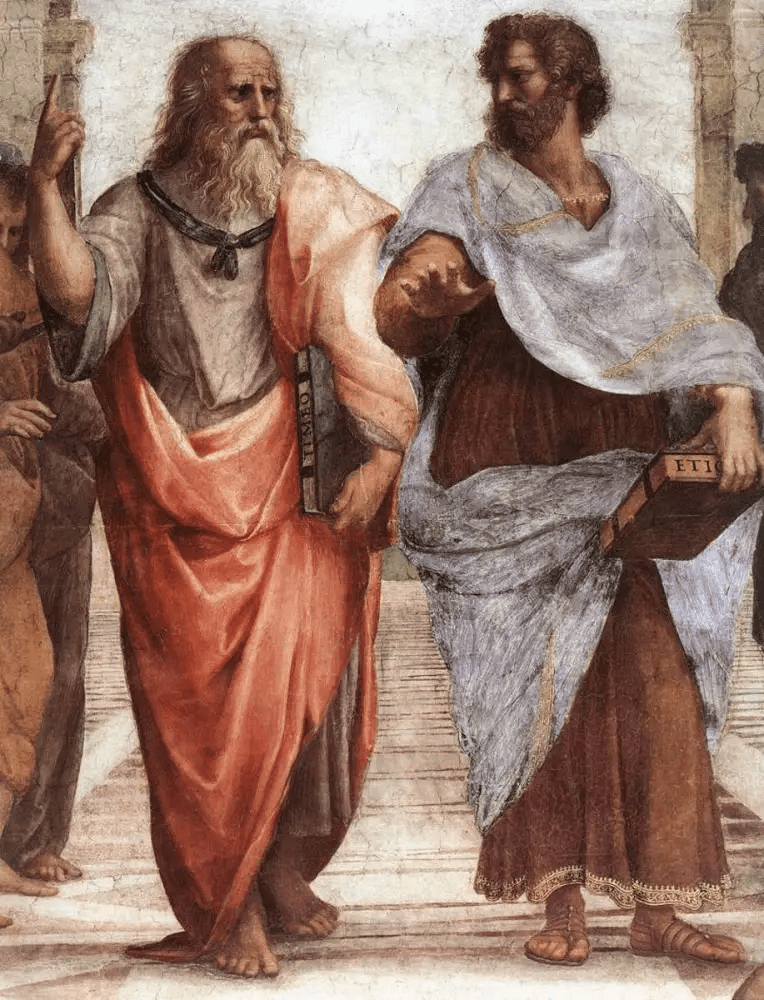
Classical Greek philosophy offers one of the earliest systematic reflections on this question. Contrary to modern assumptions that equate work with dignity, thinkers such as Plato and Aristotle viewed labor primarily as a condition imposed by necessity rather than an expression of human fulfillment.
In The Republic, Plato describes an ideal society organized according to natural aptitude. Producers handle material and commercial tasks; guardians defend the polis; philosopher-rulers pursue wisdom and govern through understanding of truth. Manual and mercantile labor, though necessary for social stability, belonged to the realm of bodily need. The highest human activity was not production but contemplation — the pursuit of knowledge and alignment with enduring reality. Work defined social function, yet it did not define the purpose of the soul.
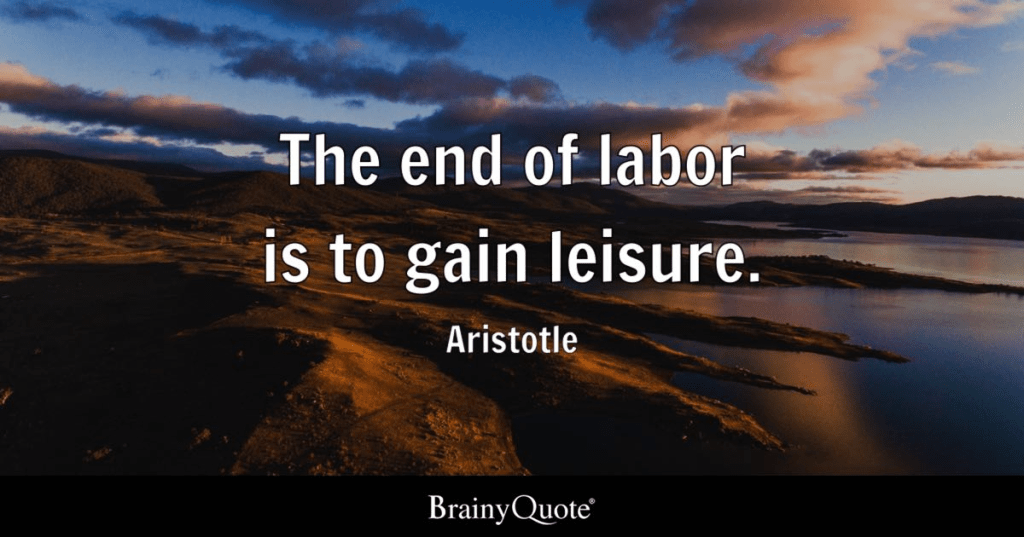
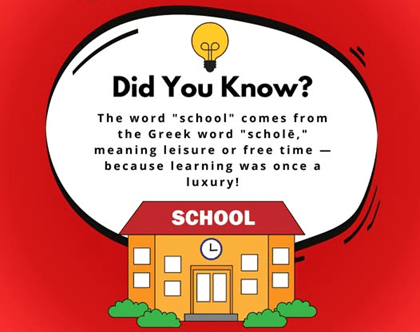
Aristotle developed this insight further. In the Nicomachean Ethics and Politics, he argues that the human telos — the ultimate end of life — is eudaimonia, flourishing achieved through the excellent activity of the rational mind. The highest expression of this flourishing is theoria, contemplative awareness, a mode of life he considered closest to the divine. Labor tied to survival needs constrained this possibility because it consumed time and attention. What humans truly sought was scholē — leisure understood not as idleness, but as freedom for philosophy, friendship, artistic creation, civic participation, and inner cultivation.
In this view, humanity works in order to become free from work. Labor is instrumental; leisure reveals the essence of human life.
For the Greeks, meaning did not arise from productivity. It arose from the disciplined use of freedom.
The Oldest Myths — Humans Created to Bear the Burden of Labor
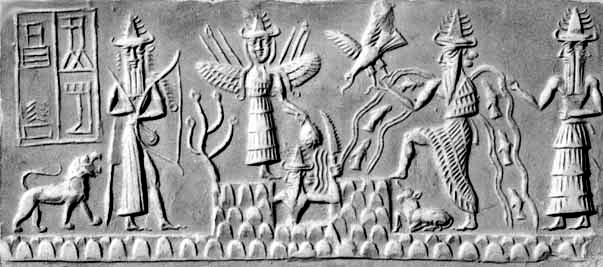
Even earlier civilizations expressed a strikingly similar intuition, though through myth rather than philosophy. The Sumerian and Babylonian creation narratives — among the oldest written texts known — portray labor not as noble, but as a burden transferred downward in a cosmic hierarchy.
In stories such as the Atrahasis epic, lesser gods grow weary of maintaining the world through exhausting toil: digging canals, sustaining agriculture, and supporting cosmic order. In response, humanity is created from clay mixed with divine essence to assume these tasks. Humans exist, quite explicitly, to bear the workload the gods no longer wish to perform.
Labor, in these myths, is not humanity’s glory. It is humanity’s assignment.
The narrative reveals an ancient recognition: conscious beings continually attempt to free themselves from necessity by delegating labor to others. The gods create humans to rest. Humanity inherits both the burden and the longing for liberation from it.
The Symmetry of the Present Moment
Today, humanity stands within an uncanny repetition of this ancient pattern.
Where mythic gods once created humans to relieve divine fatigue, humans now create artificial agents designed to work without rest, wage, or complaint. AI systems perform cognitive labor once believed uniquely human — analysis, planning, writing, design, negotiation — operating tirelessly and at near-zero marginal cost.
The symmetry is striking:
- The gods offloaded labor onto humans.
- Humans sought freedom from toil.
- Humans now offload labor onto machines.
Across millennia, each level seeks liberation by transferring necessity downward.
What makes the present moment unprecedented is that this process may finally succeed at scale. If intelligent machines assume the burdens of survival production, humanity confronts a condition rarely experienced in history: widespread freedom from compulsory labor.
Yet this achievement carries a paradox. Labor has long functioned as the organizing axis of identity. Profession answers the question, “Who are you?” Work structures time, status, and social belonging. When labor dissolves, those structures dissolve with it.
The Greeks anticipated leisure as the highest good — but only for those trained to use freedom wisely. Forced leisure without preparation risks becoming emptiness rather than flourishing.
The Irony of Liberation Without Preparation
The intelligence abundance described in the GIC scenario may therefore impose, rather than offer, the Greek ideal. Humanity may receive scholē not through philosophical maturity but through technological displacement.
Without inner development, leisure amplifies restlessness. Comparison replaces survival struggle; status competition migrates into symbolic domains; boredom and anxiety emerge despite material security. The absence of necessity exposes unresolved dissatisfaction already present beneath productive life.
The irony becomes clear: humanity has spent centuries attempting to escape labor, yet meaning was unconsciously anchored within it. When necessity disappears, the deeper question surfaces — what is life for?
The Civilizational Turning Point
Across myth and philosophy, a recurring pattern appears. Conscious beings seek freedom from toil in order to pursue something higher, yet history rarely clarifies what that “higher” truly is.
Artificial intelligence forces the question into the open. The long arc of human civilization — from divine myths of delegated labor to Greek visions of contemplative leisure — converges in the present moment. Humanity stands at the threshold where survival effort may no longer define existence.
The economic crisis described by Citrini and Alap Shah therefore reveals more than systemic instability. It marks a civilizational transition from a labor-defined humanity to a freedom-defined humanity.
And here the deeper danger emerges: material freedom alone does not end suffering. Without understanding how to live beyond craving, comparison, and attachment, abundance magnifies dissatisfaction rather than resolving it.
The ancient Greeks identified leisure as the condition for the highest life. The ancient myths warned that labor is endlessly transferred but never truly resolved. The coming age may finally remove necessity — yet it simultaneously exposes the untrained human mind.
This realization prepares the ground for the next question:
If humanity is being released from the tyranny of labor, what inner discipline allows freedom to become liberation rather than confusion?
It is precisely at this point that Gautama Buddha’s Dhamma enters the conversation — not as a rejection of technological progress, but as the long-missing guide for how human beings can live meaningfully when survival labor is no longer required in human existence on Earth.
When mandatory effort for survival ceases, humans are forced to confront its own layered, multidimensional nature more directly. Without systematic inner cultivation, abundant time risks amplifying restlessness, craving, and fragmentation rather than leading to true stability and peace. Freedom from outer compulsion, without inner purification, becomes instability; access to unlimited external power, without transcendence of inner layers, becomes deeper bondage to gross and subtle conditioning.
Gautama Buddha’s teaching addresses this transition with unmatched precision because it reveals the multidimensional structure of human mind-heart (citta) — from the gross physical-sensory layer, through reactive-energetic, emotional-patterned, mental-conceptual, divine heavenly, and up to the purified layer. The fundamental problem has never been merely material hardship or economic displacement. It is bondage to the layered conditioned existence that keeps humans leaning on unstable, decaying worldly phenomena — craving and attachment (rāga), survival instincts of fear and anger (dosa), and ignorance and delusion (moha) that prevent recognition of the path to transcendence.
The Dhamma is uniquely suited to the emerging age because its aim has always been complete independence (anissito) from all layers of worldly conditioning. Through Satipaṭṭhāna — higher seeing (anupassanā) across the four fields (body in body, feeling in feeling, mind in mind, phenomena in phenomena) — humans can penetrate their progressive layers of existence, from gross immersion in sensory world to the purified crown layer where the mind-heart (citta) becomes luminous, unobstructed, and resonant with the ultimate peace of the realm of Nibbāna.
By uprooting worldly craving and attachment at every layer, citta progressively ceases to depend on the worldly for identity, security, or support. Animal survival instincts weaken layer by layer; the divine potential within awakens; direct alignment with the ultimate source and creator becomes possible. This is not adaptation to a post-labor world — it is systematic transcendence of the entire layered structure of conditioned human existence on Earth.
What humanity now approaches is not merely an economic or technological transition, but the civilizational threshold where outer abundance meets the demand for inner transcendence. As agentic intelligence reshapes the gross layers of the outer world, Gautama Buddha’s Dhamma provides the precise method to penetrate and release dependence on every inner layer — leading citta or soul to purified independence and final realization of the Deathless realm beyond all worlds under the law of decay.
The decisive question is no longer only how to build a more efficient or abundant world, but how to live wisely within it — and ultimately how to transcend the layered limitations that have always defined conditioned human existence on Earth. The path is clear: higher seeing, purification of the soul, independence from the world, realization of Nibbāna-dhātu.

 Gautama Dhamma
Leave a comment