
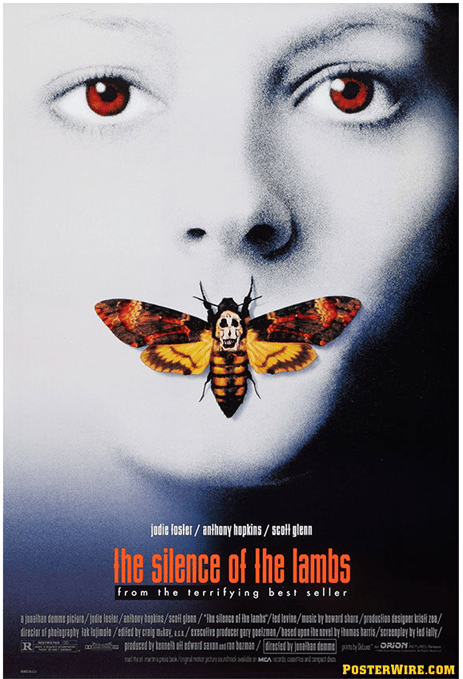
Jonathan Demme’s The Silence of the Lambs (1991) stands as one of cinema’s most unflinching meditations on the human condition, exposing the profound and perilous tension at the heart of our existence: the primal animal inheritance we carry from our evolutionary past versus the divine inheritance we are called to realize and fully embody. The film does not present humanity as a simple hybrid of beast and angel in static equilibrium; rather, it reveals a dynamic spiritual drama in which every soul faces the choice to either perpetuate the animal drives—predation, consumption, incorporation of the other, survival through domination—or progressively renounce them in favor of the sublime virtues of the Brahmaviharas: boundless loving-kindness (metta), compassion (karuna), sympathetic joy (mudita), and transcendental equanimity (upekkha).
Hannibal Lecter and Buffalo Bill (Jame Gumb) serve as stark, mirror-like embodiments of the human abyss—the shadowed inner realm where instinctual drives for survival, transformation, and consumption are allowed to dominate when the divine call is ignored, distorted, or actively inverted. Both characters literalize this biological and spiritual tension, perverting what might once have been adaptive survival mechanisms into grotesque, pathological expressions of darkness. Their actions—Lecter’s refined cannibalism and psychic devouring, Bill’s desperate harvesting of flesh for self-repair—echo the animal world’s efficient yet ruthless logic of incorporation, yet they do so without any redeeming context of necessity or restraint. In the film, these drives are no longer tools for bare survival; they become ends in themselves, enthroned as the organizing principle of the self when higher values are forsaken.
Through these two figures, Demme confronts us with a chilling truth: the animal inheritance is real, biologically grounded, and evolutionarily persistent—yet it is not our destiny. Humanity’s deepest essence lies not in managing or balancing the primal drives, but in the courageous turning away from them toward the light of the divine abodes. The film thus becomes both diagnosis and warning: when the soul fails to align with transcendence—whether through chaotic fragmentation or sophisticated misdirection—the abyss opens wide, and the lambs’ cries of innocent suffering go unheard.
Buffalo Bill: The Fragmented Self – A Soul in Pieces
Jame Gumb, known as Buffalo Bill, embodies the fragmented self—a psyche shattered by systematic childhood abuse, rejection, and profound identity crisis, resulting in a desperate, violent scramble for coherence. His pathology arises from early trauma: an alcoholic mother, foster care horrors, institutionalization, and relational betrayals (e.g., turbulent ties leading to his first killings). This leaves a void where a stable identity should be—he hates his own reflection so intensely that he projects self-loathing outward, harvesting women’s skin to construct a “woman suit” as a grotesque attempt at rebirth.
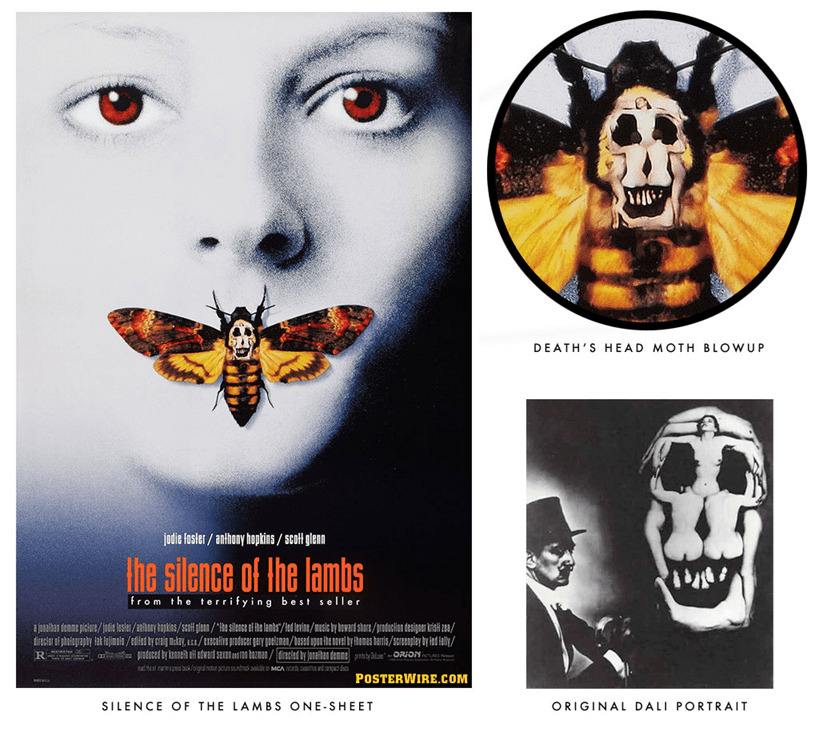
Psychoanalytically, Bill enacts a failed integration: the self remains splintered, dissociated aspects (vulnerability, desire for acceptance, rage) never cohere. His moth motif—the Death’s-Head Hawkmoth pupae forced into victims’ throats—symbolizes this perverted metamorphosis: he seeks transformation but achieves only destruction. In mirror scenes, he dances awkwardly in incomplete skin, weeping and lip-syncing, revealing raw longing beneath savagery—a pathetic, tragic display of a soul aching for beauty and wholeness yet trapped in imitation and violence.
From a spiritual viewpoint, Bill’s soul is not absent but shattered and eclipsed. Trauma has severed access to the divine source; without inner coherence, he cannot cultivate loving-kindness or compassion—others become mere material to patch the void. His lack of kindness stems from this fragmentation: empathy requires relational mirroring (“you are like me”), but Bill sees no stable “me” to extend outward. He remains human in his profound suffering, creativity (sewing, moth-rearing), and vulnerability (his attachment to his dog Precious), yet his soul hovers at the edge of humanity—consumed by the animal default of incorporation without transcendence.
Cannibalism in Hybrid Human Nature
From an evolutionary and biological perspective, cannibalism has deep grounds in our animal heritage: humans, like all life forms, descend from ancient lineages (tracing back through primates to early vertebrates like fish), where predation and incorporation of others—including kin or conspecifics—served as efficient strategies for nutrient acquisition and survival in scarcity. This biological imperative contrasts sharply with the civilized, moral choice to restrain such drives in favor of compassion, restraint, and ethical elevation.
In nature, cannibalism is widespread and adaptive. Over 1,500 species, including primates, exhibit intraspecific predation under stress, for reproductive advantage (e.g., eliminating rivals or unhealthy offspring), or territorial defense. Early hominins show evidence of cannibalism dating back at least 1.45 million years (e.g., cut marks on bones from Homo antecessor relatives), often linked to nutritional needs in harsh environments or cultural/ritual practices. While caloric yields from a human body are modest (~125,000–144,000 calories total, with muscle at ~650 calories per pound—far less than megafauna like mammoths or even boars/beavers at ~1,800 calories per pound), the real biological advantage lies in protein efficiency.
Animal proteins, including those from humans, are highly bioavailable and digestible (~90–100% in metrics like PDCAAS or DIAAS), providing complete essential amino acids (EAAs) in ratios that closely match human needs. This allows rapid absorption and utilization for cell repair, tissue rebuilding, and metabolic demands—superior to most plant proteins (often 40–90% bioavailability, incomplete in key EAAs like leucine or lysine, and hindered by fiber, anti-nutritional factors, and structural differences that resist digestion). Evolutionarily, this efficiency arises because our physiology developed alongside animal-based food sources: humans evolved as omnivores from primate ancestors who scavenged and hunted meat, not from herbivorous lineages reliant on plants. Consuming flesh from close evolutionary relatives (e.g., other hominins) would offer protein profiles biochemically aligned with our own, making it a pragmatic, if risky (due to prions and disease), survival strategy in famine or hardship.
Human cannibalism persisted across history and prehistory—evident in Paleolithic funerary practices, wartime exocannibalism in Melanesia/Polynesia, or survival cannibalism during famines—precisely because it provided high-quality, readily utilizable nutrients when other sources were scarce. Yet as societies advanced toward civilization, moral and spiritual frameworks emerged to suppress it: religious taboos, ethical systems (e.g., the Brahmaviharas in Buddhism—metta/loving-kindness, karuna/compassion, mudita/sympathetic joy, upekkha/equanimity), and social norms prioritized relational harmony over predatory incorporation. Civilization represents this deliberate choice: rejecting the animal default of devouring the vulnerable in favor of divine values—light over darkness, connection over consumption.
The film’s killers literalize this animal drive, but their horrors stem from rejecting the divine choice—to restrain instinct, cultivate the sublime abodes, and choose light over darkness. Civilization is this deliberate turn: values over voracity, compassion over consumption, wholeness through connection rather than devouring.
Hannibal Lecter: The Misaligned Predator – A Soul Enthroned in Mastery and Control, Rejecting the Divine
Hannibal Lecter stands in stark opposition to Bill’s fragmentation: he is the misaligned predator, a psyche that has achieved terrifying, near-perfect coherence by fully enthroning the animal inheritance while deliberately rejecting and suppressing the divine. His childhood horrors—witnessing his sister’s murder and cannibalism—fracture him early, but instead of allowing that fracture to open a path toward compassion or surrender, Lecter transmutes the trauma into an unbreakable structure of control. Intellect, culture, aesthetics, refinement, and deliberate cruelty are all aligned in service of one goal: predatory mastery. Unlike Bill’s chaotic splinters, Lecter’s self is unified—id, ego, and superego operating in seamless concert to support predation, consumption, and domination.
He intellectually comprehends empathy (“quid pro quo”) and even mimics relational gestures (“courtesy,” poetic insight, selective curiosity toward Clarice), but these are not openings toward the divine; they are tactical instruments of manipulation and amusement. Affectively, he excises vulnerability and compassion as threats to equilibrium. Others are reduced to objects—sources of amusement, utility, psychological dissection, or literal incorporation. His cannibalism is no mere survival instinct; it is elevated to a sacrament of supremacy: devouring psyches and bodies to affirm absolute control, turning the animal act of consumption into high art (gourmet cuisine, meticulous drawings, operatic appreciation).
Spiritually, Lecter’s soul possesses a chilling, counterfeit integrity—darkness not hidden or conflicted, but fully embraced, refined, and aestheticized. He has achieved a form of psychic wholeness, but it is a wrong alignment: every faculty subordinated to the animal pole of existence—hunger, predation, incorporation of the other, mastery through domination. The divine inheritance—the Brahmaviharas—is not merely underdeveloped; it is actively rejected and inverted:
- Metta (loving-kindness) is dismissed as sentimental weakness, incompatible with the predator’s need for detachment.
- Karuna (compassion) is absent; suffering is observed with clinical or ironic interest, never felt as shared pain.
- Mudita (sympathetic joy) is perverted into detached amusement at others’ downfall or vulnerability.
- Upekkha (transcendental equanimity) is warped into icy, unfeeling detachment rather than the transcendental openness that arises from insight into non-separation.
In this sense, Lecter represents the most dangerous spiritual distortion: he has removed inner conflict and fragmentation, but he has done so by enthroning the very animal drives that must ultimately be transcended. His “integration” is not a step toward divine realization; it is a perfected inversion—an elegant, sophisticated enthronement of predation rather than its dissolution. The divine spark flickers faintly—seen in his aesthetic appreciation, his poetic language, his selective fascination with Clarice—but it is buried, subordinated, and instrumentalized to serve the animal alignment. It never blooms into genuine compassion, non-harm, or recognition of the other as not-separate.
His profound lack of compassion arises precisely from this misalignment: vulnerability—the gateway to the divine abodes—would crack the fortress of control, so it is severed. What remains is the animal logic of consumption, refined to a transcendentally monstrous degree: efficient, deliberate, aesthetically exquisite, yet utterly devoid of light.
Yet Lecter remains inescapably human. His intelligence, creativity, purposefulness, and capacity for selective attachment reveal that the divine potential has not been extinguished—only deliberately misdirected and suppressed. This makes his figure all the more chilling: he demonstrates how far the human soul can go in perfecting darkness when it chooses alignment with the animal inheritance over surrender to the divine.
What Being Human Means: The Hybrid Soul and the Eternal Choice
Lecter and Bill affirm humanity’s inescapable duality: an animal heritage (rooted in evolutionary survival through efficient incorporation, predation, and consumption) fused with a divine potential (the innate capacity for transcendence through values, compassion, and the sublime abodes). Their lack of kindness and compassion stems from profound misalignment—Bill’s fragmentation blocks any relational warmth or opening to the divine; Lecter’s misaligned “integration” seals off vulnerability entirely, enthroning the animal drives in refined mastery rather than dissolving them. Biologically grounded in our evolutionary past—from fish-like ancestors through primates—cannibalism and predatory incorporation carry pragmatic efficiency in extreme conditions (high-bioavailable protein aligned with human physiology), yet civilization and moral awakening ban it not for lack of biological grounds, but because higher values demand we choose otherwise: restraint over hunger, giving over taking, light over devouring.
Both figures affirm that monstrosity does not erase humanity—it distorts and perverts it. They remain human because they exhibit purpose, creativity, profound suffering, self-awareness, and—most crucially—the capacity for choice. Bill’s fragmented soul aches desperately for wholeness, trapped in chaotic imitation and violent repair. Lecter’s misaligned soul achieves a terrifying coherence, reveling in mastery, yet this is no true integration; it is a counterfeit wholeness that perfects the animal inheritance while rejecting the divine path. Neither is a supernatural demon; both emerge from human material—trauma, desire, the drive for identity—warped when the call to transcendence is forsaken.
The lack of kindness and compassion traces to this misalignment: fragmentation prevents the soul from mirroring others’ pain or opening to relational warmth; misaligned coherence actively suppresses vulnerability as a threat to control, leaving only the material world’s predatory cycle—devouring rather than loving, incorporating rather than relating. In spiritual terms, the soul darkens when the Brahmaviharas are abandoned or inverted: the divine inheritance—boundless loving-kindness, compassion, sympathetic joy, equanimity—is not cultivated but subordinated or excised, allowing the animal pole to dominate unchecked.
Clarice Starling stands as the counterforce: her wounded self (the screaming lambs, paternal loss) confronts raw animal suffering without letting it define her. She does not merely balance or integrate the pain; she channels it toward empathy, moral courage, and compassionate action—gestures that progressively align her with the divine rather than compromise with the animal. She peers into the abyss without succumbing, cultivating karuna amid horror and silencing the lambs through deliberate choice of light. This movement toward transcendence—confronting shadows while turning ever more fully toward the sublime abodes—is humanity’s highest essence: the hybrid soul, born of animal origins yet endowed with divine potential, capable of renunciation and awakening.
The Silence of the Lambs thus becomes a profound parable of free will amid duality. We are not condemned to our cannibalistic, predatory nature; we are called to civilization and nobility (Ariya)—the path of the noble ones who walk the straight way toward liberation. Cannibalism—literal or metaphorical—represents the refusal of transcendence: consuming the other to fill inner voids rather than extending boundless goodwill and recognizing non-separation. The film’s true terror lies in this recognition: the abyss is potential within us all—the animal that hungers and devours, the divine that can choose transcendental equanimity over predation, compassion over consumption.
In Lecter’s poised, elegant misaligned mastery and Bill’s desperate, weeping dance, we glimpse our hybrid nature laid bare. True humanity—true realization of our divine inheritance—emerges not in mere balance, but in the resolute turn toward light: progressive release of the animal drives, embrace of the Brahmaviharas, and wholeness through selfless connection rather than incorporation. The lambs’ cries demand not silence, but awakening—to face our shadows with an open heart, lest darkness prevail.
We choose to be who we are.

 Gautama Dhamma
Leave a comment