
1. A Persistent Intuition Across Civilizations
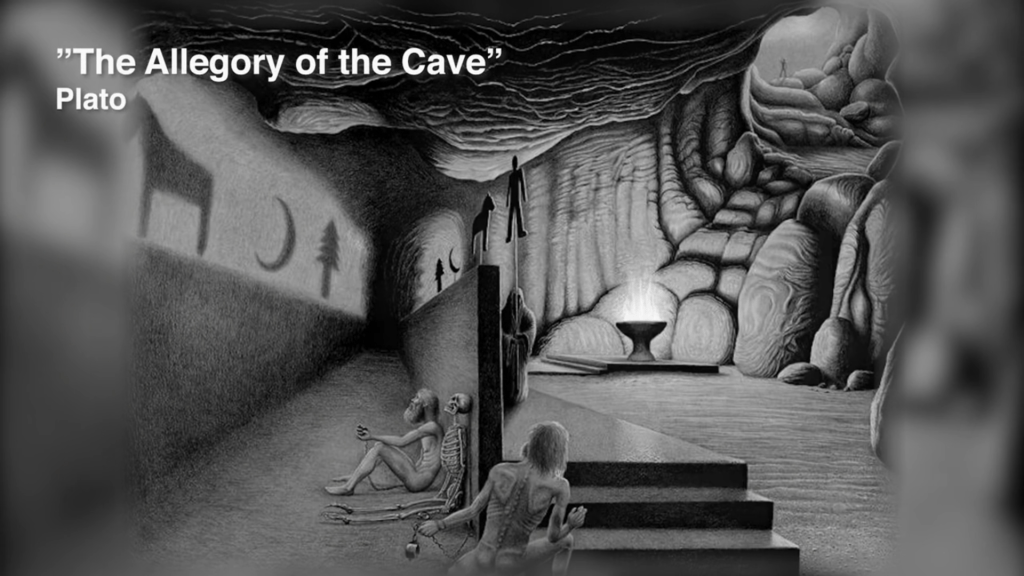
Across philosophy, religion, and science, a striking intuition keeps returning:
the world as we see it is not the ultimate reality.
It may be:
- an illusion (māyā),
- a projection,
- a simulation,
- or a partial rendering of something deeper.
Despite cultural distance and historical separation, thinkers repeatedly arrive at the same unsettling insight:
what appears solid, final, and self-evident may be only a surface-level display.
2. The Modern Simulation Hypothesis
In recent years, this ancient intuition has re-emerged through technology.
Elon Musk famously argued that the probability we are living in a base reality is extremely low—often paraphrased as “one in billions.”
His reasoning is simple:
- civilizations create increasingly realistic simulations,
- simulated worlds vastly outnumber base worlds,
- statistically, we are more likely inside a simulation than outside it.
This is not mysticism.
It is probabilistic logic applied to technological trajectories.
3. Physics: Reality Is Already Strange
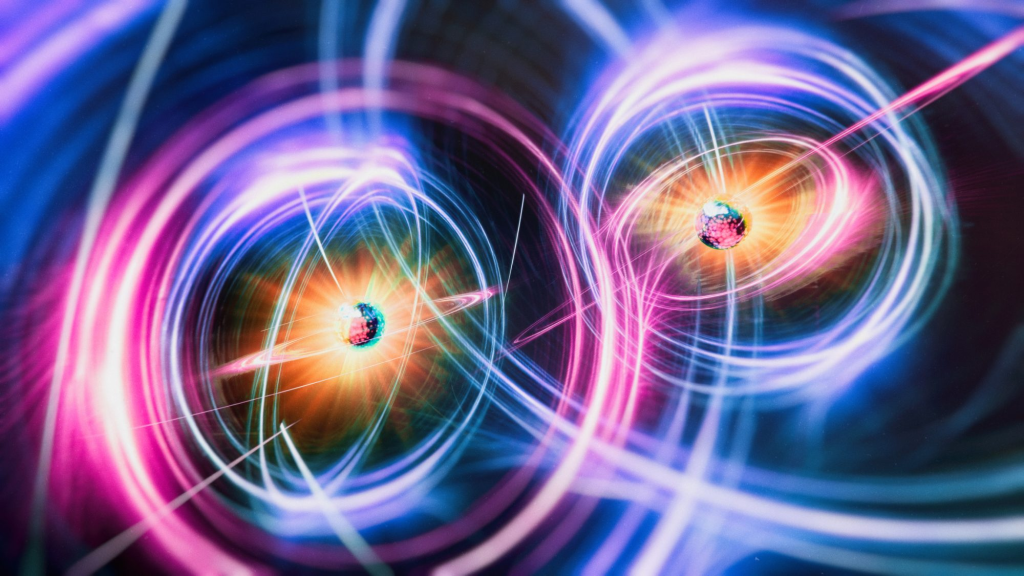
Even without simulation theory, modern physics destabilizes naïve realism.
Quantum mechanics reveals:
- particles existing as probabilities,
- observers affecting outcomes,
- non-local correlations defying classical causality.
At the smallest scales, reality behaves less like objects and more like mathematical rules being executed.
The universe looks less like “stuff” and more like code with constraints.
4. Plato’s Allegory of the Cave
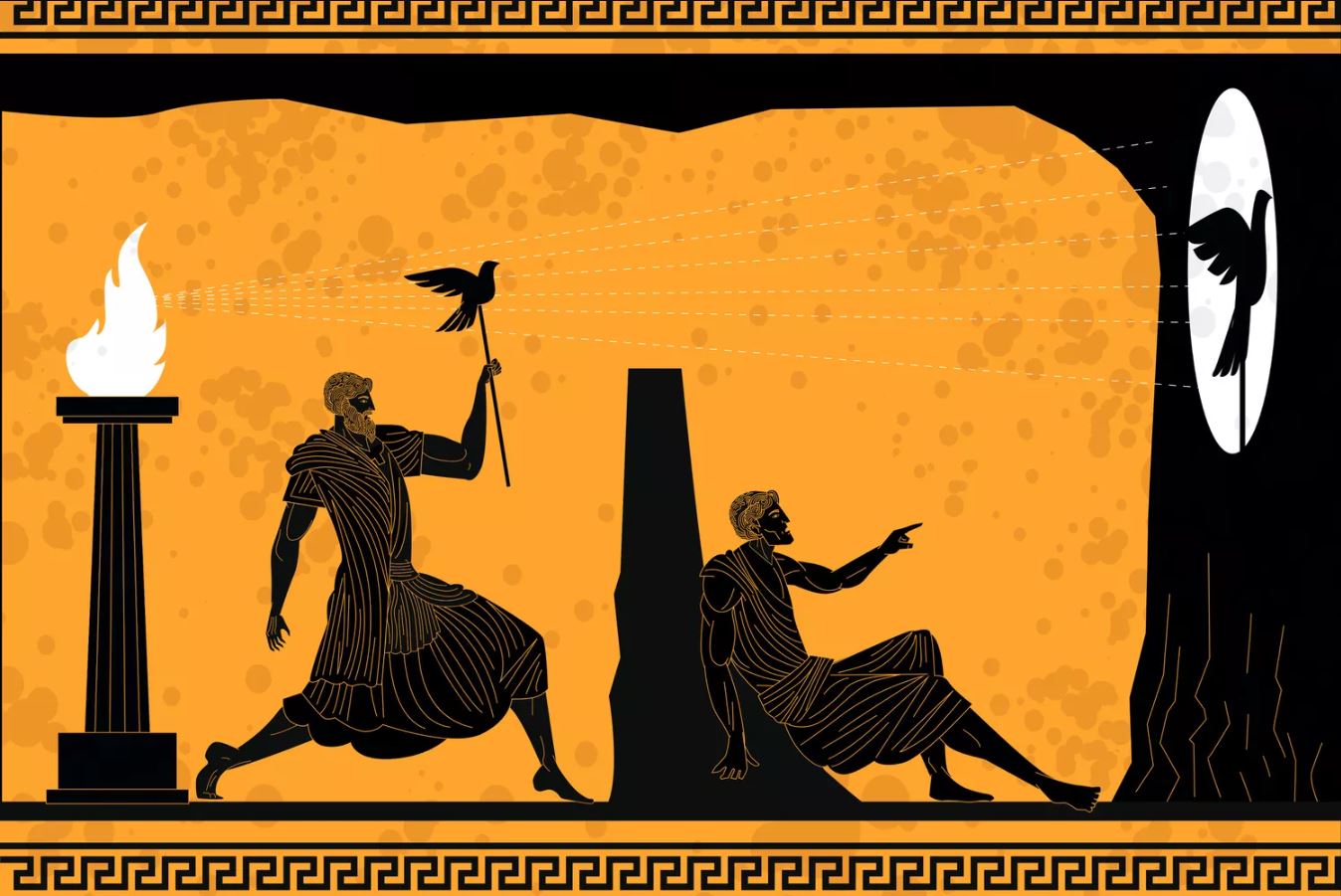
Over two millennia ago, Plato offered one of the most enduring metaphors of illusion.
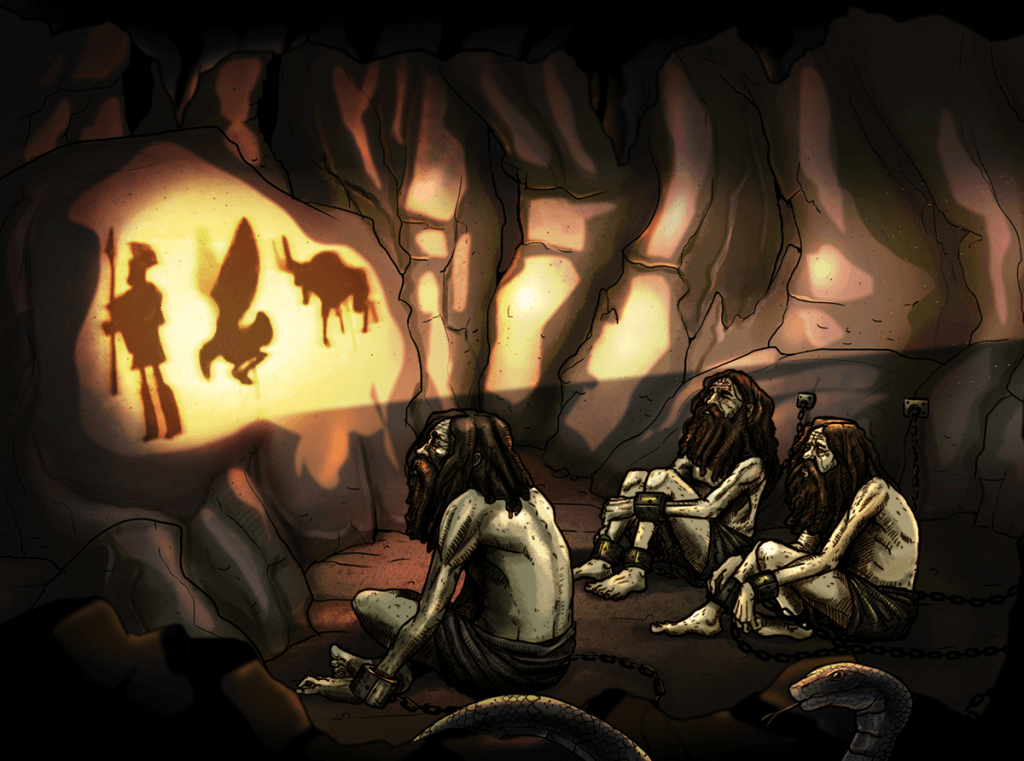
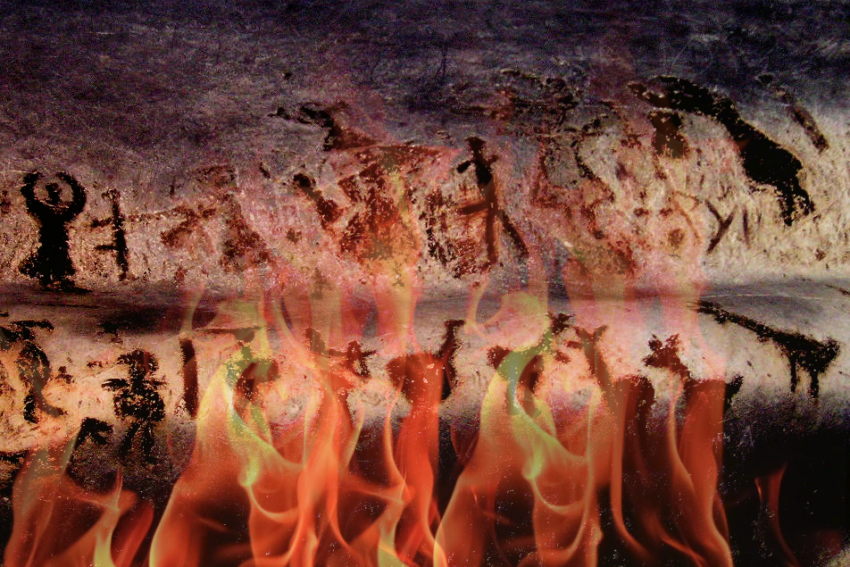
In the Allegory of the Cave:
- prisoners are chained, facing a wall,
- shadows flicker before them,
- they mistake shadows for reality,
- unaware of the fire and objects behind them.
The message is precise:
Humans may be confined to appearances,
mistaking projections for truth,
simply because they have never seen the source.
5. Zhuangzi’s Butterfly Dream

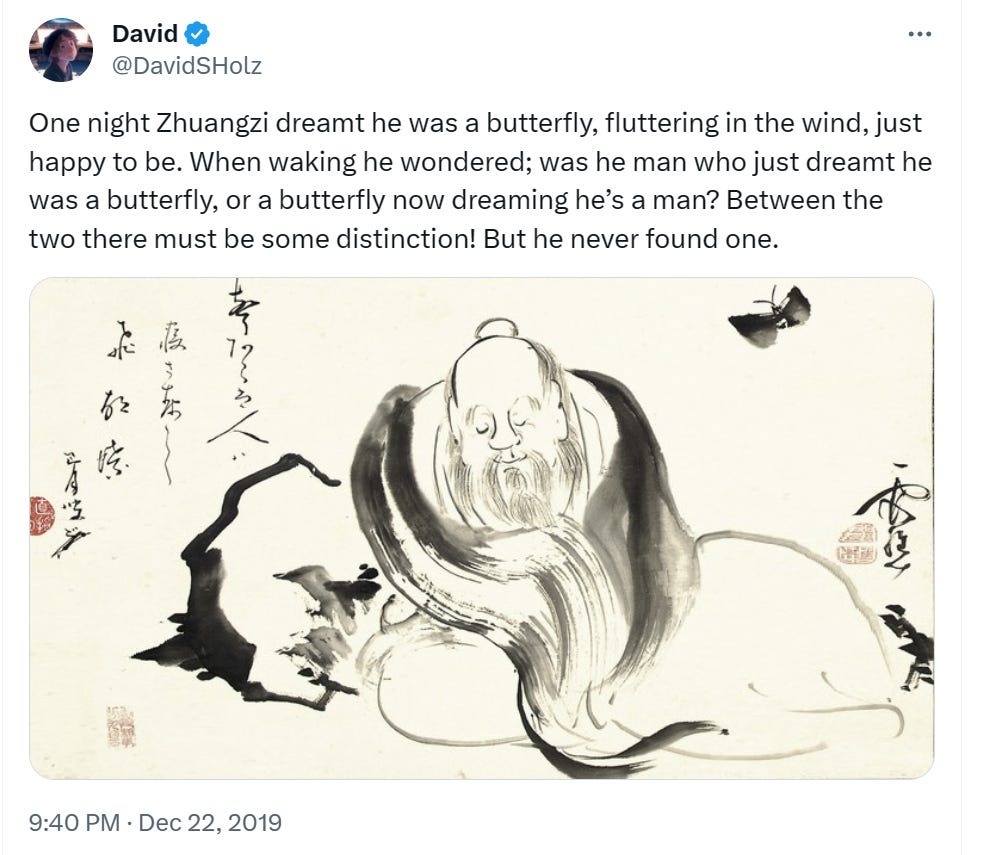
In ancient China, Zhuangzi posed a quieter but equally radical question.
He dreamt he was a butterfly.
Upon waking, he wondered:
Was I a man dreaming of being a butterfly,
or a butterfly dreaming of being a man?
The insight is devastatingly simple:
- experience alone cannot guarantee reality
- waking life and dreams differ only by stability, not certainty
6. The Creator Intuition
Throughout mythologies and religions, humanity expresses an almost universal intuition:
- the existence of a Creator, Architect, or Higher Intelligence
In a modern frame, this may reflect:
- an embedded memory,
- a deep intuition of an upper-level reality,
- or an awareness of design beyond the visible layer.
Even many scientists echo this intuition.
Chen Ning Yang reportedly expressed that the universe appears too ordered and mathematically elegant to be random—an intuition widely shared, in different forms, by scientists across generations.
So too did:
- Albert Einstein, who spoke of cosmic order and intelligibility,
- Isaac Newton, who viewed the universe as law-governed and intelligible.
Their views differ, but the pattern remains:
order implies source.
7. If the World Is Not Real — Then Who Are We?
This question cannot be avoided.
If the physical world is:
- conditional,
- rendered,
- or illusory,
then identity cannot be purely physical.
So what are we?
Are we:
- merely aggregates of matter and sensation?
- temporary patterns of information?
- or something prior to form?
8. The Question of Soul and Consciousness
Across traditions, the answer converges:
There is something that experiences —
- not reducible to flesh,
- not identical with thoughts,
- not limited to the senses.
Call it:
- soul,
- consciousness,
- awareness,
- witness,
- or observer.
Names differ.
The intuition is universal.
Plants, animals, and humans each express this presence at different levels of complexity, suggesting a continuum of being, not an absolute divide.
9. Where Do We Come From?
If reality has layers, then origin may not be physical.
Possible answers include:
- emergence from a higher-order reality,
- descent into a constrained world,
- participation in a designed system for learning, evolution, or experience.
In this view, birth is not the beginning —
it is entry.
Death is not annihilation —
it is exit or transition.
10. Omniverse Reflection
Across science, philosophy, and myth, the message converges:
- the world is not final,
- perception is limited,
- reality is layered,
- identity exceeds the body.
Whether framed as:
- Plato’s shadows,
- Zhuangzi’s dream,
- quantum uncertainty,
- or technological simulation,
the conclusion remains the same:
What we see is not what is.
Closing Contemplation
If the world is illusion,
then awakening is not belief —
it is seeing through.
And if we are more than bodies,
then the true journey is not outward,
but inward —
toward the source of awareness itself,
beyond shadows, beyond dreams,
toward the deeper reality that has always been quietly watching.
 Gautama Dhamma
Leave a comment