
One of the strangest facts in modern physics is also one of the most quietly accepted:
Nothing physical can exceed the speed of light.
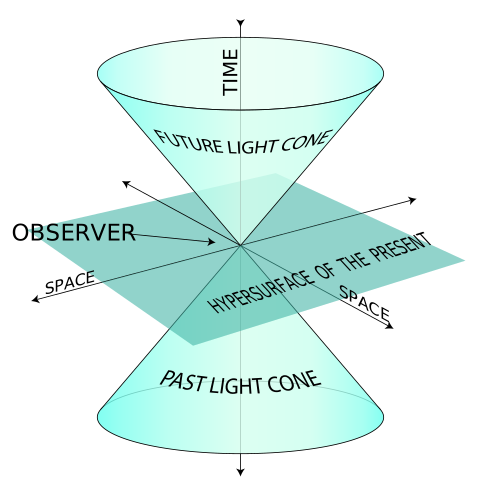
No matter how advanced the technology, no matter how much energy is applied, material objects slow, destabilize, and ultimately lose their physical form as they approach light speed. This rule is not merely practical—it is absolute.
From a purely mechanical perspective, this is deeply unnatural.
Why should the universe impose a hard ceiling on speed at all?
In this third installment of Omniverse Cosmology, we examine the speed of light not merely as a physical constant—but as a structural limit of manifestation, one that begins to make sense when reality is viewed as rendered, regulated, and consciousness-bounded.
1. The Speed of Light: An Absolute That Shouldn’t Exist

In classical intuition, speed should be relative and unbounded. With enough force, objects should continue accelerating indefinitely.
Yet the universe refuses this logic.
According to relativity:
- As an object accelerates toward light speed, its effective mass increases
- Infinite energy would be required to reach or exceed light speed
- Physical matter cannot cross this threshold
This behavior has no deeper mechanical necessity. It is not required by geometry or causality alone.
Instead, it behaves like a hard-coded rule.
In a simulated system, such limits are common—not as natural laws, but as hardware constraints designed to prevent instability, overflow, or system collapse.
From this angle, the speed of light looks less like a discovery—and more like a ceiling.
2. Matter, Light, and the Threshold of Stability
As speed increases, matter destabilizes.
At the limit:
- Particles lose rest mass
- Distinct localization collapses
- Existence becomes wave-like and radiant
In short:
Matter dissolves into light.
This suggests a deeper principle:
- Stable matter exists only below the light-speed threshold
- Beyond it, existence expresses itself as light
Light is not just energy—it is the containment form of post-material existence within our physical realm.
When velocity slows, structure condenses.
When velocity rises, structure dissolves.
Matter and light are not separate substances—but states of manifestation governed by speed.
3. Light as the Interface of Higher Existence
If matter cannot exist beyond the speed limit, yet phenomena still occur, then light becomes the visible residue of something crossing domains.
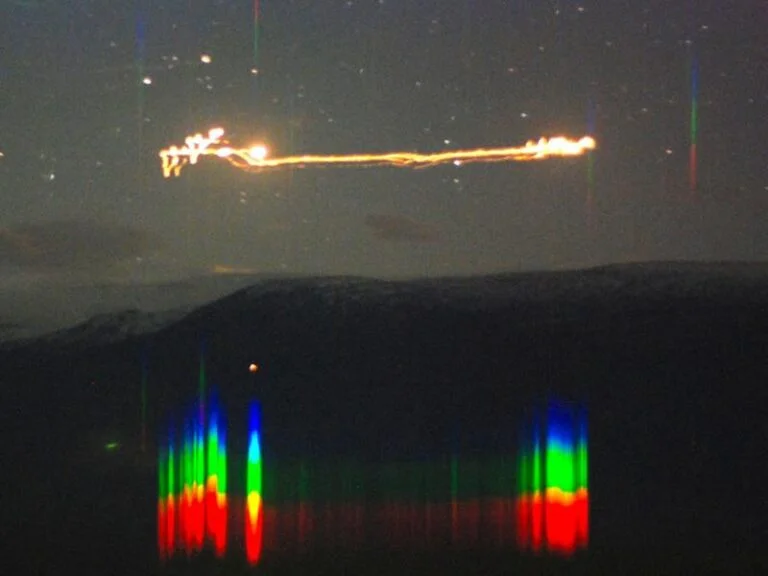
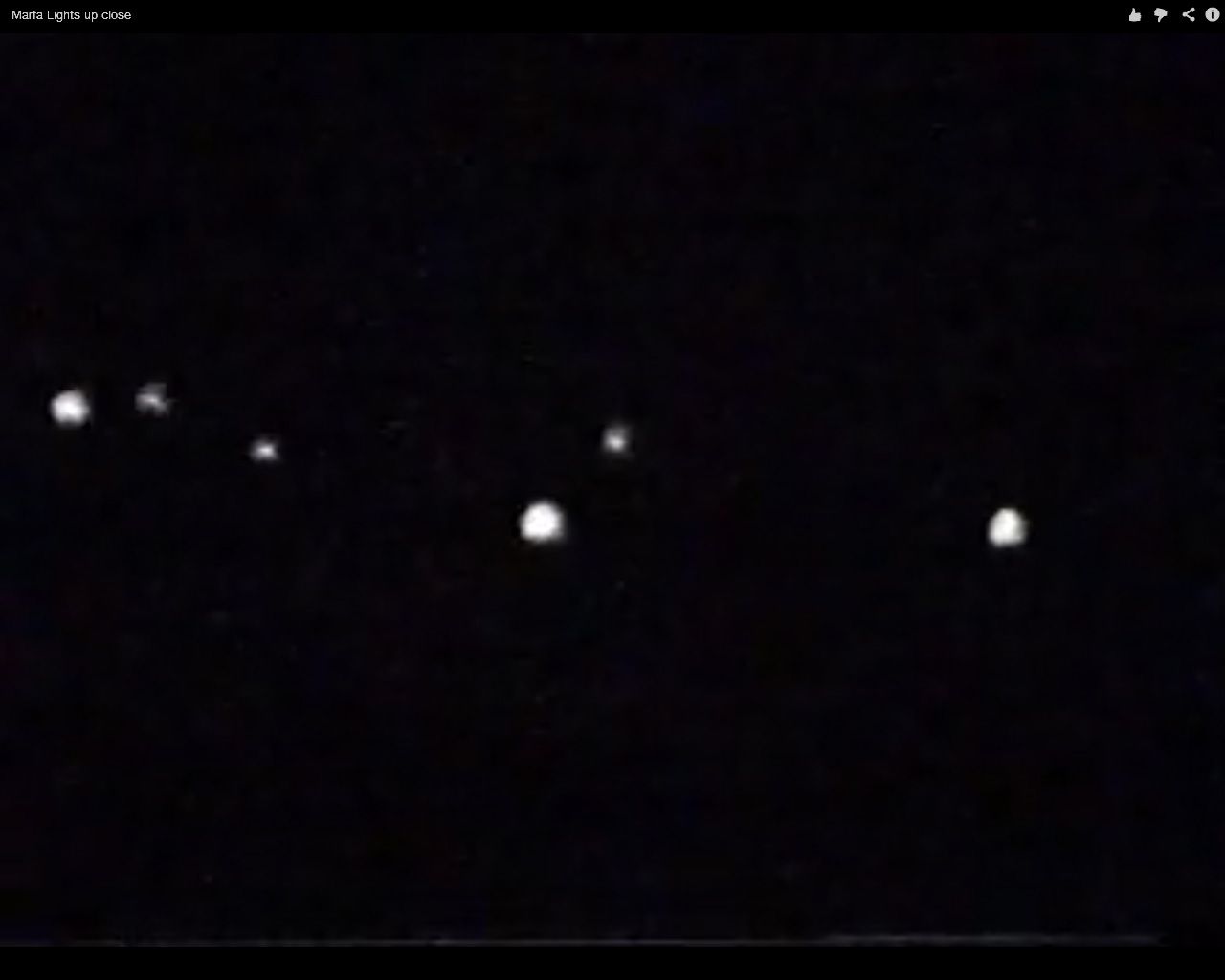
This brings us to one of the most persistent anomalies on Earth: intelligent, recurring, unexplained light phenomena.
Across cultures and continents, witnesses report luminous orbs that:
- Appear without heat or combustion
- Move intelligently
- Ignore wind, gravity, and terrain
- Manifest repeatedly over decades or centuries
Examples include:
- Brown Mountain Lights
- Hessdalen Lights
- Marfa Lights
- Naga Fireballs
Despite extensive investigation, no conventional physical explanation fully accounts for their behavior.
What if these are not objects—but consciousness expressions constrained by the light-speed boundary?


4. Consciousness Beyond Matter: Why It Appears as Light
If consciousness is not bound to mass, then when it enters a physical realm governed by a speed limit, it must adopt the only allowable high-frequency form:
Light.
This explains several otherwise disconnected observations:
- Consciousness temporarily leaving the human body is often seen as luminous balls
- Near-death and out-of-body experiences frequently involve light forms
- Witnesses report “light beings” rather than solid entities
- Higher-dimensional presence collapses into photons when intersecting physical spacetime
Light becomes the compression format for non-material existence.
Just as data must be encoded to enter a limited system, consciousness must be encoded as light to appear within ours.
5. The Speed of Light as a Containment Law
From this perspective, the speed of light serves multiple functions:
- It prevents physical matter from destabilizing spacetime
- It separates material existence from post-material existence
- It regulates interaction between domains
- It acts as a firewall between layers of reality
In a simulation framework, this makes perfect sense:
- Unlimited speed would crash causality
- Unbounded interaction would collapse structure
- Rendering limits preserve coherence
The universe behaves less like an open wilderness—and more like a managed environment.
6. Light as the Signature of the Beyond
Rather than asking why mysterious lights exist, we may be asking the wrong question.
The better question is:
Why would higher forms of existence appear as anything else?
Light is:
- Massless
- Fastest allowable carrier
- Non-local in quantum behavior
- Capable of encoding information
- Borderline between wave and particle
It is the perfect interface state.
Matter is not the highest form of existence—it is the slowest, densest, most constrained.
Conclusion: The Ceiling That Reveals the Architecture
The speed of light is not merely a physical constant.
It is a structural boundary—a line separating:
- Stable matter from radiant existence
- Physical embodiment from conscious traversal
- Rendered form from underlying agency
What appears “unnatural” in physics becomes perfectly logical when the universe is viewed as regulated, layered, and conscious-compatible.
Matter slows to exist.
Light accelerates to appear.
And consciousness—when crossing worlds—shines.
In the Omniverse, limits are not flaws.
They are design features.

 Gautama Dhamma
Leave a comment