
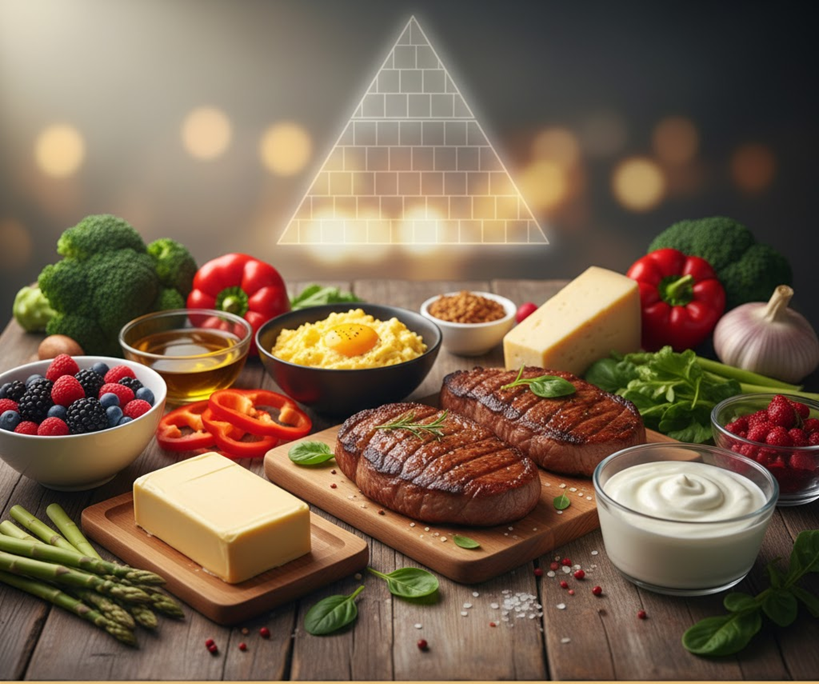
For decades, many people followed the advice: “low-fat is best,” “grains are the foundation,” and “count your calories.” Yet, despite these efforts, their health has been in steady decline. Obesity rates have soared, chronic diseases and fatty liver disease have become epidemics, and children are increasingly at risk.
Change is finally here. On January 7, 2026, under the “Make America Healthy Again” (MAHA) initiative spearheaded by Health and Human Services Secretary Robert F. Kennedy Jr., the U.S. Dietary Guidelines underwent a revolutionary update. This is a total inversion of the old food pyramid, signaling a powerful return to common sense and scientific truth.
The Great Inversion: A New Foundation for Health
The most striking change is the complete reorientation of the food pyramid:
- Protein and Healthy Fats: New Foundation. The new pyramid firmly places meats, eggs, and full-fat dairy (like milk, cheese, and yogurt) at its broad foundation. Traditional, natural fats such as butter, beef tallow, and cold-pressed olive oil are no longer demonized but celebrated as essential for health. The message is clear: prioritize high-quality protein at every meal.
- Vegetables and Fruits: Vital, But Not the Sole Energy Source. Fresh produce still holds a crucial place, sharing the upper tiers with healthy fats. They provide essential vitamins, minerals, and fiber, but the guidelines clarify that our primary energy and structural needs are met through protein and healthy lipids.
- The Demotion of Grains: Quality Over Quantity. Perhaps the most controversial shift for some, whole grains have been significantly downsized to a tiny segment at the bottom. The emphasis is now on drastically reducing refined carbohydrates, acknowledging their role in metabolic dysfunction.
Beyond the Pyramid: Key Principles Driving the Change

The philosophy behind these new guidelines is refreshingly simple and profound: “Eat Real Food.” This isn’t about rigid rules; it’s about reclaiming our plates from the grip of the industrial food system.
- The End of the “War on Fat”: For far too long, natural fats were unfairly blamed for heart disease. The new guidelines recognize that the real culprits are ultra-processed foods and unhealthy industrial seed oils (like soybean, corn, and canola oil), which often contain damaged fatty acids that promote inflammation.
- Focus on Food Quality, Not Just Calories: The old paradigm of calorie counting often led people to choose “low-fat” or “low-calorie” processed foods laden with sugar and artificial ingredients. The new approach emphasizes nutrient density and the degree of food processing, understanding that a calorie from a whole food is fundamentally different from a calorie from a processed snack.
- Zero Tolerance for Added Sugar in Children: In a bold move, the recommendation for “no added sugar” has been expanded from children under two to all children under the age of ten. This directly addresses the escalating crisis of childhood obesity and early-onset metabolic issues.
- Support for Low-Carb Approaches: The guidelines now officially acknowledge that low-carb, high-protein diets are beneficial, particularly for individuals battling chronic conditions like Type 2 diabetes and fatty liver disease.
Related Videos:
Core Principle of the 2026 Update
The new model emphasizes:
Real food first. Nutrient density over calorie quantity. Metabolic stability over industrial convenience.
Key Features of the New 2026 Food Pyramid
1. Protein as the Structural Foundation
At the base of the updated pyramid is high-quality protein, including:
- meat,
- fish,
- eggs,
- dairy (where tolerated),
- and whole-food plant proteins.
Protein is emphasized because it:
- stabilizes blood sugar,
- supports muscle, hormones, and immunity,
- reduces overeating through satiety,
- and provides essential amino acids unavailable from refined grains.
This represents a return to biological reality, not a dietary trend.
2. Natural Fats Rehabilitated
The new guidelines distinguish clearly between:
- natural fats (animal fats, olive oil, butter, avocado, nuts),
- and industrial seed oils and trans fats.
Natural fats:
- support brain function,
- regulate inflammation,
- and provide long-lasting energy.
The blanket fear of fat has been replaced by fat discernment.
3. Carbohydrates Reframed, Not Demonized
Carbohydrates are no longer the foundation of the diet.
Instead:
- whole vegetables and fruits are prioritized,
- refined grains and sugars are minimized,
- starch intake is contextualized based on activity level and metabolic health.
This recognizes that not all bodies tolerate carbohydrates equally, and that excess carbohydrates are a major driver of modern disease.
4. Ultra-Processed Foods Explicitly Discouraged
For the first time, ultra-processed foods are treated as a primary public health risk, not a neutral convenience.
These foods:
- disrupt appetite signaling,
- damage gut microbiota,
- promote addiction-like consumption,
- and undermine metabolic health.
The new guidelines explicitly favor foods that resemble what humans have eaten for generations, not factory-engineered substitutes.
5. Metabolic Health as a Central Goal
The 2026 Guidelines shift the focus from:
- calorie counting,
- rigid portion control,
- and abstract nutrient ratios,
to:
- insulin sensitivity,
- inflammation reduction,
- muscle preservation,
- and long-term metabolic resilience.
Health is no longer framed as weight alone, but as functional vitality.
 Gautama Dhamma
Leave a comment