
A Reflection from the World Fellowship of Buddhists Conference, Bangkok
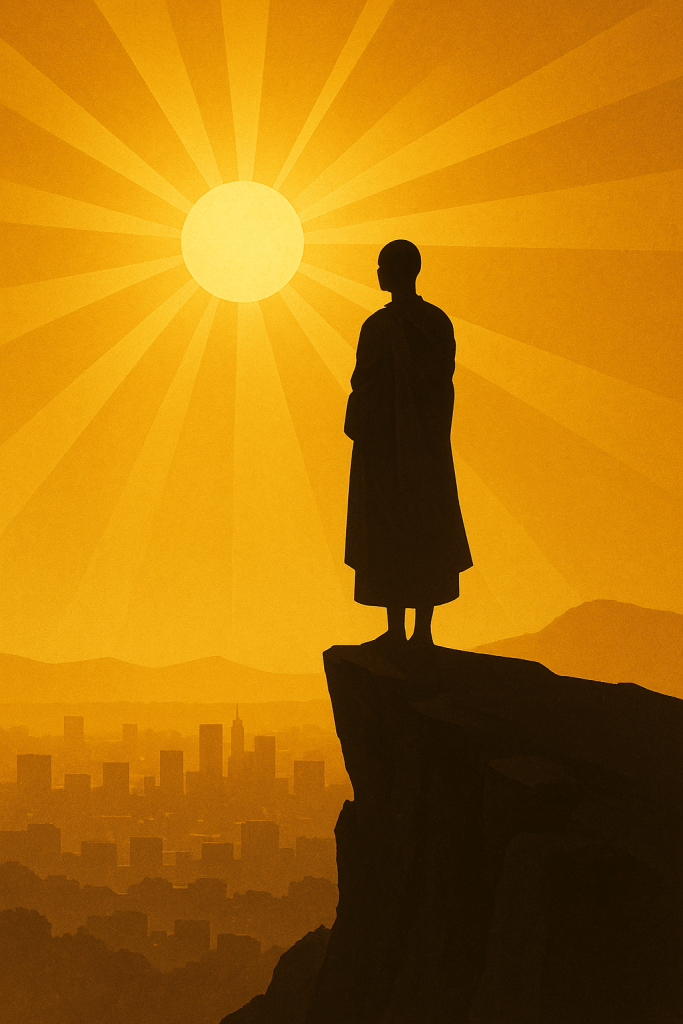
Bangkok is radiant right now — temples shining with golden light, the fragrance of incense carried by the warm breeze, and Buddhists from many nations gathering with hopes of unity, peace, and compassion.
The 75th World Fellowship of Buddhists Conference has brought together venerable monks, nuns, dignitaries, scholars, and lay leaders from across the world. The Thai government has demonstrated great hospitality: the Royal Navy, the Ministry of Culture, and many generous supporters have worked harmoniously to make this event possible. The Supreme Patriarch and senior Sangha leaders have offered their blessings and guidance.
There is much to rejoice in:
bridges of friendship formed across borders,
dialogues on peace and mutual understanding,
and recognition of the Buddha’s contribution to humanity.
And yet — as I watch the dignified interactions between monarchy, government, and the Sangha — a gentle but firm realization keeps arising in my heart:
When monastics step too deeply into the affairs of the world,
the true purpose of the monastic life becomes less visible.
The Noble Distinction of Two Communities
The Buddha gave the world a profound structure:
two communities working together toward goodness, but in different ways.
Laypeople
• care for society
• build hospitals and schools
• organize humanitarian aid
• maintain order and prosperity
Their merit preserves the well-being of the community.
Monastics
• renounce possessions, wealth, and status
• withdraw from worldly affairs
• dedicate their life to the deathless liberation
• guide beings toward the realm beyond birth and death
Their purity preserves the path to transcendence.
If monastics attempt to fully take up the mission of worldly improvement,
then who will preserve the knowledge that leads out of the world?
Who will carry forward the sacred remembrance
that liberation is possible
here and now
through direct realization?
The human realm can be made gentler,
but it will never be free from aging, sickness, and death.
Only the monastic mission points beyond these chains.
The Sangha Bows Only to the Dhamma
When a monastic bows, it is to the Buddha, the Dhamma, and the Vinaya.
This is not defiance toward worldly authority,
but fidelity to a higher law.
A king rules the land.
A government shapes society.
These are noble responsibilities.
But:
A monastic walks the path beyond the reach of kings.
The saffron robe symbolizes
leaving behind the world’s currencies:
power, fame, success, influence, wealth, and politics.
If the Sangha becomes too closely woven into worldly structures,
dependence arises,
subtle obligations emerge,
and the freedom to point clearly toward the Deathless becomes compromised.
When we stand beside kings and power,
we must remain inwardly unattached,
guarding the silence of renunciation.
The Gentle Drift Toward Secularization
For the conference, we live in a luxury hotel —
the Pullman King Power Hotel —
a striking symbol:
King Power, not Buddha Power.
While we appreciate the generosity,
the surroundings whisper a subtle shift:
the Dhamma is being placed inside worldly majesty,
rather than the world kneeling humbly before the Dhamma.
Panels and speeches focus largely on:
● social development
● public policy
● global cooperation
● activism
● humanitarian relief
All admirable — yet deeply world-rooted.
We speak of climate change, international law, economic challenge.
We talk about healing society,
but not about ending saṃsāra.
This quiet shift reflects a broader trend:
Buddhism becoming a social movement,
a cultural identity,
a moral philosophy…
But less a path of liberation.
The Mission That Only Monastics Can Hold
The Buddha did not leave his palace to organize projects.
He left because even the most perfect palace
could not shield him from suffering.
He saw directly:
the world is inherently unstable —
impermanent, unsatisfactory, and bound to death.
His heart could not settle for
kindness within the prison.
He sought the key to the gate.
The Buddha’s gift is not comfort.
It is escape.
It is the Middle Exit —
the path beyond worldly existence
to the Deathless Realm,
beyond aging and beyond the universe itself.
If monastics forget this,
the lighthouse goes dark.
And if the lighthouse goes dark,
the ships of life
will lose direction.
A Loving Reminder to the Sangha
I write this not as criticism,
but as a reminder
to myself
and to all who wear the robe:
Let the laypeople do their sacred work
to make society more just, safe, and compassionate.
Our sacred work
is to demonstrate
a life freed from domination by the world.
To live simply.
To walk lightly.
To turn the mind inward.
To teach the Deathless path
through conduct and concentration.
To keep alive the knowledge
that liberation is real.
The World Must Know the Exit Exists
The conference slogan is “World Peace, Unity, and Harmony.”
But the peace that is truly secure
is the peace beyond worldly becoming.
If monastics do not guard this truth,
Buddhism dissolves into humanitarian philosophy.
A valuable philosophy — but not the Dhamma of Liberation.
So I offer this reflection
from a place of love and gratitude:
Remember why the robe exists.
Remember what only the Sangha can preserve.
Remember the Deathless.
May we honor the Buddha
by walking the Path that leads beyond the world,
not merely improving the world.
May our presence remind all beings that:
Nibbāna-dhātu is real.
The path remains open.
Let us not forget to point to it.
 Gautama Dhamma
Leave a comment