
A sanctuary of peace, learning, and compassion — inspired by Mount Wutai, renewed in Canada
- Location: Cavan–Monaghan, Ontario, Canada
- The Buddhist Garden On Google Map
- Website: https://thebuddhistgarden.com
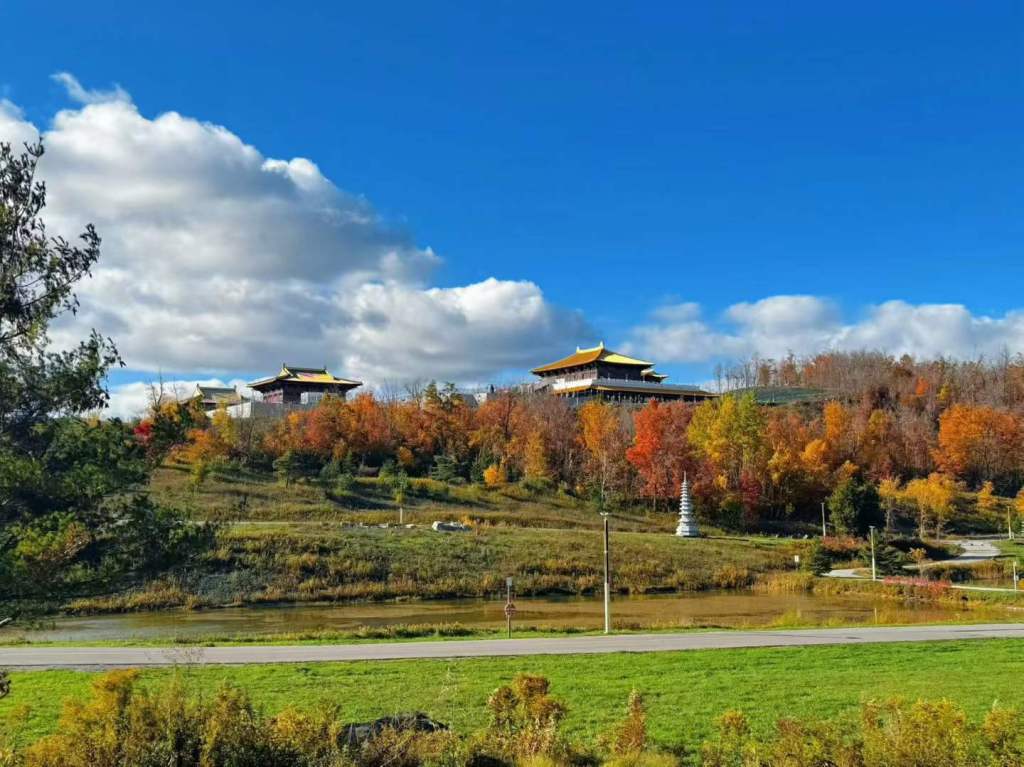
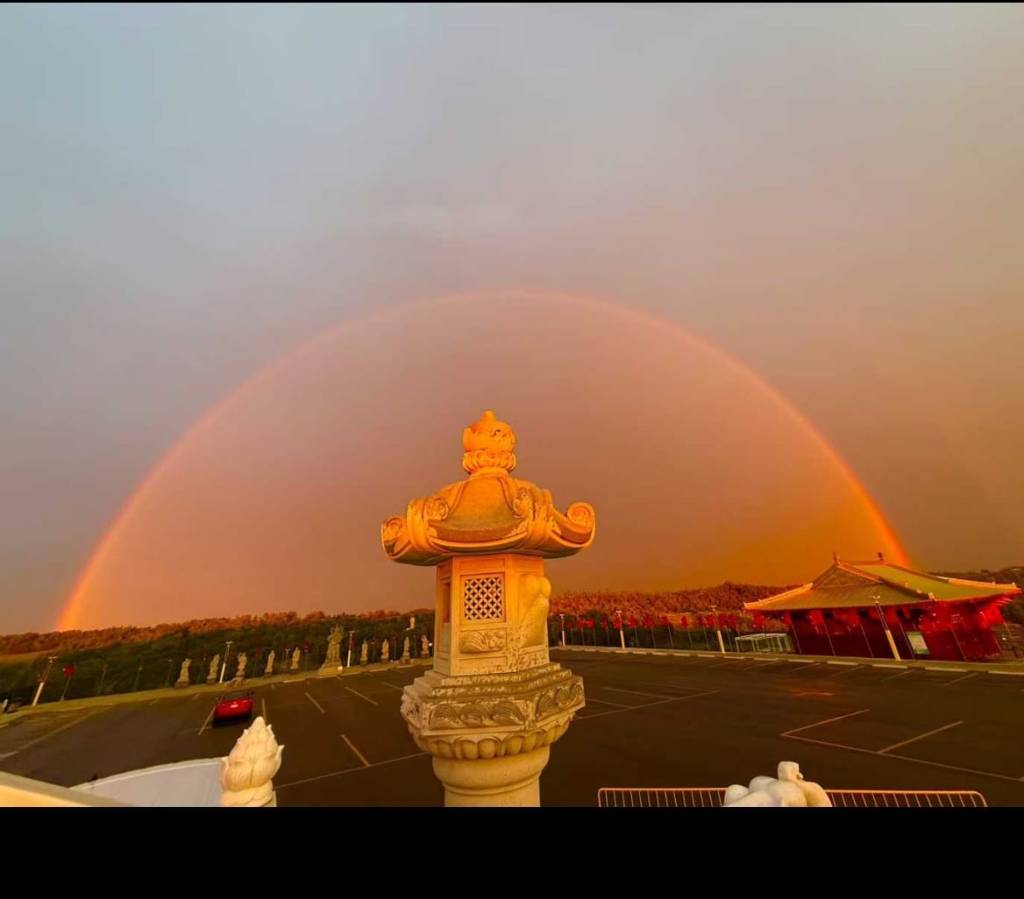
Nestled in the rolling hills of Ontario, the Wutai Shan Buddhist Garden stands as one of the most serene and majestic Buddhist cultural sites in North America. Inspired by the sacred Mount Wutai of China, this Garden reimagines the Five Terraces of Wisdom through architecture, art, and contemplative landscape design. Each hall, statue, and pathway has been built with devotion and precision, blending Tang-dynasty artistry with Canadian natural beauty.
This guided walk introduces the Garden’s key landmarks — from the radiant Maitreya Buddha at the entrance to the tranquil Wisdom Lake, from the towering Grand Buddha Hall to the Five Platforms of Mañjuśrī, each revealing a facet of the path toward wisdom, compassion, and peace.





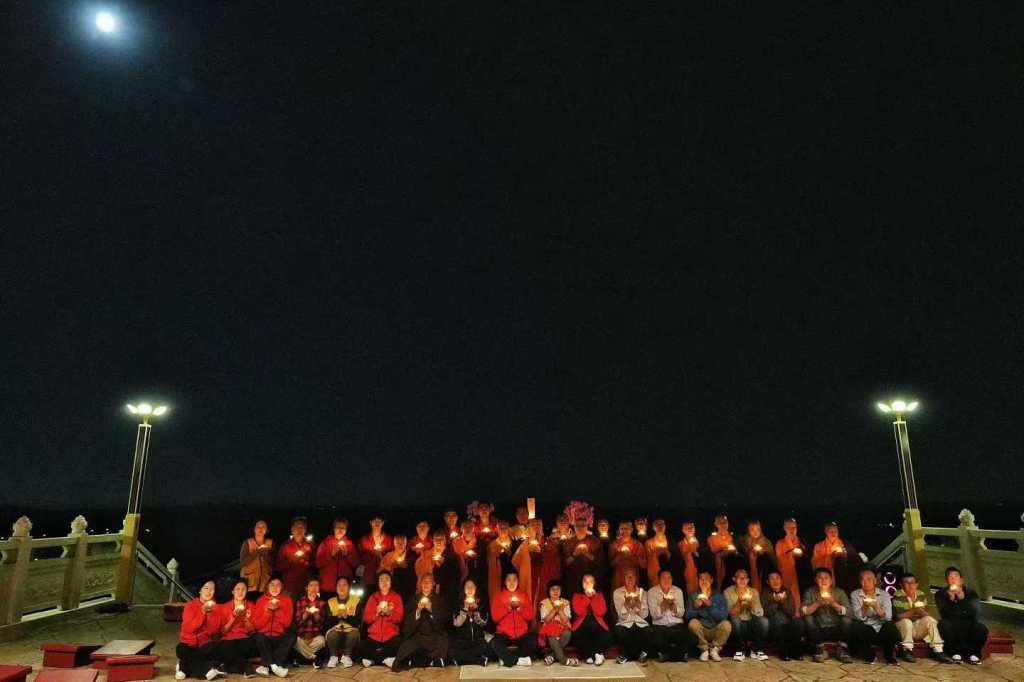

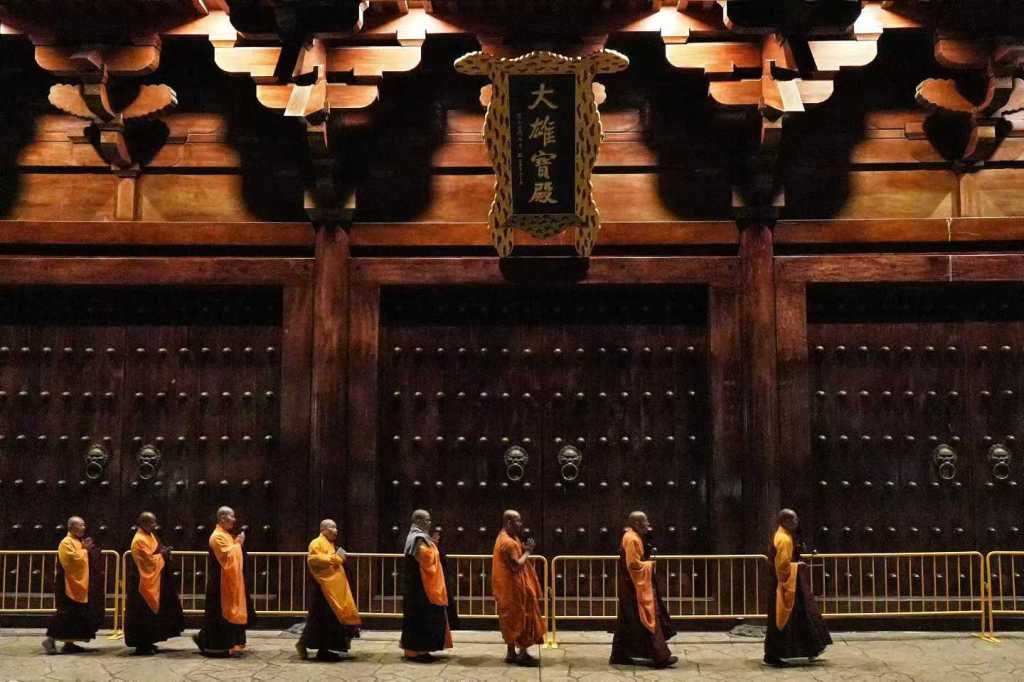
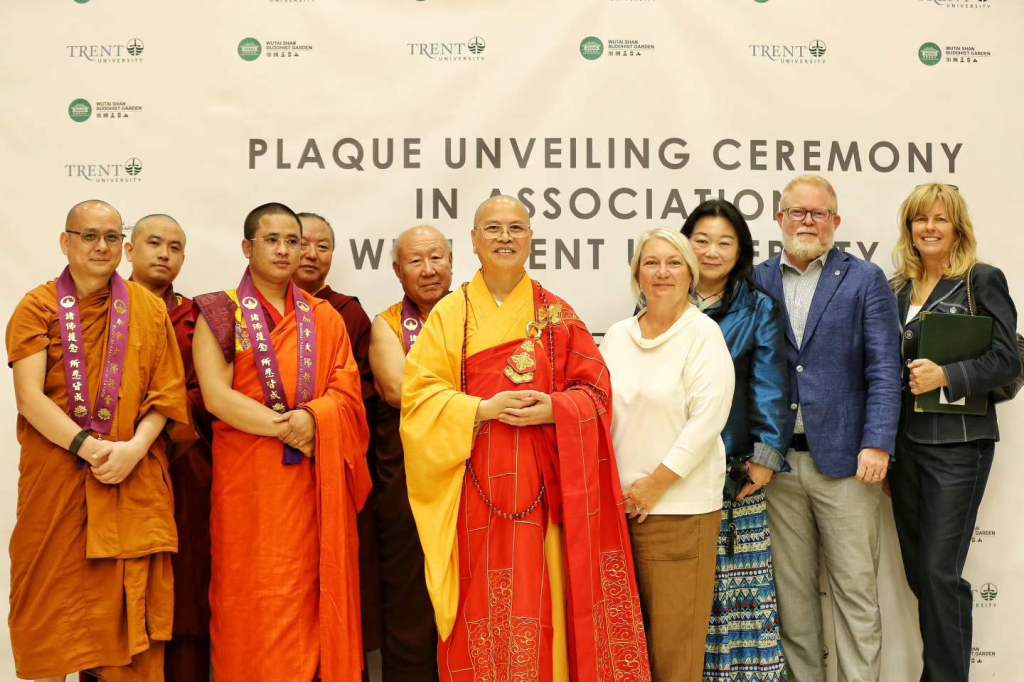
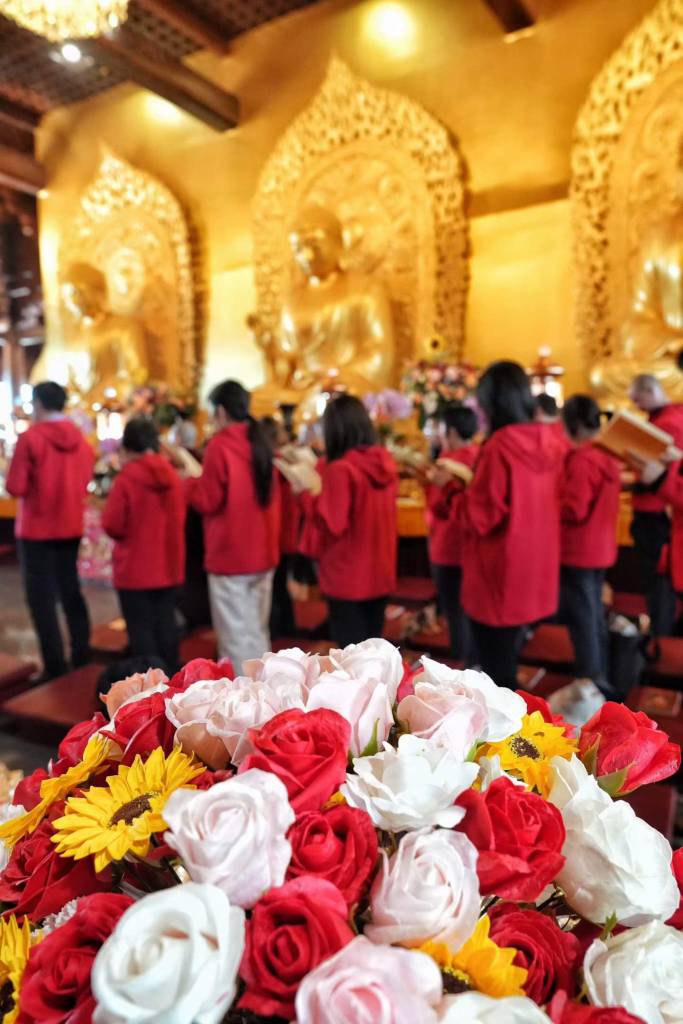

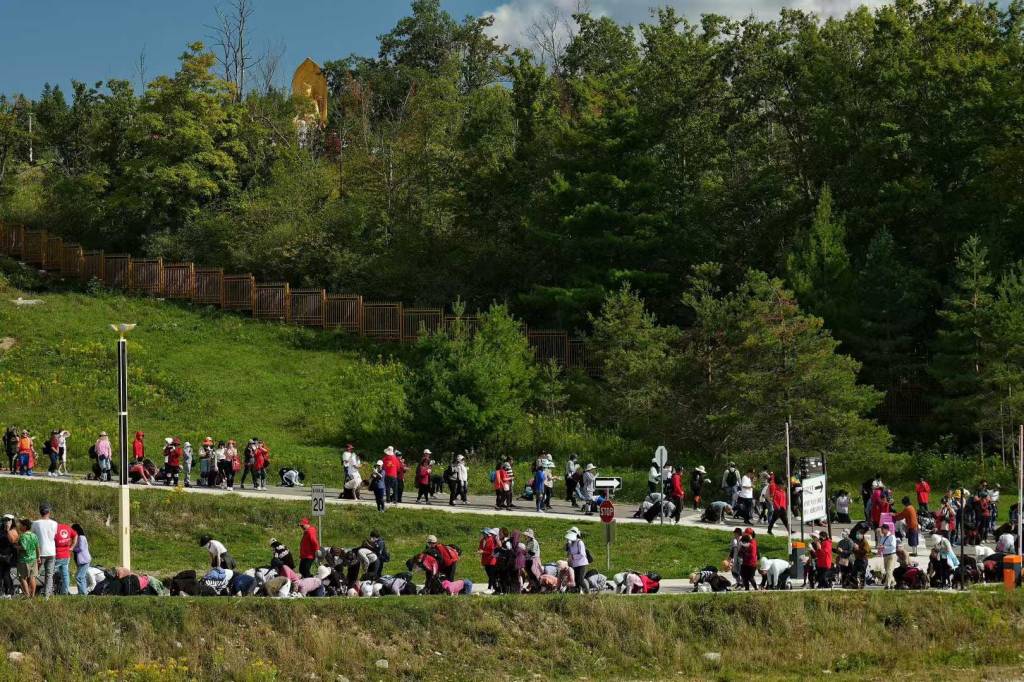
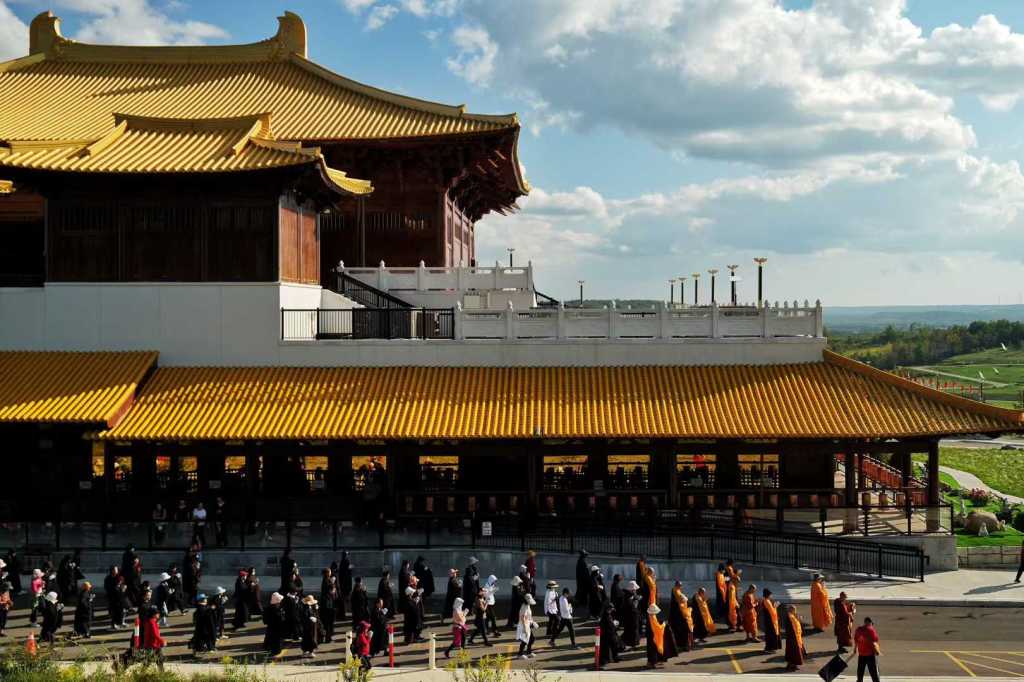
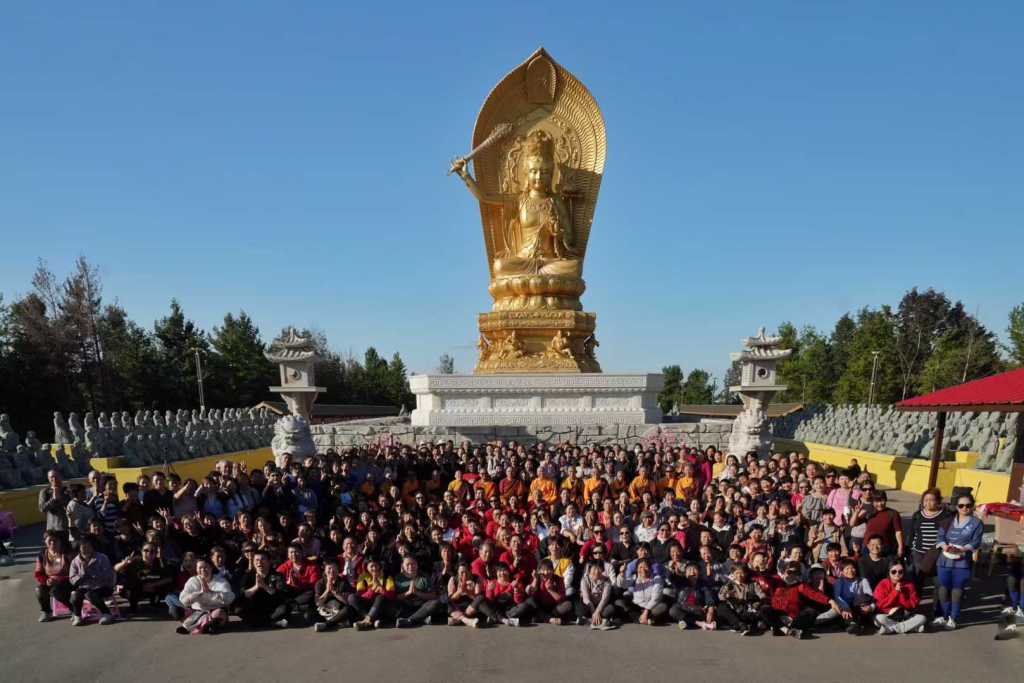
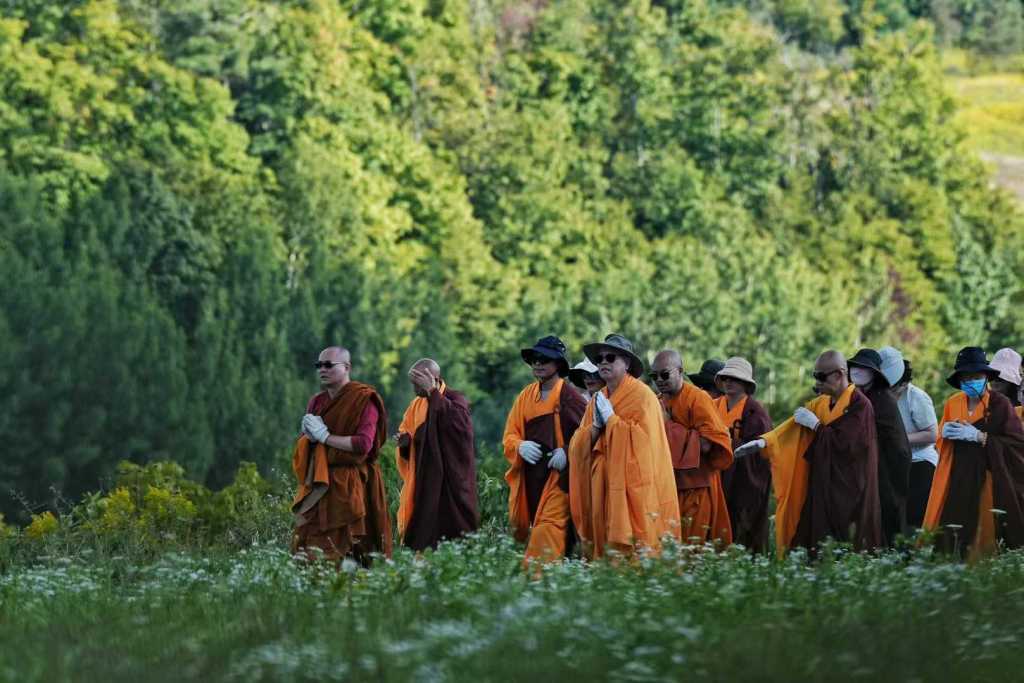
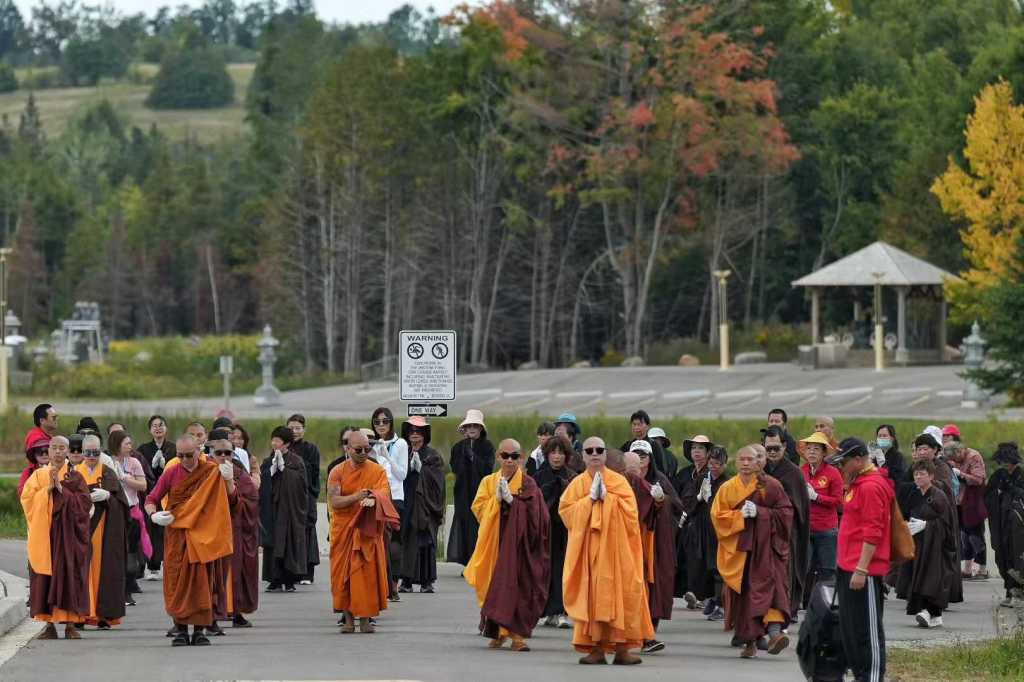
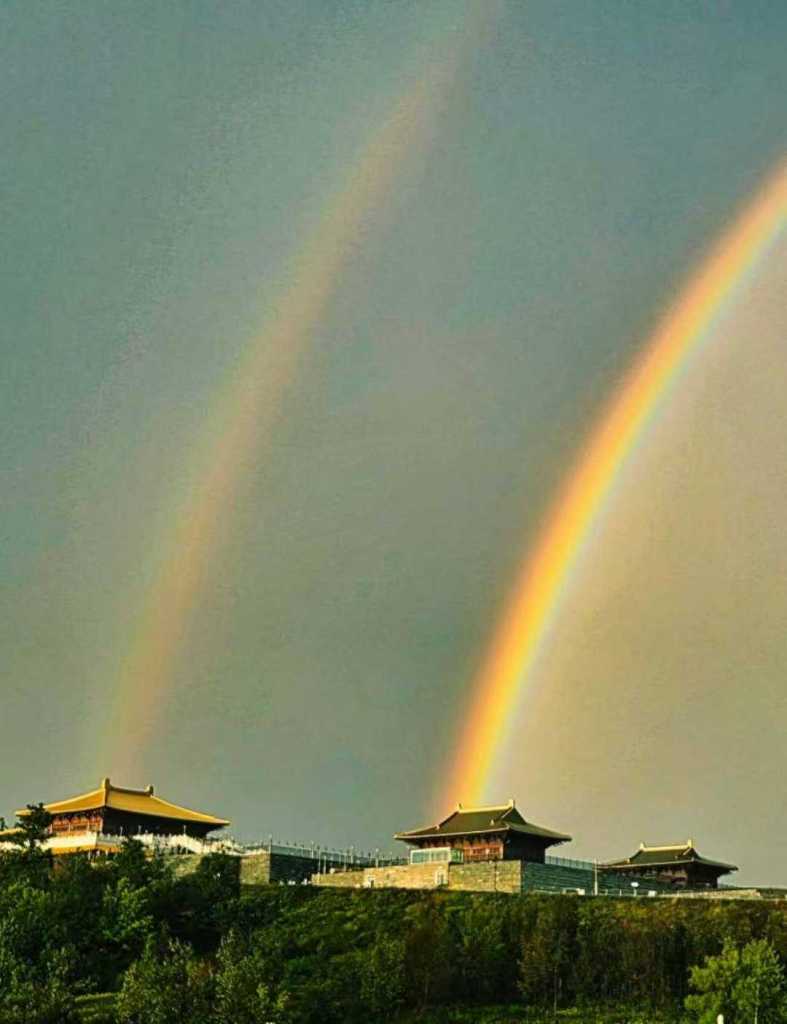
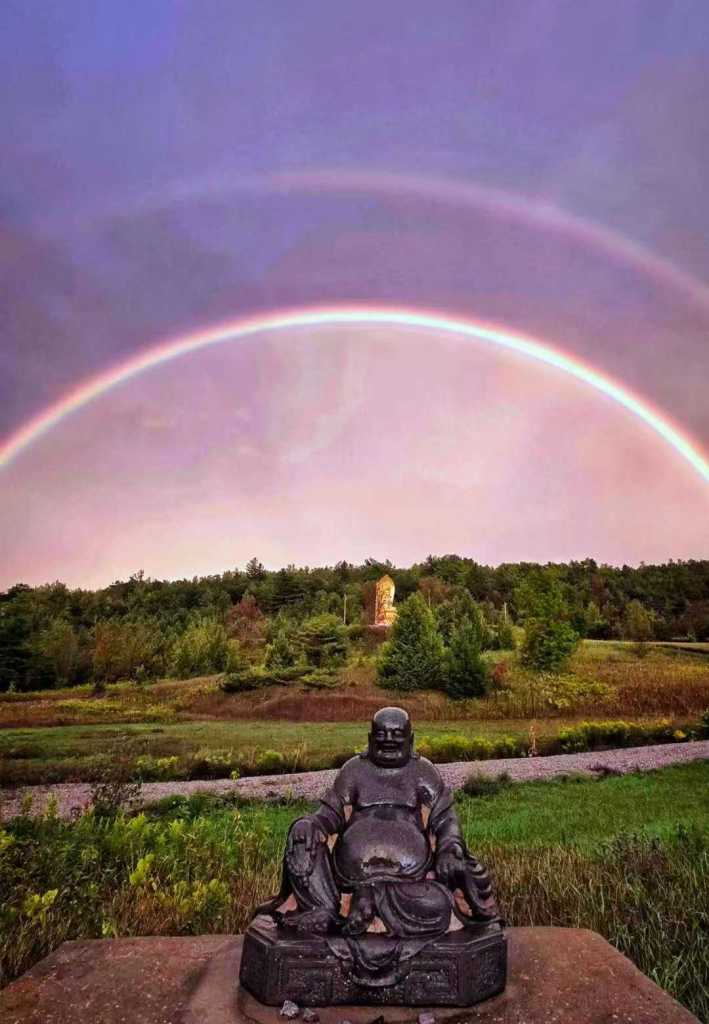
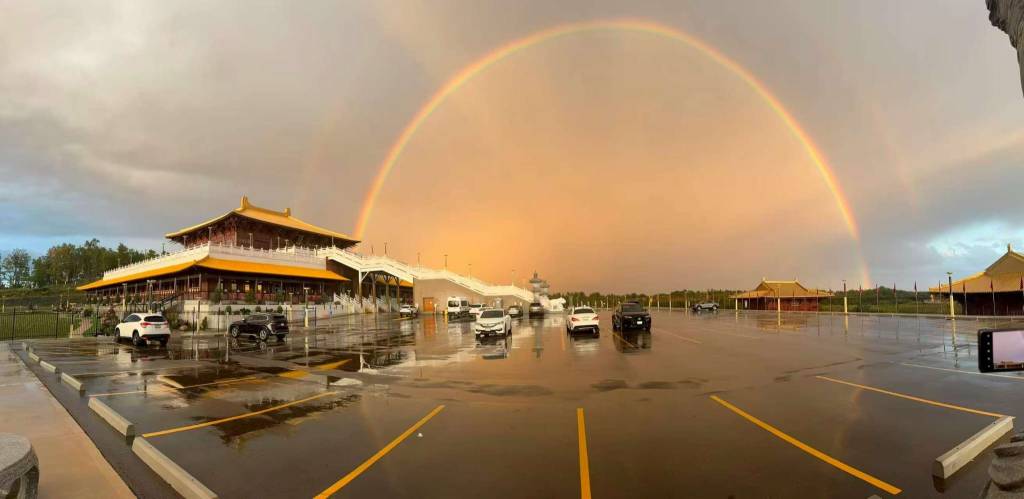


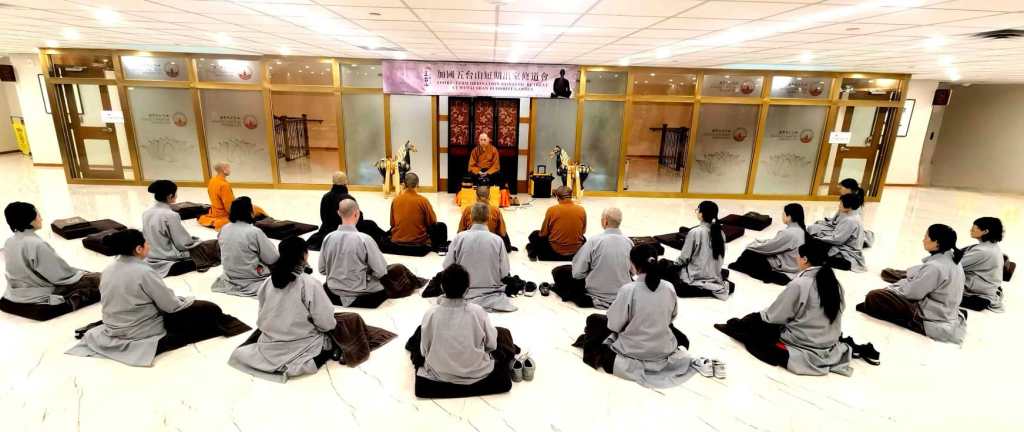
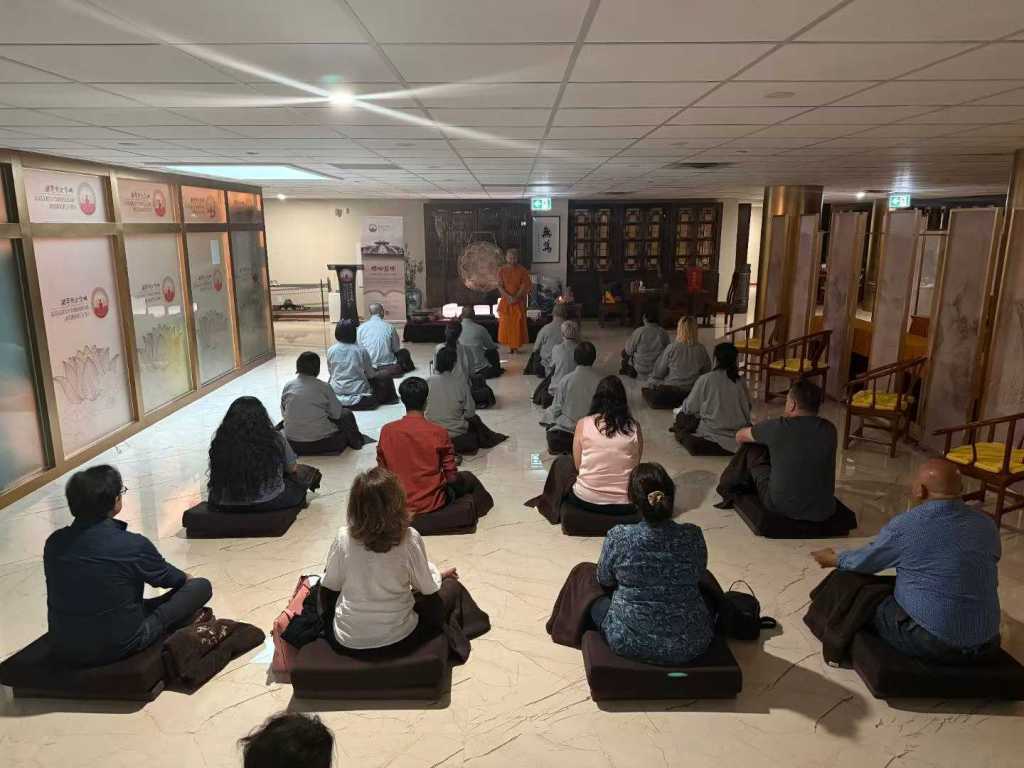
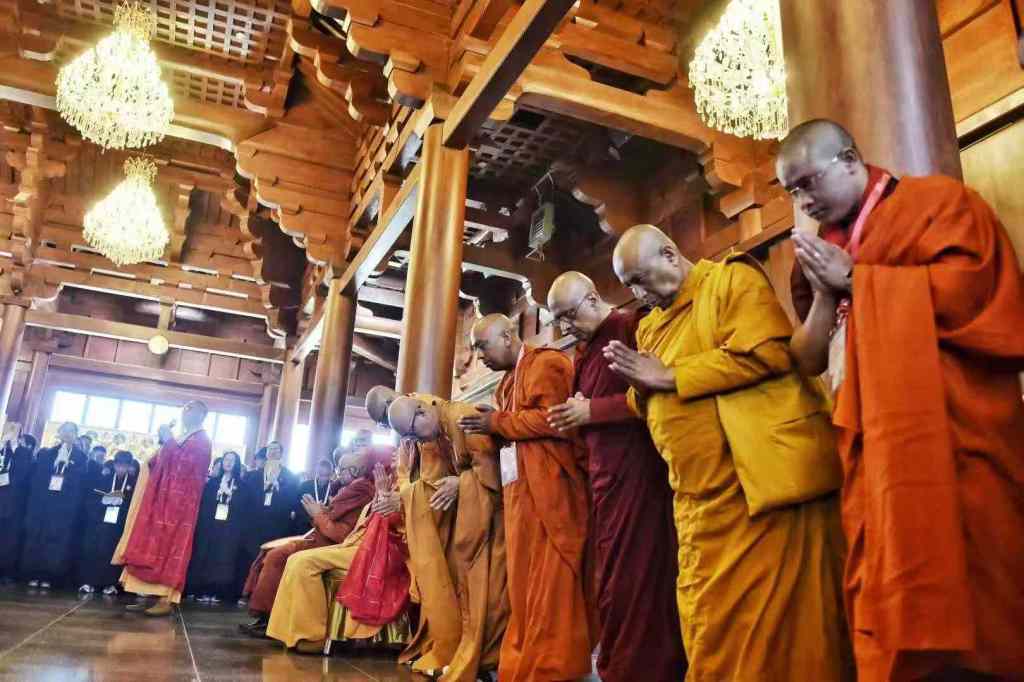
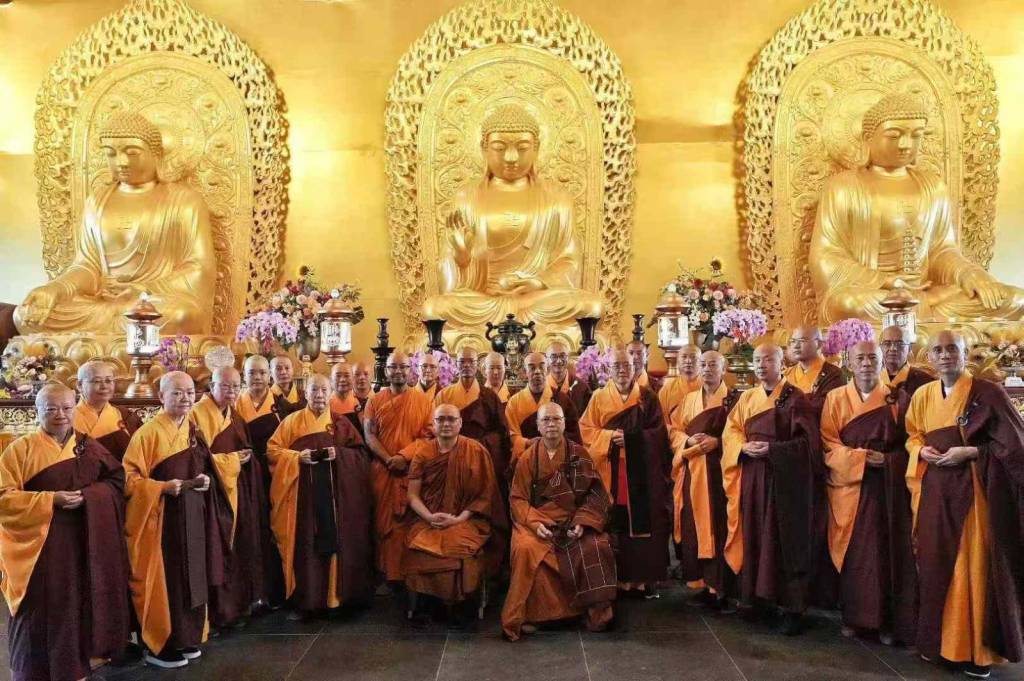

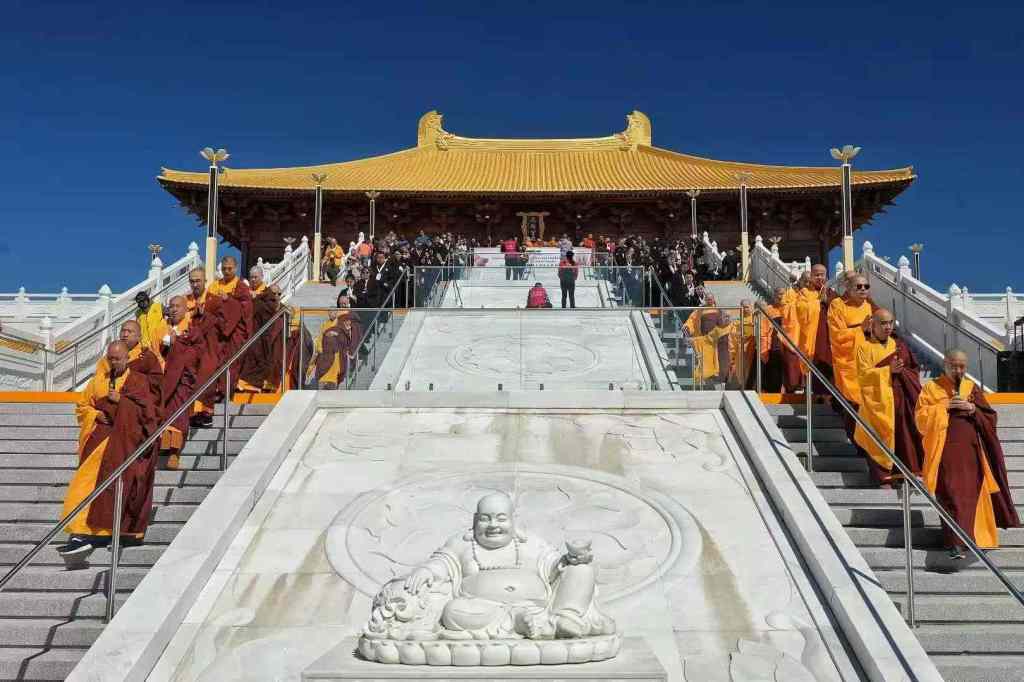
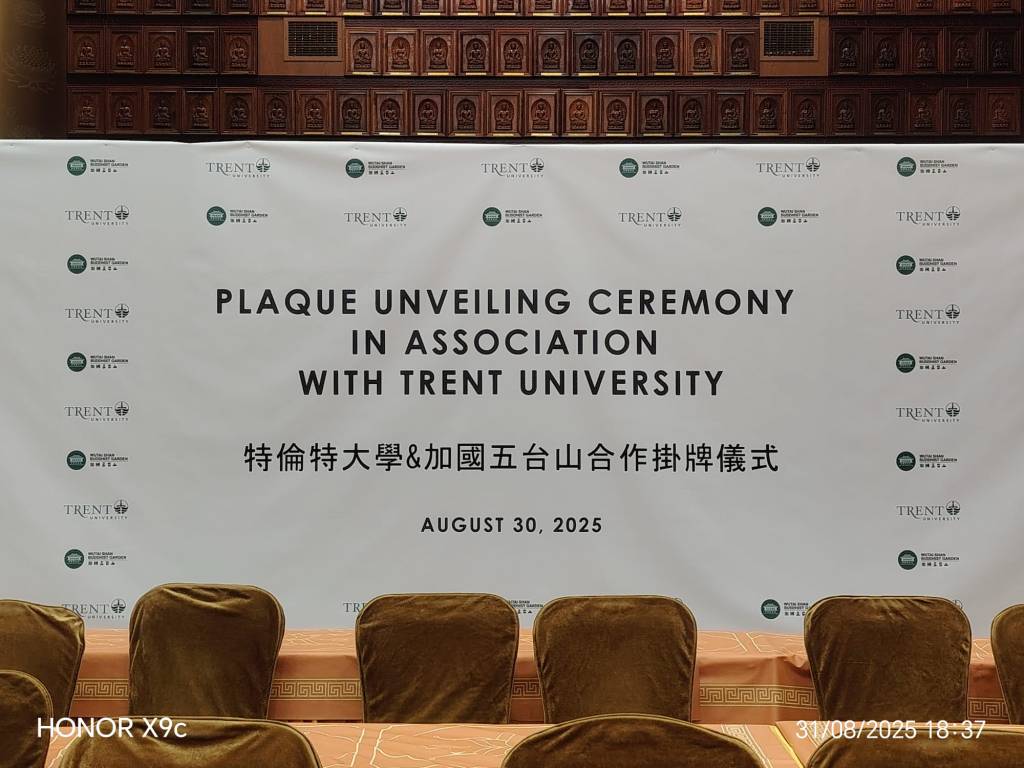

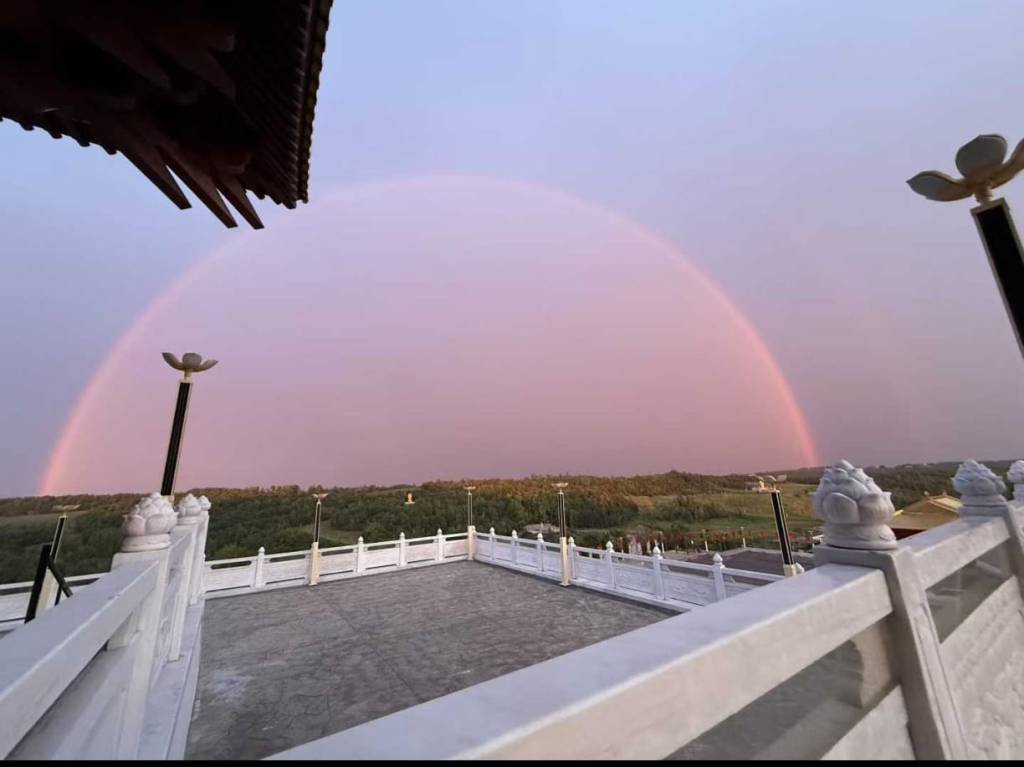


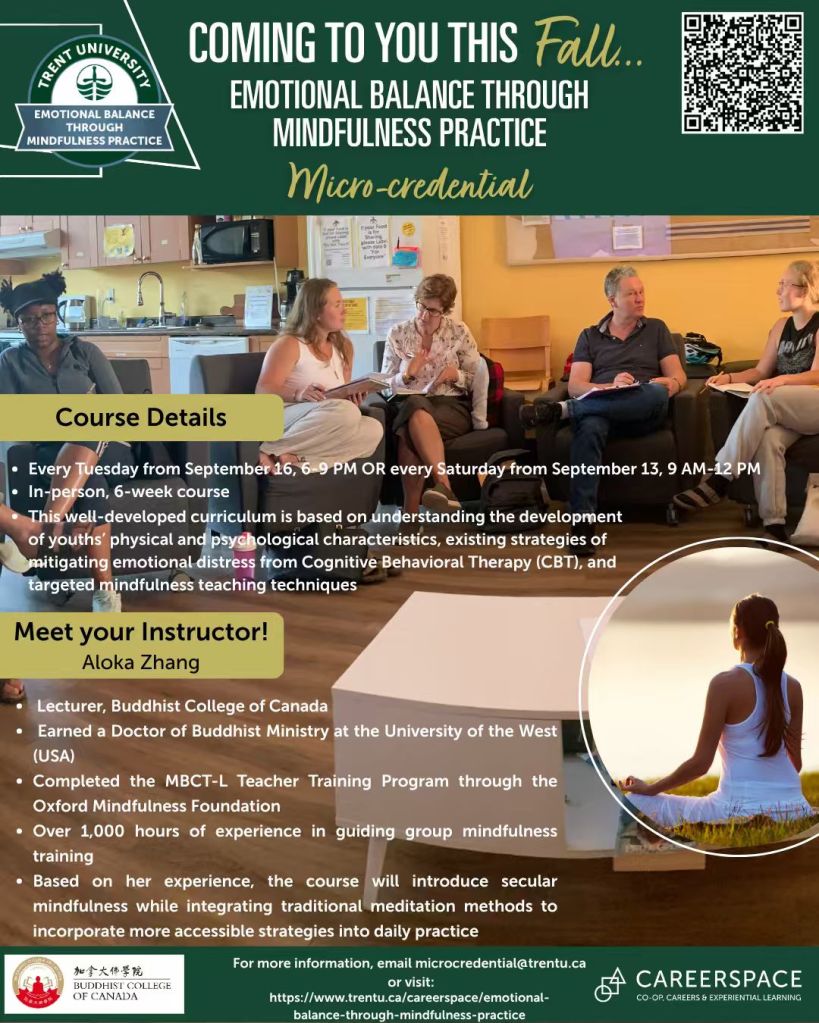



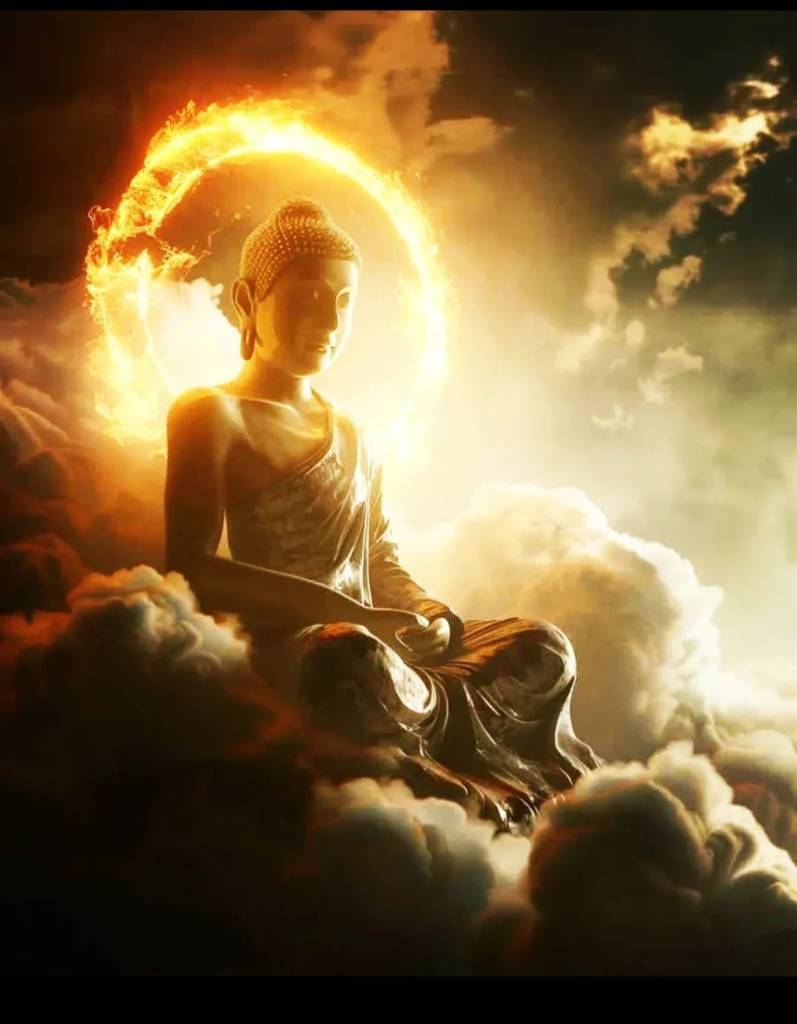
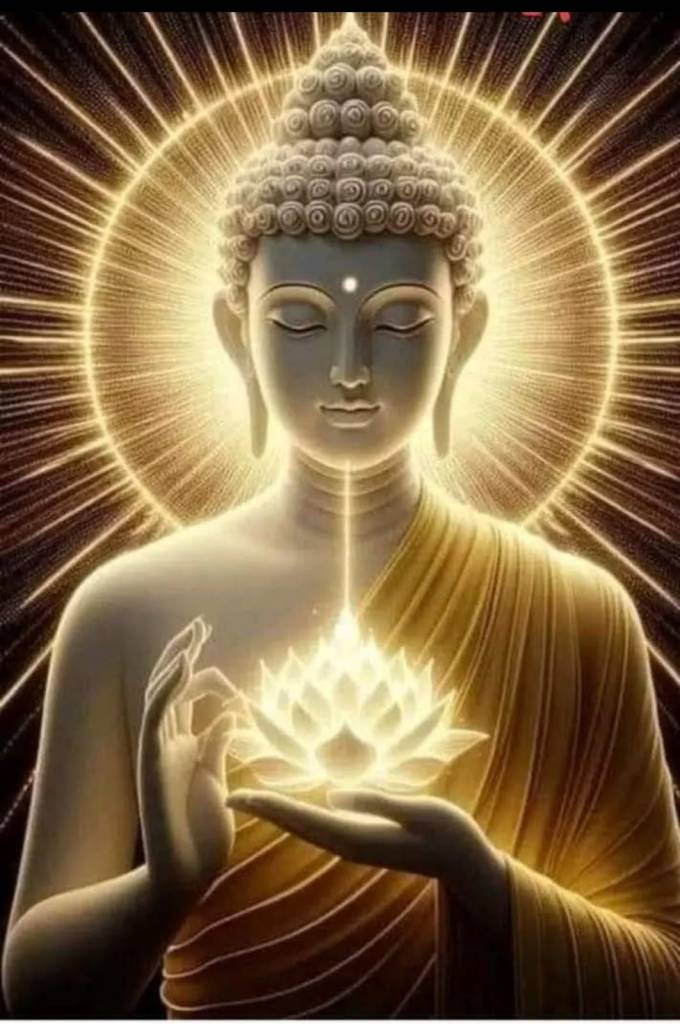

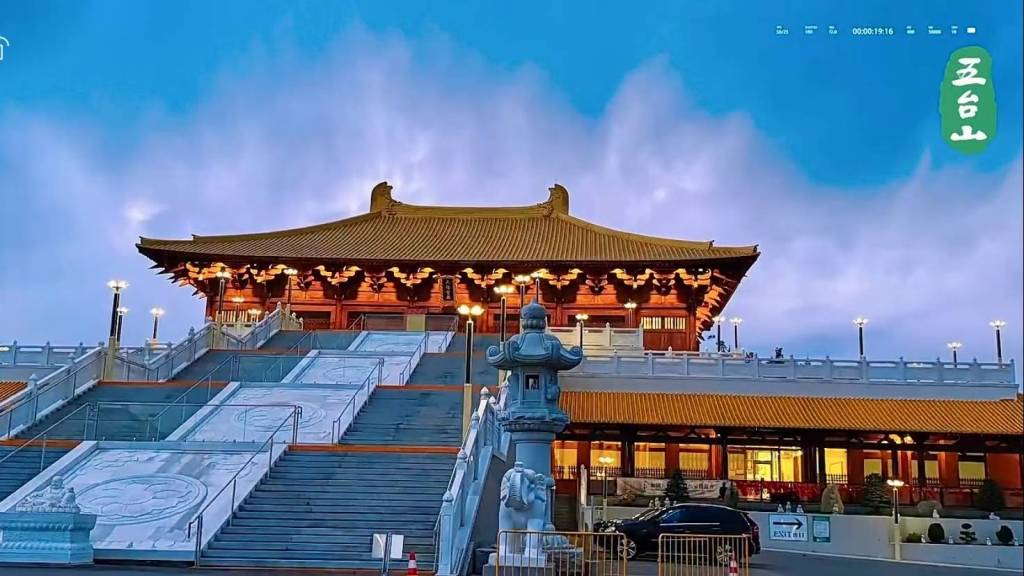
Welcome to the Wutai Shan Buddhist Garden — a sanctuary of peace, learning, and cultural exchange.
This site is inspired by Mount Wutai in China, one of the Four Sacred Mountains of Buddhism, but every structure here has been built anew in Canada with the same devotion and precision.
Today, I will guide you through some of our main landmarks, each representing the harmony of faith, art, and community.
1. Main Gate (山门)
- Traditional three-arch layout symbolizing the Three Trainings — Sīla (Ethical Conduct), Samādhi (Concentration), Paññā (Wisdom).
- Constructed in Tang-style architecture with bronze-tiled roof and carved wood doors.
- Beyond the gate lies a long central axis representing the spiritual journey inward — from the worldly to the sacred.
2. Grand Buddha Hall (大雄宝殿)
Summary:
- The heart of the complex — a Tang-dynasty–style wooden structure, 15 m high, built using traditional mortise-and-tenon joinery without nails.
- Houses the Three Great Buddhas:
- Bhaiṣajyaguru (Medicine Buddha) in the East — healing wisdom.
- Gautama Buddha in the Center — enlightenment in this world.
- Amitābha Buddha in the West — infinite compassion.
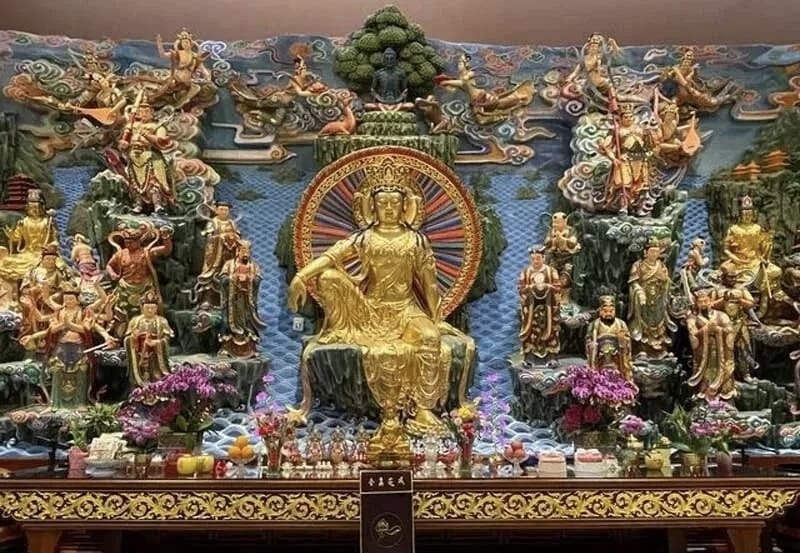
- Two flanking Bodhisattvas: Mañjuśrī (Wisdom) and Samantabhadra (Practice).
- The hall’s redwood carvings depict the Eighty-Eight Buddhas; the bronze roof tiles (61 tons total) gleam gold under sunlight — symbol of incorruptible truth.
Main Buddha Hall (大雄宝殿)
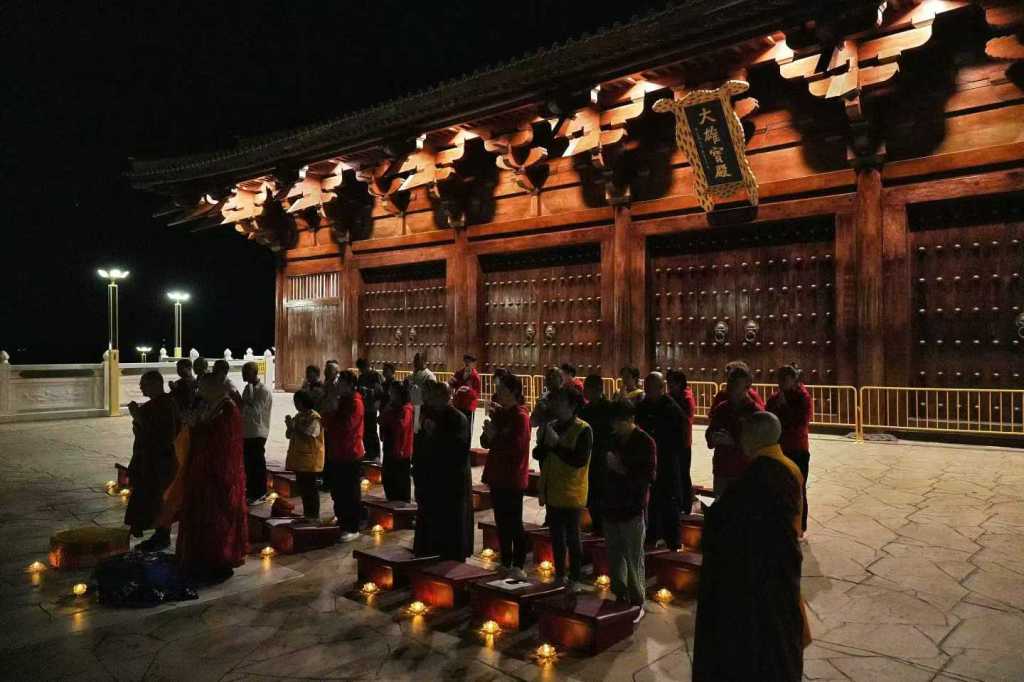
The Main Buddha Hall is the spiritual heart of the Wutai Shan Buddhist Garden. It stands as one of the largest and most authentic Tang-dynasty–style wooden temples ever built in North America.
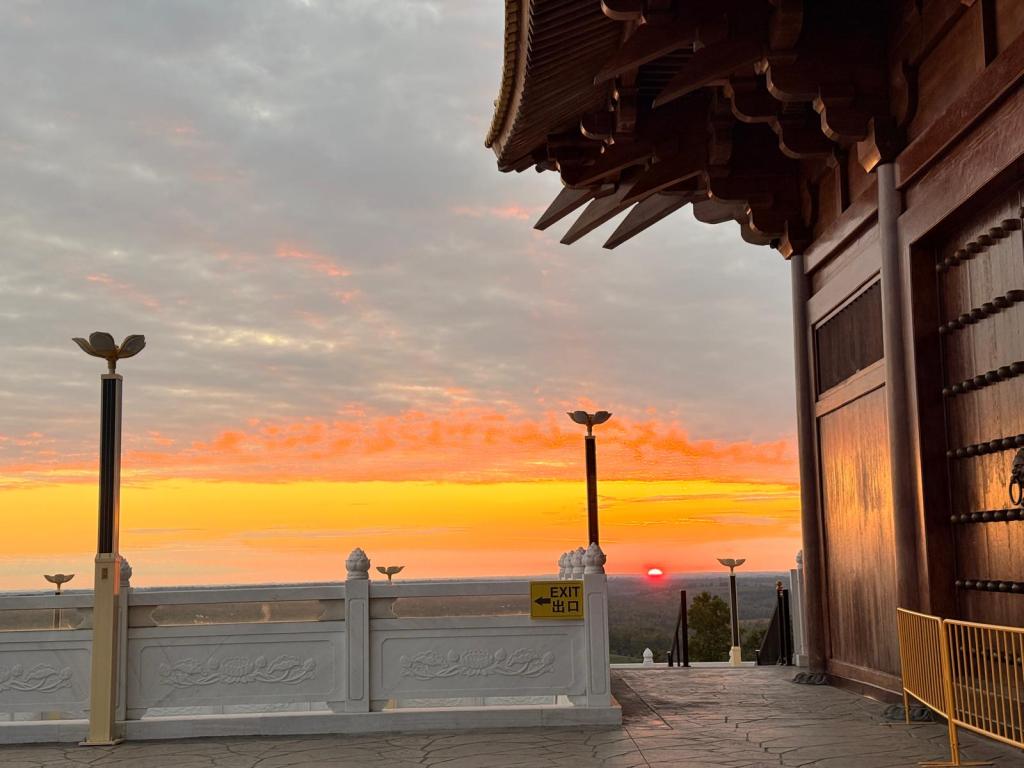
The hall measures about 44 metres in length, 30 metres in depth, and 15 metres in height, with a total area of approximately 1,400 square metres. The lower two levels are reinforced concrete, while the upper hall is a complete wooden structure built using traditional Tang-era techniques — mortise-and-tenon joints without nails.
All major components, including beams, columns, and brackets (dougong), are made from imported hardwoods such as rosewood, camphor, and yew. The roof is covered with more than 24,000 bronze tiles weighing around 61 tonnes, bringing the total roof structure to about 600 tonnes. This gives the building both durability and a soft golden luster that glows under sunlight.
Inside the hall are the Three Great Buddhas:
- Bhaiṣajyaguru (Medicine Buddha) in the East — symbol of healing and restoration.
- Gautama Buddha in the Center — symbol of enlightenment and the rediscovery of the path.
- Amitābha Buddha in the West — symbol of infinite light and compassion.
On each side stand two great Bodhisattvas: Mañjuśrī (Wisdom) on the left and Samantabhadra (Practice) on the right. Together they represent the union of wisdom and virtuous conduct.
The inner walls are decorated with carved redwood panels gilded in gold, depicting the Eighty-Eight Buddhas of the Past. These works were crafted by master artisans and assembled piece by piece by hand.
The architectural design follows Tang-dynasty proportion — broad rooflines, deep eaves, and graceful simplicity — expressing both strength and serenity. The open interior space, supported by interlocking bracket sets, allows the central Buddha platform to remain unobstructed, embodying the principle of spaciousness and harmony.
Today, this hall stands not only as a place of worship but also as a living testament to the preservation of ancient craftsmanship in a modern world — a bridge between continents, and between faith and artistry.
(note): The structure is the largest Tang-style wooden Buddha Hall in North America.
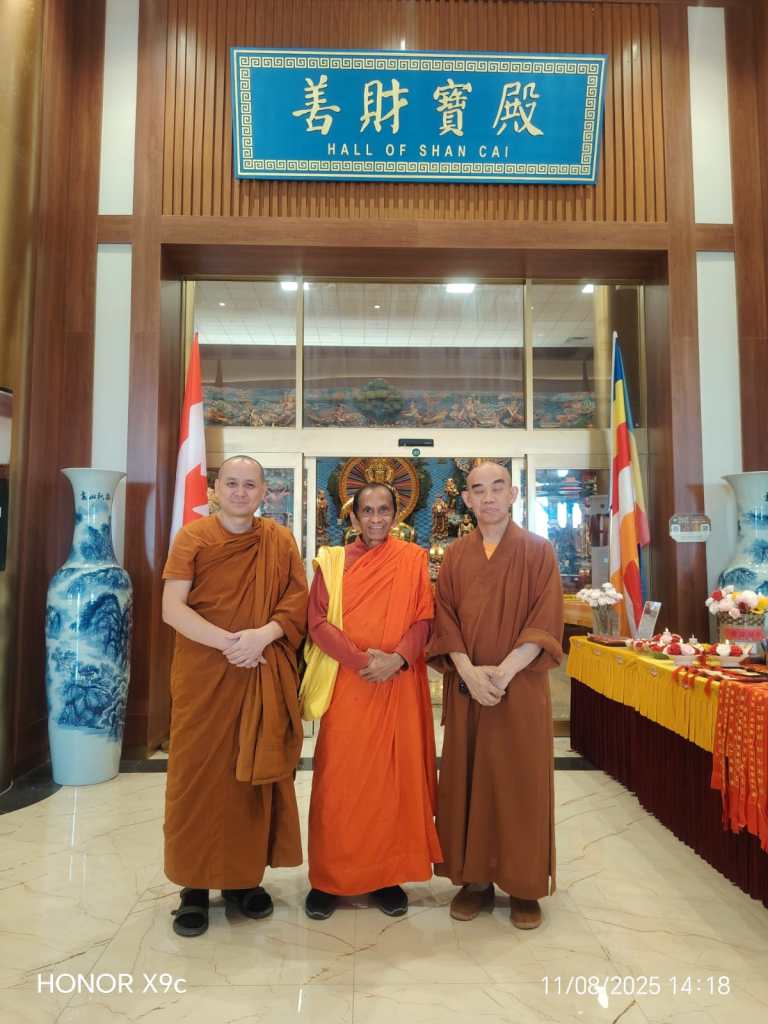
3. Shan Cai Hall (善财堂)
- Multipurpose cultural hall used for art exhibitions, concerts, and educational programs.
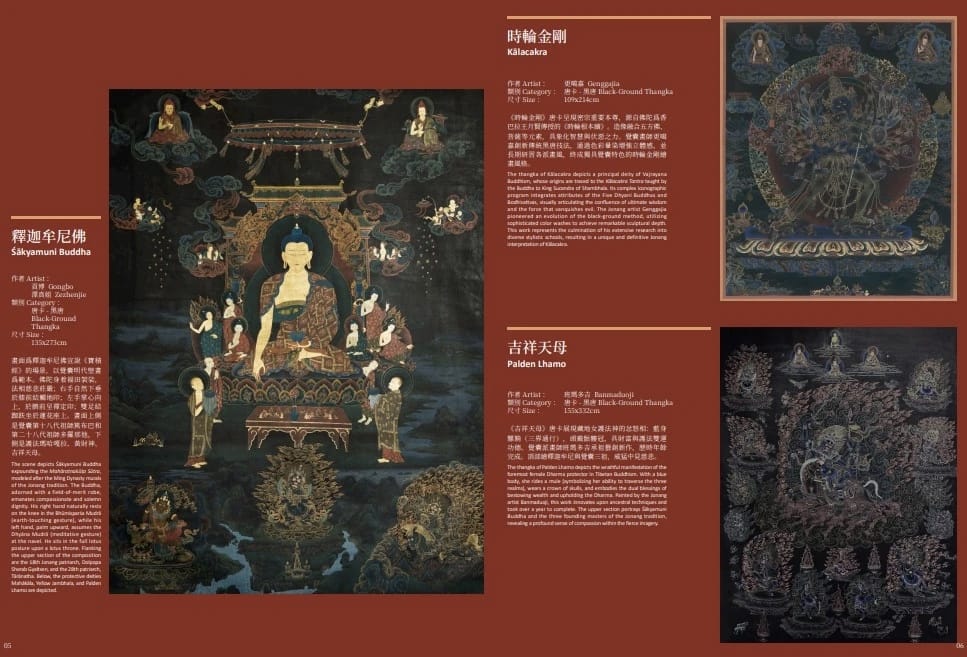
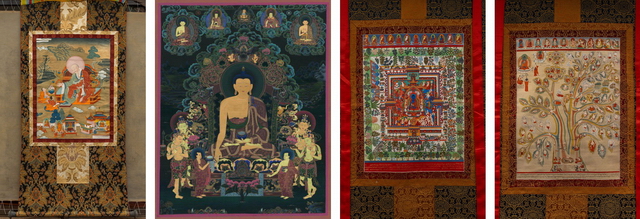
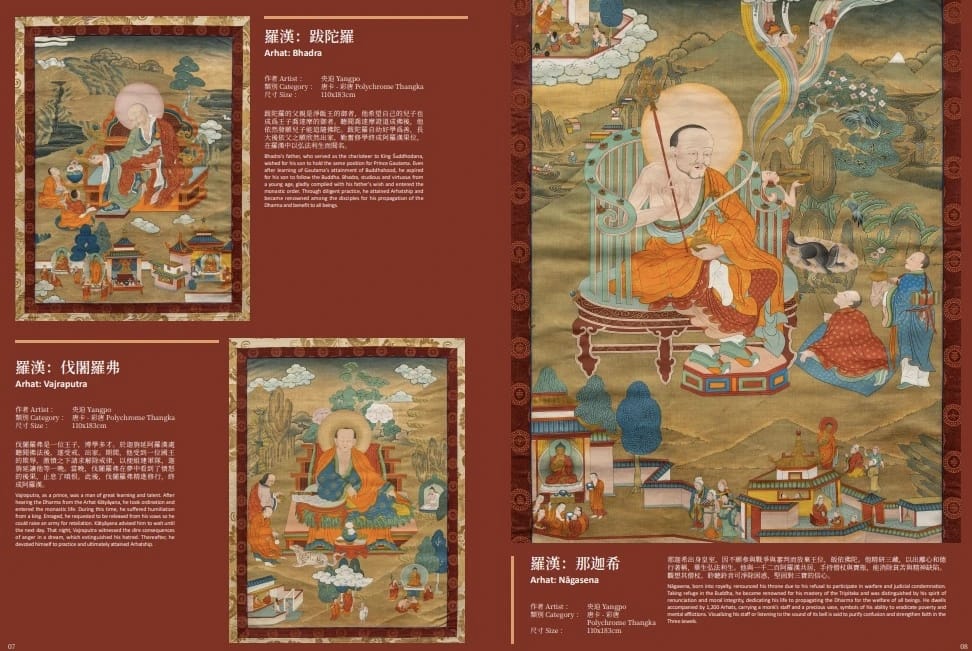
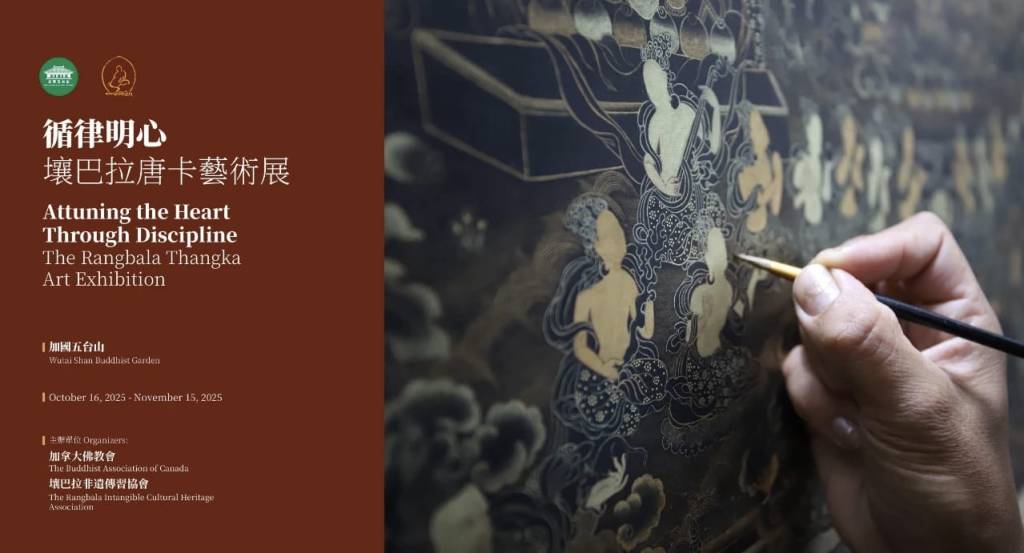
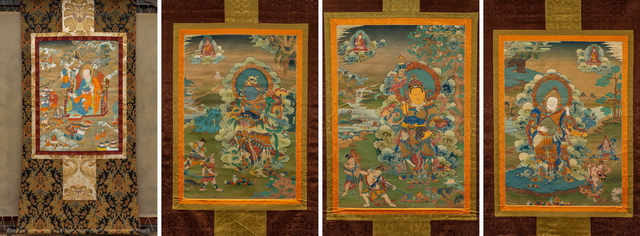
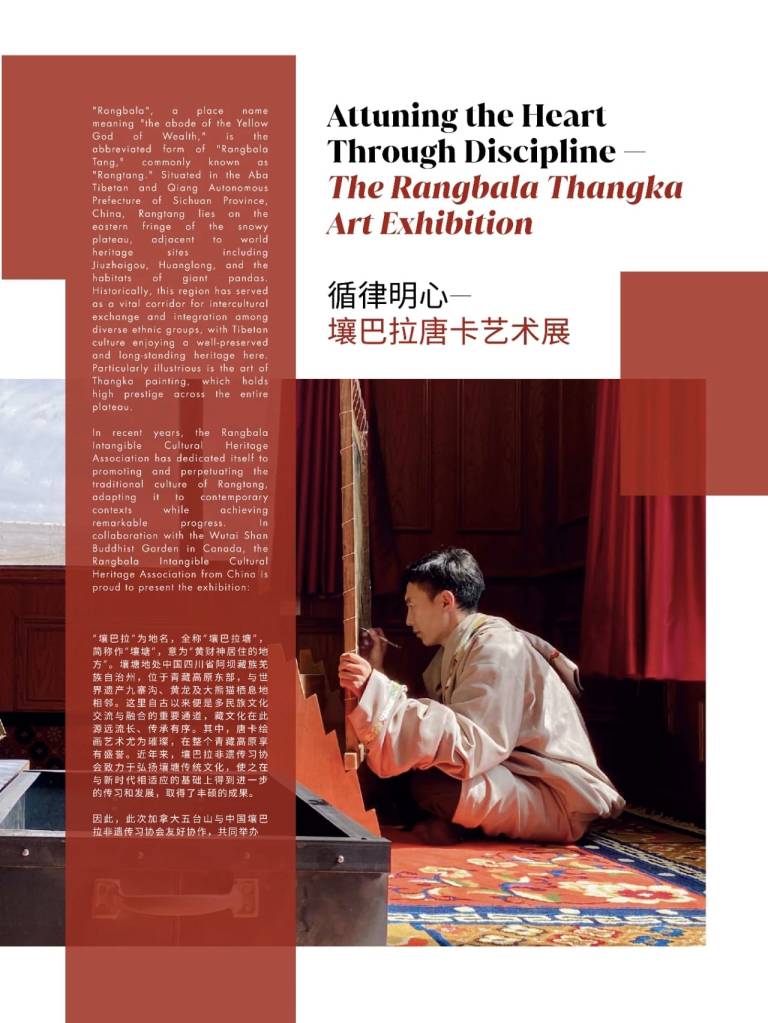
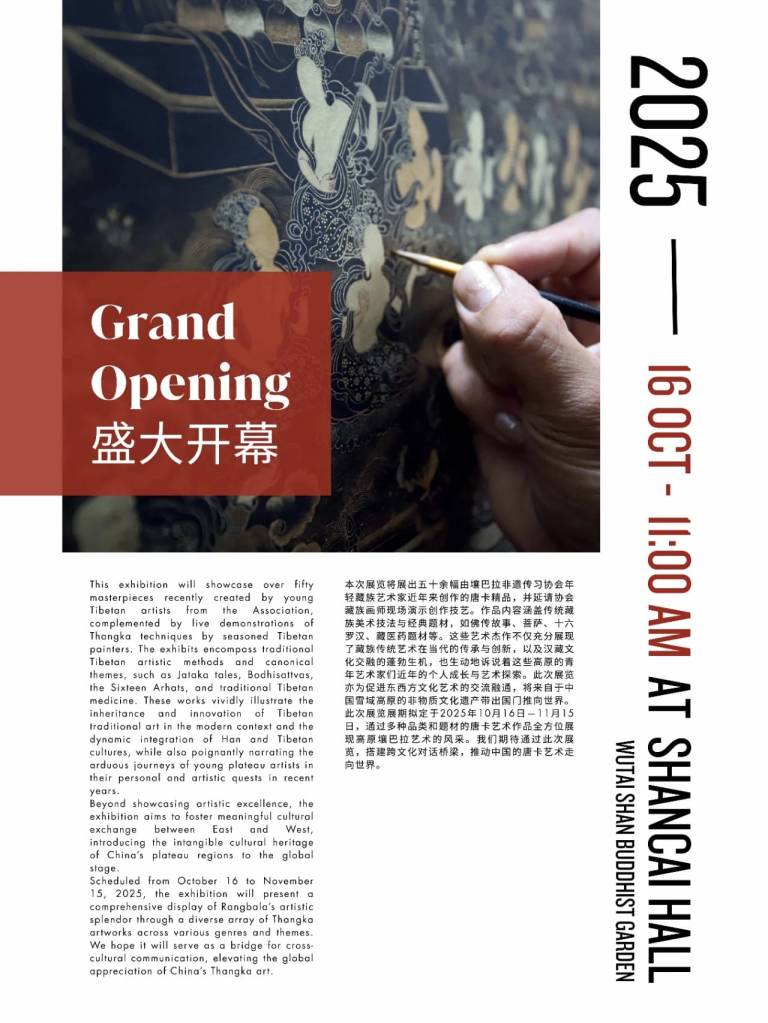
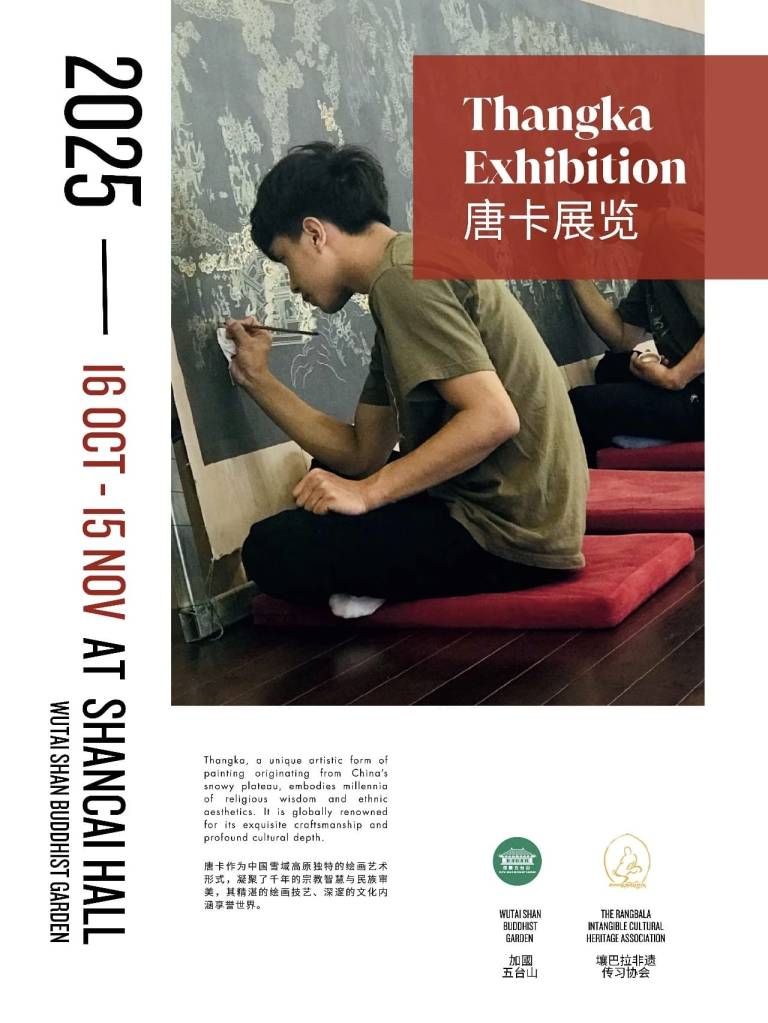
- Currently hosts the Rangbala Thangka Art Exhibition — featuring more than fifty authentic Tibetan thangkas from Sichuan, hand-painted with natural pigments and gold.
- Emphasize cultural exchange: “Art is a bridge between devotion and understanding.”
Shan Cai Hall is named after Shan Cai (善财童子) in Chinese — in Sanskrit as Sudhana, the youth who embodies the seeker’s path toward perfect wisdom.
In Buddhist tradition, Sudhana was a devoted disciple of Mañjuśrī Bodhisattva, the embodiment of wisdom. The story of his pilgrimage appears in the Avataṃsaka Sūtra (Flower Ornament Scripture), in the section known as the Gandavyūha chapter — one of the most beautiful allegories of spiritual awakening in world literature.
Following Mañjuśrī’s instruction, the young Sudhana set out on a vast pilgrimage to visit fifty-three teachers — men, women, monks, nuns, householders, kings, courtesans, and deities — each revealing to him a different aspect of the Bodhisattva Path.
Through humility, perseverance, and pure aspiration, he learned that wisdom is not found in isolation, but through compassion and service in every encounter.
At the end of his journey, Sudhana reunited with Mañjuśrī and realized that all those he had met were reflections of the one enlightened mind. His pilgrimage symbolizes the living path of spiritual maturity — the movement from curiosity to insight, from seeking to awakening.
Therefore, Shan Cai Hall in this Garden represents the union of learning and practice, the place where knowledge becomes experience and where wisdom is embodied through culture, art, and education.
It is here that exhibitions, concerts, and community programs are held — continuing Sudhana’s journey of learning through encounter and shared inspiration.
4. Avalokiteśvara Shrine (观音殿 / Guanyin Hall)
- Dedicated to Avalokiteśvara (Guanyin), the Bodhisattva of Compassion.
- The hall contains multiple standing and seated Guanyin statues in diverse iconography — representing universal compassion in all forms.
- The interior design follows a lotus motif — symbol of purity arising from the world’s impurity.
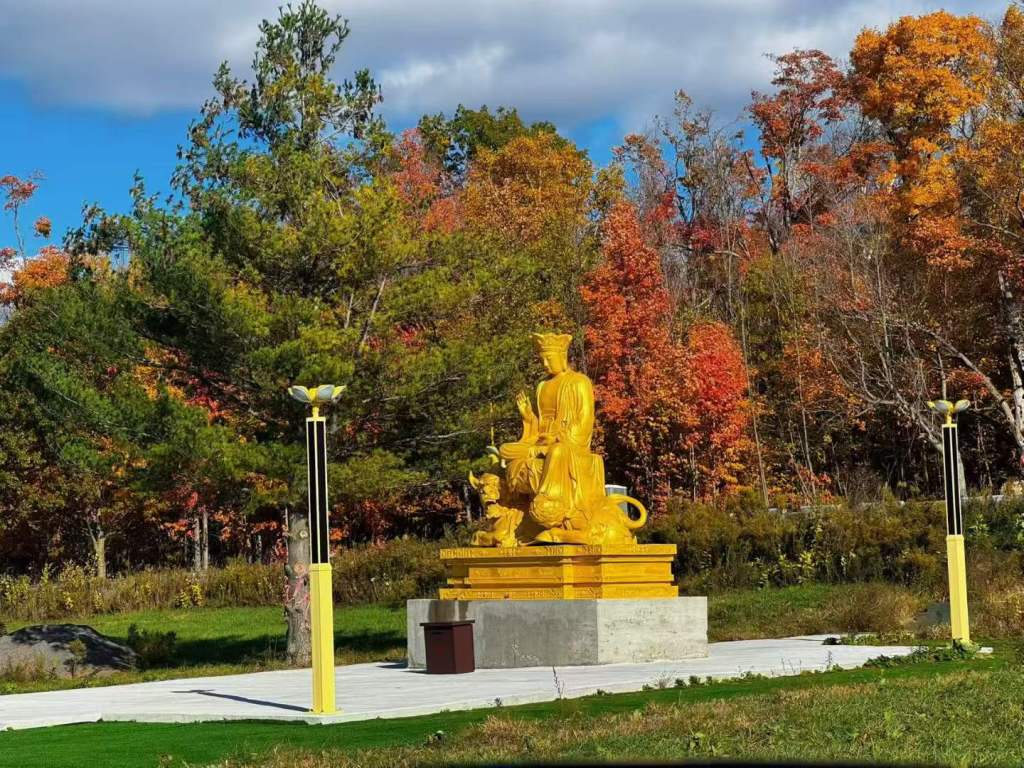
5. Kṣitigarbha Hall (地藏殿 / Dìzàng Diàn)
Dedicated to Kṣitigarbha Bodhisattva (地藏菩薩) — the Bodhisattva of Great Vows, Compassion, and Deliverance. His vow embodies the limitless compassion and unshakeable resolve to rescue all beings from suffering. Inside the hall, the main statue of Kṣitigarbha Bodhisattva is portrayed in monk’s robes, holding a wish-fulfilling jewel in one hand and a staff of liberation in the other. Flanking him are often the Ten Kings of the Underworld, representing the karmic process of judgment and purification.
6. Pilgrim’s Path and The Five Platforms (五台)
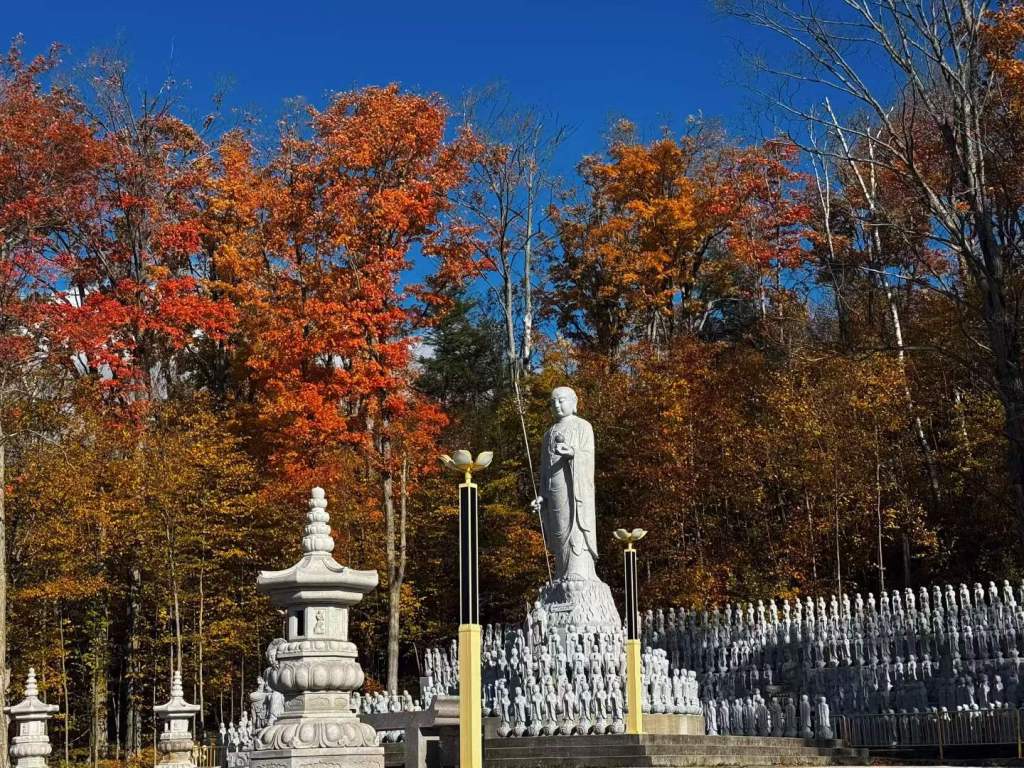
On this land, five terraces or platforms (五台) have been established: East, South, West, North, and Central. Each holds a bronze statue of Mañjuśrī, representing one of the Five Wisdoms of Enlightenment.
Together, they form a living mandala — a circle of wisdom harmonizing heaven, earth, and mind.
Imagine the Garden not just as landscape, but as a sacred field of awareness, where each direction expresses a different aspect of enlightenment.
1). Eastern Platform (東台) — “Platform of Clarity”
- Element: Air / Dawn
- Wisdom: Mirror-like Wisdom (大圓鏡智)
- Colour: Blue
- Statue: Blue Mañjuśrī — calm, reflective, holding the sword of insight.
The Eastern Platform faces the rising sun. From this direction comes light — symbolizing the awakening of awareness that reflects reality just as it is. This is the Mirror-like Wisdom, the mind that sees all phenomena clearly, without distortion. Here, Mañjuśrī’s sword represents clarity that cuts through confusion. Visitors often begin their walk here, as dawn marks the birth of wisdom.
2). Southern Platform (南台) — “Platform of Harmony”
- Element: Fire / Noon
- Wisdom: Wisdom of Equality (平等性智)
- Colour: Yellow
- Statue: Yellow Mañjuśrī — compassionate, radiating warmth.
“The Southern Platform represents warmth and vitality. Its wisdom is the Wisdom of Equality — the insight that sees all beings as equal in nature, beyond division of self and other. The fields and open sky of the south remind us that compassion is expansive like sunlight, embracing all without bias. Here, Mañjuśrī smiles — teaching that wisdom and kindness are never separate.”
3). Western Platform (西台) — “Platform of Discernment”
- Element: Water / Sunset
- Wisdom: Wisdom of Subtle Discernment (妙觀察智)
- Colour: Red
- Statue: Red Mañjuśrī — seated in meditation, holding a lotus and scripture.
The Western Platform faces the setting sun. It embodies the Wisdom of Discernment — the ability to distinguish truth from illusion, and to understand the unique nature of all things. The soft evening light teaches reflection and insight. Here, Mañjuśrī observes with compassion — reminding us that true discernment is gentle, never harsh.
4). Northern Platform (北台 / Běitái) — “Platform of Action”
- Element: Wind / Midnight
- Wisdom: Wisdom of Accomplishment (成所作智)
- Colour: White
- Statue: White Mañjuśrī — standing, holding a staff or vajra.
The Northern Platform stands highest and feels the coldest wind. It represents purity, discipline, and resolve — the Wisdom of Accomplishment. Just as the northern stars guide travelers, this wisdom guides all compassionate actions in the world. It is not enough to see truth; one must embody it through right conduct. This platform honours all who dedicate themselves to selfless service.
5). Central Platform (中台) — “Platform of Unity”
- Element: Space / Stillness
- Wisdom: Dharmadhātu Wisdom (法界體性智) — the all-encompassing wisdom of the awakened mind.
- Colour: Gold or Green
- Statue: Golden Mañjuśrī — serene, seated on a lion throne.
At the centre lies the heart of the mandala. The Central Platform unites the four directions — representing the totality of wisdom and the still point within all motion. Here, all distinctions dissolve; every direction becomes one. This is the realization of Mañjuśrī himself — wisdom that is boundless, luminous, and free.
The path around the Five Platforms is more than a walk — it is a mandalic pilgrimage. Beginning in the East with clarity, passing through harmony, discernment, and action, one returns to the Centre — to unity, stillness, and liberation.
These Five Platforms are living reflections. Here, wisdom is not distant. It is alive in every direction, in every breath, and in the quietness of this Canadian sky. May all who walk these terraces awaken the same luminous mind that Mañjuśrī represents — the mind of pure wisdom and compassion.
7. Monastic Residence & Dining Hall
- Living quarters for resident bhikkhus and visiting practitioners.
- Visitors may observe mindful eating in silence in the dining hall, symbolizing gratitude and restraint.
8. Wisdom Lake (靈泉湖)
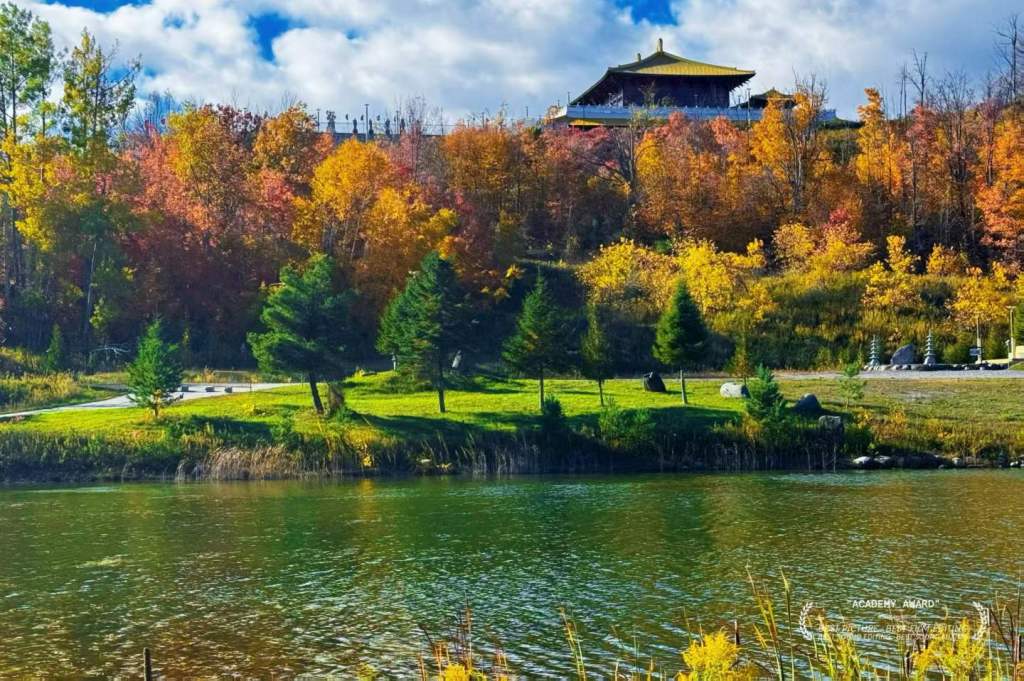
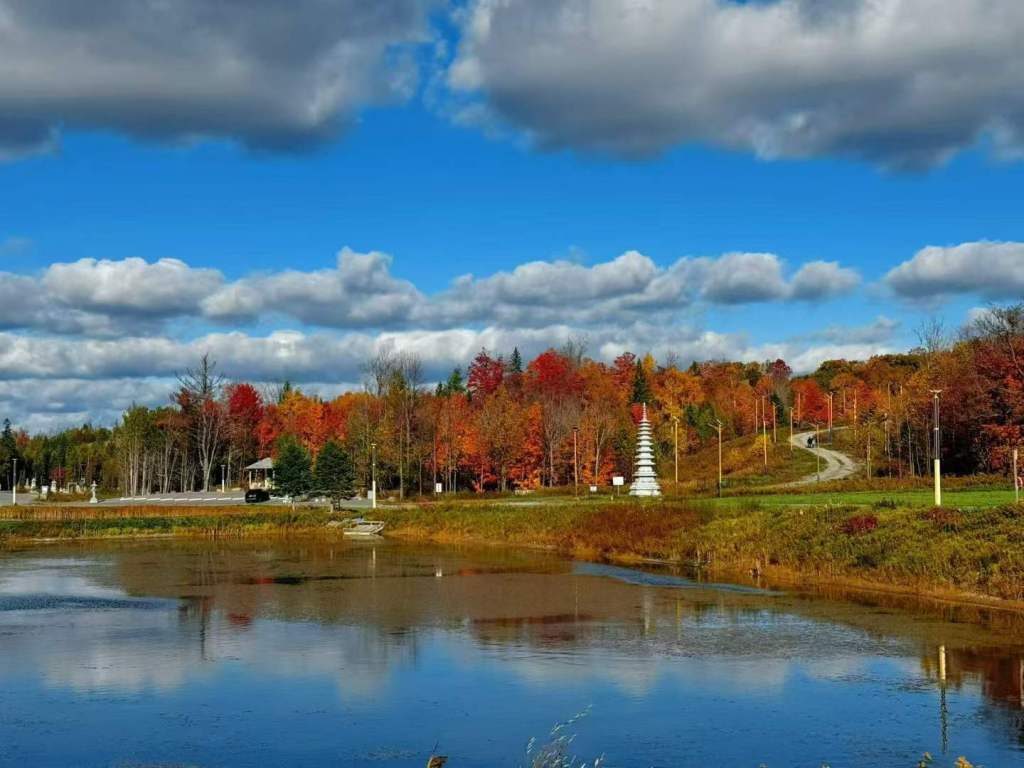
Wisdom Lake, a spring-fed pond that forms the natural heart of the landscape. The pond is fed by a natural underground spring discovered during the construction of the Garden, transforming what was once swampy ground into this clear, reflective water. The lake’s name, Língquán — meaning ‘Sacred Spring’ — reflects its pure and living source of water. It symbolizes the still mind and clear wisdom that arise when the defilements of greed, hatred, and delusion have settled.
In Buddhist symbolism, water represents both clarity and compassion — fluid, reflective, and life-giving. Visitors may pause by the lakeside, breathe quietly, and observe the mirrored reflection of the sky and trees — a gentle reminder that true wisdom is found in stillness.
Around Wisdom Lake, the Garden’s walking paths and pavilions create a serene space for reflection, photography, and mindful connection with nature. It is one of the most beloved features of the Wutai Shan Buddhist Garden. As you walk around the lake, you’ll pass several stupas and sculptural elements that echo the sacred architecture of the whole complex. This is one of the most tranquil features here — a place where one may pause, reflect, photograph, or simply sit with stillness and let the mind rest.
9. Entrance Landmark: Maitreya Buddha (彌勒佛)
At the main entrance stands the great Maitreya Buddha, known affectionately as the ‘Happy Buddha.’ Maitreya, whose name means ‘The Loving One’, is revered in Buddhist tradition as the future Buddha — the successor to Gautama Buddha who will appear in a future age when the teachings of the Dhamma have been forgotten.
His joyful and welcoming appearance, with open arms and radiant smile, represents boundless optimism and benevolence. Standing here at the gate, Maitreya greets every visitor with the spirit of inclusiveness and goodwill.
In many cultures, Maitreya is seen as the embodiment of hope, prosperity, and renewal — reminding us that no matter how dark the world may seem, compassion and joy will rise again.
This statue marks the threshold of the sacred grounds, inviting all beings to enter with an open heart and a smiling mind.
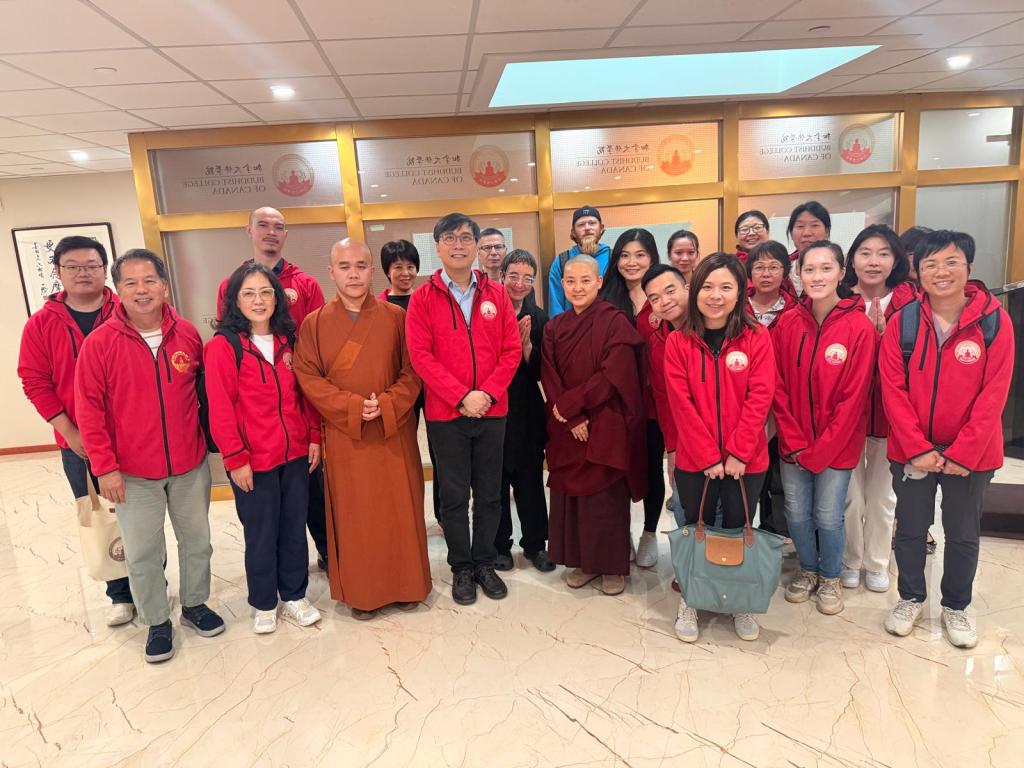
10. Buddhist College of Canada
The Buddhist College of Canada (BCC) is under development as a new educational and training institute dedicated to cultivating teachers of Dhamma, mindfulness, and compassionate service.
BCC’s curriculum bridges traditional Buddhist wisdom with modern professional education. Alongside our own designed courses and training programs in meditation, ethics, and counseling, the college also develops cooperative academic pathways — including a Compassionate Canopy Program with Emmanuel College (University of Toronto) and micro-credential and co-op courses with Trent University.
These partnerships allow students to integrate Buddhist studies, mindfulness, and applied ethics within mainstream higher education while engaging in real-world practice through internships and community placements.
Beyond academic training, the College envisions public and community programs that unite spiritual care with public service — working with hospitals, schools, and organizations such as the Peterborough Police Service to bring mindfulness, compassion, and ethical awareness into community life.
Our long-term goal is to build a generation of qualified Buddhist counselors, chaplains, and mindfulness educators who can serve society with both wisdom and heart.
Closing Reflection
The Wutai Shan Buddhist Garden is more than architecture — it is a living field of merit, cultivated by compassion, discipline, and wisdom. We welcome all beings here not to become Buddhist, but to rediscover peace within themselves. Thank you for your visit, and may your heart carry the calm of this garden wherever you go.
 Gautama Dhamma
Leave a comment