
Why the Buddha’s Way Requires a Death and Rebirth
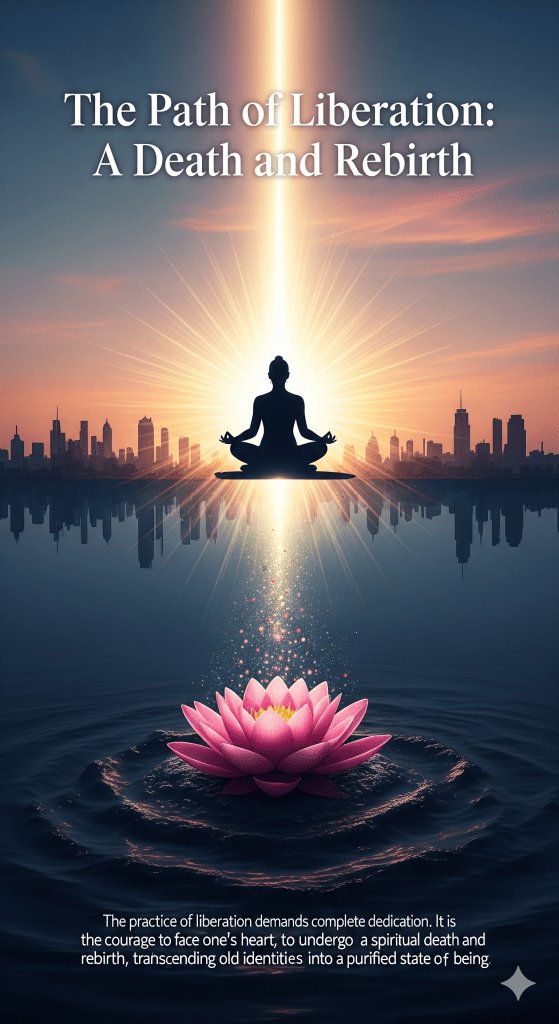
A Question from Retreat
During a recent meditation retreat, someone asked me:
“I have a full-time job, but I meditate for a couple of hours every day. Isn’t that good enough? Surely liberation will come if I keep at it.”
This question is sincere. Many people today practice meditation in exactly this way—part of a balanced lifestyle. A little meditation to reduce stress, improve focus, and feel calmer. And it works: meditation does bring peace, patience, and stability.
But we must ask: is this the Liberation Path the Buddha walked and taught?
The Buddha’s Example
If anyone could have lived happily with “a few hours of meditation a day” while enjoying worldly life, it was Prince Siddhattha. He had wealth, power, and privilege. He could have ruled his kingdom while meditating daily, balancing inner calm with outer success.
But he didn’t.
He saw aging, sickness, and death. He realized that no amount of balance in the palace could overcome those universal truths. And so he left it all.
This was not part-time. It was total.
The Buddha renounced his kingdom, his family life, his luxury. He devoted himself wholly to the quest for the end of suffering. Only after years of struggle and awakening did he return—not as a king, but as the Awakened One.
Why Part-Time Practice Isn’t Enough
A few hours of meditation each day brings calm, but it does not uproot the causes of rebirth. Why?
Because the rest of the day, we are still living under the sway of craving, fear, and delusion. We are still tied to identity, career, family, and worldly expectations. The ego is alive and well.
This is like trying to serve two masters—one worldly, one spiritual. Eventually, one will win.
The Buddha warned:
“Heedfulness is the path to the deathless; heedlessness is the path to death.” (Dhp 21)
Heedfulness (appamāda) is not two hours a day. It is a way of being, a continuous dedication.
The Death and Rebirth of the Path
The Path of Liberation is not self-improvement. It is self-transcendence.
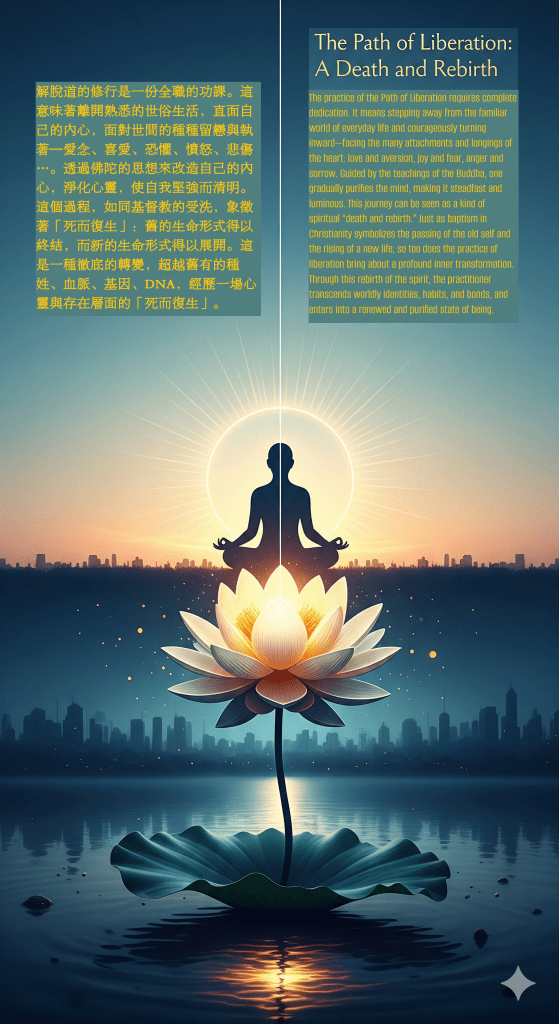
It requires the death of the false self—the ego bound by craving and fear. And it requires the rebirth of a new being—one who belongs to the lineage of the Noble Ones, aligned with truth, purity, and freedom.
This is why many traditions use death-and-rebirth imagery:
- In Christianity, baptism symbolizes dying to the old self and rising to new life.
- In Buddhism, ordination is often called a new birth into the Noble family.
But the Buddha’s teaching goes further. It is not only a new identity, but the end of dependence on identity itself.
Like the lotus that rises out of the mud, the practitioner rises above worldly bondage—not by dipping in for a while, but by leaving the mud entirely.
Beyond Blood and DNA
In the Buddha’s time, people were bound by caste and birth. Nobility was seen as fixed by bloodline.
The Buddha shattered this view. He declared that true nobility is by conduct and wisdom, not by birth.
In our modern language, we could say: the transformation of the Path goes deeper than blood, deeper than DNA. It is a spiritual genetic shift, a total reorientation of being.
One enters a new family: the Noble Sangha of those who walk toward freedom.
Living After the Rebirth
What does life look like after this transformation?
- Old fears lose their hold.
- Praise and blame no longer sway the heart.
- Compassion and wisdom flow naturally.
- The world is still here, but one no longer belongs to it.
As the Buddha said:
“His path is hard to trace, like that of birds in the sky.” (Dhp 93)
The reborn one lives in the world, but free from it—already tasting the deathless.
Conclusion: The Lotus Does Not Bloom Part-Time
To the retreat question—“Is a couple of hours a day enough?”—my answer is:
It is good. It brings benefit. But it is not the full Liberation Path.
The Buddha did not teach part-time meditation. He lived and showed total dedication, seeking not comfort but the end of aging and death.
The lotus does not bloom by dipping into the water a little each day. It blooms by rising fully above the mud, reaching into the light.
So too, liberation is not part-time. It is a death to the old self, and a rebirth into freedom.
Part-Time or Full-Time?
At a recent retreat, someone asked:
“Isn’t a couple of hours of meditation each day, while keeping my job, good enough for liberation?”It’s a sincere question. And yes, such practice brings calm and balance. But the Buddha’s Path was not about part-time calm. It was about full-time transformation.
Liberation is not a lifestyle hobby. It is a death and rebirth.
👉 Read the full essay here:
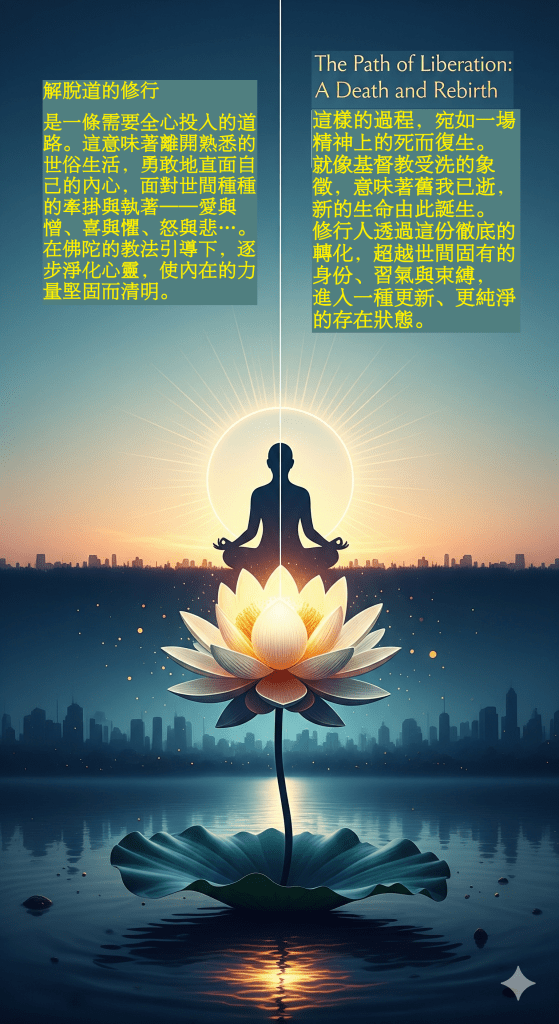
1. Introduction: A Question from Retreat
At a recent meditation retreat, during one of our Dhamma discussions, a practitioner raised a sincere question. They said, “I have a full-time job, but I try to meditate a couple of hours each day. Isn’t that good enough? Surely if I keep practicing like this, liberation will come in due time.”
This question is not unique to them. Many modern practitioners approach Buddhism in this way. Meditation is treated as a kind of spiritual exercise, something to balance the stress of worldly life. A couple of hours in the morning or evening—just as one might go jogging, attend yoga, or read for personal growth. Meditation becomes part of a lifestyle package.
And indeed, this approach does bring benefits. Those who meditate part-time may feel calmer, more mindful, more resilient at work and in family life. They may cultivate patience, kindness, and emotional balance. These are good fruits, and not to be dismissed.
But here is the deeper issue: is that really the Path of Liberation that the Buddha taught? Did the Buddha simply mean for us to find a way to be more balanced in worldly life? Or did he point to something far more radical—something that demands not part-time commitment, but full-time dedication, even to the point of leaving the world behind?
This is what I wish to clarify, because my understanding of the Liberation Path—based on the Buddha’s own example and the Pāli Canon—is that it demands nothing less than a death and rebirth. Not physical death, but the death of the worldly self, of clinging, of dependence on the world. And not rebirth into another round of saṃsāra, but into a new existence: one aligned with the Noble Path, purified, and freed.
The Buddha’s Example
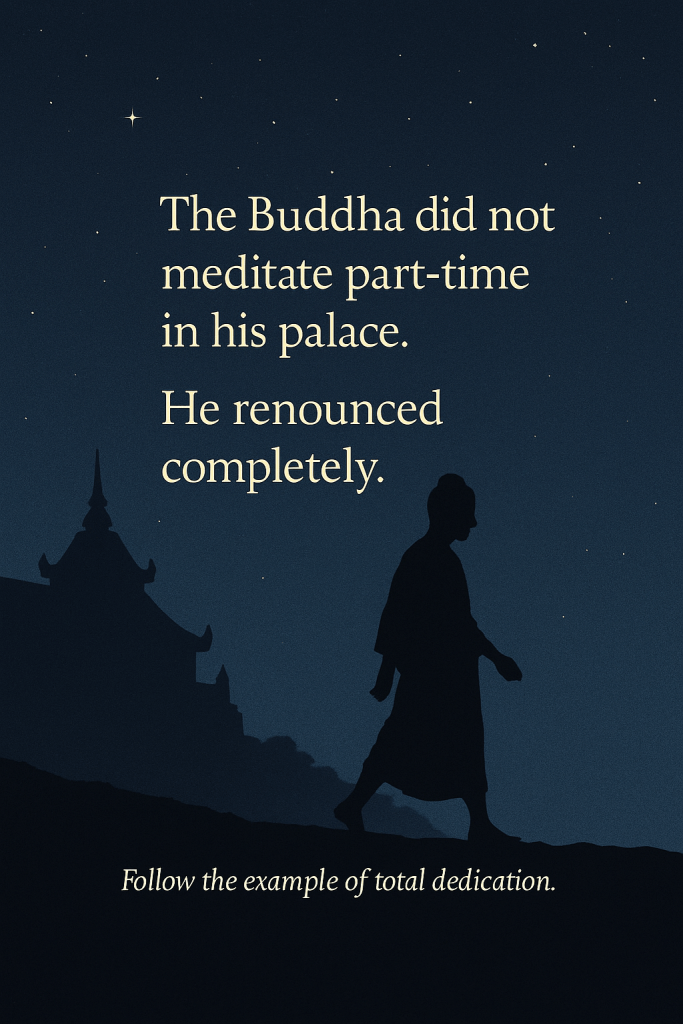
Prince Siddhattha could have lived happily in his palace, meditating part-time while ruling his kingdom. But he didn’t.
Why? Because he saw aging, sickness, and death—and realized no amount of balance in luxury could end suffering.
He renounced completely, lived the Path as a full-time calling, and became the Awakened One.
2. The Buddha’s Example
If ever there was a person who could have lived happily with “a couple of hours of meditation each day” while maintaining worldly duties, it was Prince Siddhattha. He had luxury, power, respect, and the resources to pursue any kind of balance. He could have remained in his palace, practicing yoga and meditation daily, and enjoyed peace of mind while ruling a kingdom.
But he did not. Why?
Because he saw that worldly life itself is bound by aging, sickness, and death. No amount of part-time meditation could erase that universal truth. As the Ariyapariyesanā Sutta (MN 26) recounts, when he saw an old man, a sick person, and a corpse, he realized:
“Na kho ahaṃ etad abhinandāmi”
“I do not delight in this.”
He could not find satisfaction in temporary well-being while the deeper problem remained unresolved.
Thus, at age 29, he left his home, family, and kingdom. He walked away from every worldly attachment, not because he lacked them, but because he saw their limitations. He sought an end to aging and death itself.
This was not part-time. This was total commitment.
His life sets the standard. The Buddha did not advocate dabbling in meditation while clinging to worldly identity. He renounced completely, devoted every breath to the quest, and only after years of struggle and awakening did he return—not as a king or householder, but as the Tathāgata, the Fully Awakened One.
3. Why Half-Hearted Practice Fails
This is not to say that lay practitioners cannot benefit from meditation. They certainly can, and they should. But to believe that occasional practice plus worldly life is the same as the Path to Nibbāna is a misunderstanding.
The Buddha himself warned of lukewarm practice. In the Dhammapada (v. 75), he says:
“There are those who do not strive, who cling to the world;
There are those who strive, who renounce the world.
Know this difference, and walk the Path of the Noble Ones.”
The danger of half-hearted practice is that it may give us a false sense of progress. We feel calmer, more mindful, perhaps even proud of our discipline. But the deeper fetters remain intact: craving for existence, fear of death, attachment to identity.
Meditating while clinging to worldly identity is like trying to serve two masters. One cannot give full loyalty both to the world and to the path of renunciation. Eventually, either worldly duties will dominate, or the call of liberation will demand full surrender.
A few hours of practice cannot uproot the seeds of rebirth, because those seeds are watered by every moment of craving, aversion, and delusion in worldly life. To truly transform, the whole structure of our existence must shift.
4. The Path as Full-Time Transformation
The Buddha defined the Noble Eightfold Path not as a set of techniques, but as a way of life.
- Sīla (ethical conduct): reshaping our entire lifestyle around harmlessness and purity.
- Samādhi (concentration): training the mind to be steady and luminous, not occasionally, but continuously.
- Paññā (wisdom): seeing through the illusion of self and world, moment by moment.
This is not a hobby. It is a full-time transformation.
As the Dhammapada says:
“Appamādo amatapadaṃ, pamādo maccuno padaṃ.”
“Heedfulness is the path to the deathless;
Heedlessness is the path to death.” (Dhp 21)
Heedfulness (appamāda) cannot be scheduled into two daily hours. It is a quality of continuous mindfulness, vigilance, and dedication. To be careless most of the day and careful only for a short period is not enough to walk toward the deathless.
The ordination of bhikkhus and bhikkhunīs represents this full-time commitment. To go forth is to declare: I will give my whole life to the Path. Even for laypeople, deep retreat is an echo of this spirit—stepping away from worldly roles to immerse fully in Dhamma.
The Death of the Old Self
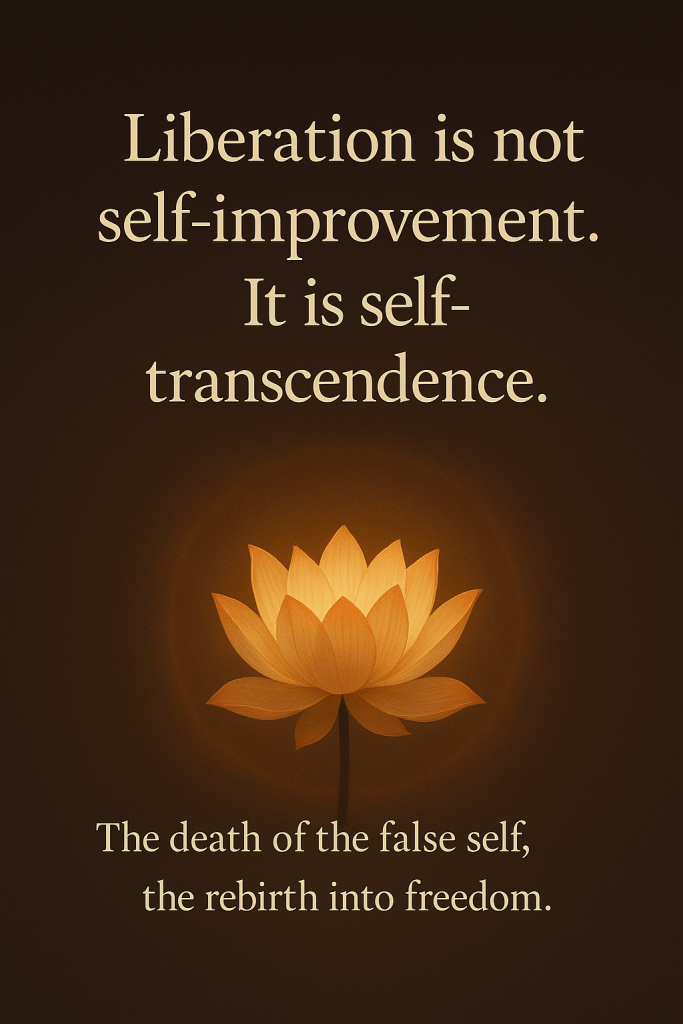
Liberation is not self-improvement. It is self-transcendence.
The Path requires the death of the false self—the ego bound to craving and fear. And it brings the rebirth of a new being—free, compassionate, and unshakable.
The lotus does not dip in mud part-time. It rises fully above the water into the light.
5. Death and Rebirth: The Symbol of Transformation
Why call this process a “death and rebirth”? Because liberation requires the death of the false self—the ego constructed out of craving and clinging to the world.
This is why so many spiritual traditions use the imagery of death and rebirth. In Christianity, baptism symbolizes dying to sin and rising into a new life. In Hinduism, initiation rites (upanayana) mark a second birth into the spiritual path. In Buddhism, ordination itself is sometimes described as a new birth into the Noble lineage.
But the Buddha’s teaching goes deeper. He shows that what must die is not only bad habits or old identities, but the very illusion of a permanent, satisfying self bound to this world.
This is the “death” of ego. And the “rebirth” is not another round of samsāra, but entry into the Noble realm—the ariyavaṃsa, the noble lineage of those walking toward Nibbāna.
As the lotus rises out of the mud to bloom in the sunlight, so does the practitioner rise above the world of craving. The mud is not denied, but transcended.
Deeper Than DNA
In the Buddha’s time, people believed nobility came by birth and bloodline.
The Buddha shattered this. He taught that true nobility is by conduct and wisdom.
The transformation of the Path goes deeper than blood, deeper than DNA—it is a spiritual rebirth into the lineage of the Noble Ones.
6. Beyond Blood, Lineage, and DNA
In the Buddha’s time, identity was defined by caste and birth. A brahmin was said to be pure by lineage, a low-caste untouchable was condemned by birth.
The Buddha shattered this view. He declared that nobility is not by bloodline, but by conduct and wisdom.
In modern terms, we can extend the metaphor. Our transformation goes deeper than blood, deeper than DNA. It is not just changing external identity, but a complete reorientation of our inner being. The shift is so radical it feels as if one has been born anew at the deepest level of existence.
As the Vasettha Sutta (MN 98) says:
“Not by birth is one a brahmin, not by birth is one a non-brahmin;
By deeds one is a brahmin, by deeds one is a non-brahmin.”
In the Liberation Path, one enters a new “family”: the lineage of the Buddha and the Noble Ones. This is not about race, nation, or genes. It is about transcending all worldly classifications.

The Lotus Does Not Bloom Part-Time
Meditation for stress relief is good. A calmer mind helps daily life.
But the Liberation Path goes further. It calls us to rise above the world, to let the old self die, and to be reborn into freedom.
The lotus does not bloom part-time. Neither does liberation.
7. Living After the Rebirth
What happens after this spiritual death and rebirth?
The practitioner lives as if in a new world. Old fears lose their power. Death is no longer terrifying, because attachment to self has been loosened. Praise and blame do not sway the heart, because one no longer depends on worldly approval.
This is what it means to live “in the world but not of it.” The arahants described in the suttas embody this state. They lived in villages and forests, interacted with laypeople, but their minds were unbound.
As the Buddha said:
“He whose mind is well-trained, who is unattached to house and forest alike,
His path is hard to trace, like that of birds in the sky.” (Dhp 93)
Such a person is free while living. They have undergone the death of the false self and the rebirth into the deathless.
8. Conclusion: A Call to Seriousness
Returning to the retreat question: “Is a couple of hours of meditation each day, while keeping a full-time job, good enough?”
The compassionate answer is: it is good—it brings peace, clarity, and virtue. But it is not the Liberation Path in its fullest sense. The Liberation Path demands more. It demands our whole being.
The Buddha did not teach part-time meditation. He lived, breathed, and embodied the total renunciation of the world, seeking not comfort but the end of aging and death.
The path of liberation is a call to seriousness. It asks us to dare to die to the world, to let go of the self we cling to, and to be reborn into freedom.
The lotus does not bloom by dipping into the pond for a while each day. It blooms by rising entirely above the mud, reaching for the light.
So too, we must rise—not partially, not part-time, but fully, wholeheartedly—into the Path of Liberation.
 Gautama Dhamma
Leave a comment