
Courage, Patience, and the Heroic Mind in the Theravāda Suttas
Many people approach meditation for peace and stress relief. This is a good beginning, but the Buddha’s Path goes far beyond comfort. It leads to the complete ending of suffering—the Deathless—and it demands heroic qualities of mind.
The Buddha himself declared:
“This Dhamma goes against the stream.” (AN 4.5)
The faint-hearted are swept away by the current of the world—by craving, by comfort, by fear of loss. But the courageous swim against it, enduring hardship for the sake of freedom.
The Pāli Canon again and again highlights the inner strengths needed for this journey:
- Saddhā (faith): the confidence to step forward into the unseen.
- Viriya (energy): the courage to keep striving without collapse.
- Khanti (patience): the endurance to bear hardship and insult without retreat.
- Upekkhā (equanimity): the balance to remain unmoved by the world’s storms.
- Cāga (renunciation): the letting go of clinging, even to what feels secure.
These are not qualities of the faint-hearted. They are the virtues of lions, warriors, and heroes of the Dhamma.
The Buddha himself showed the way. Alone in the forest, he faced fear without running. He resisted Māra’s temptations. He endured hardships that would have broken weaker hearts. And by this courage, he attained the Deathless.
As the Dhammapada declares:
“Zeal is the base to the Deathless;
Apathy is the base to death.” (Dhp 21)
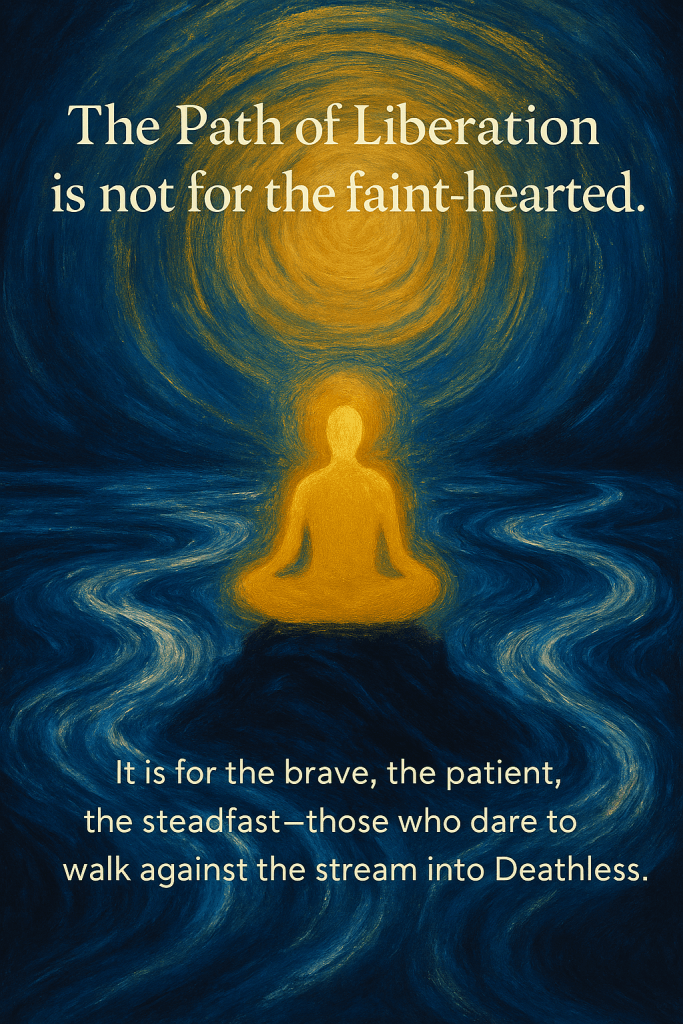
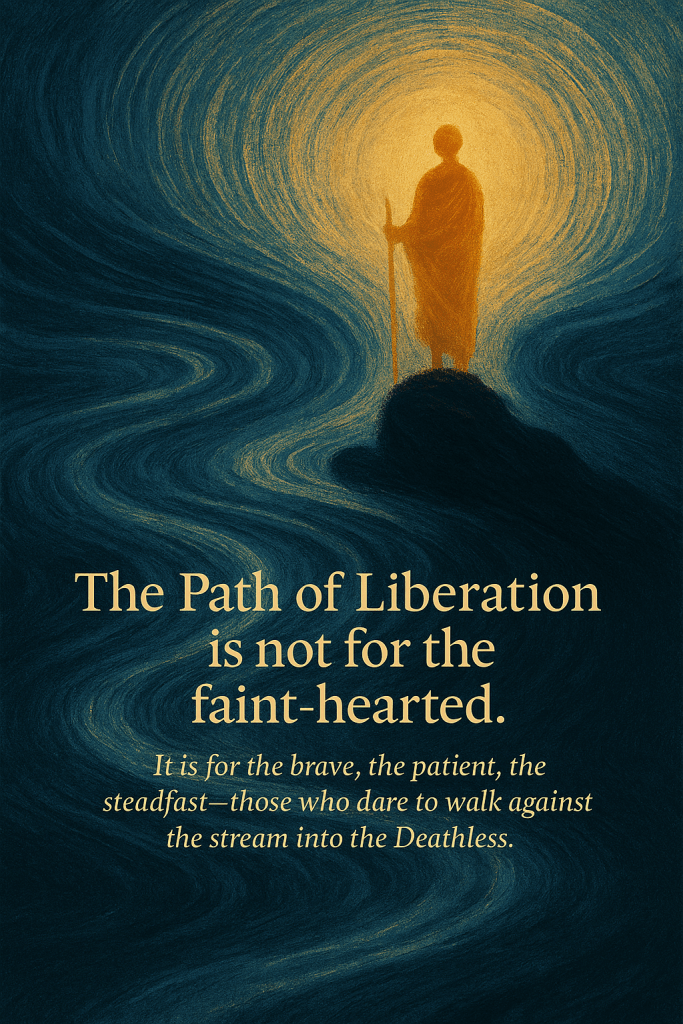
The Path of Liberation is not for the faint-hearted. It is for the brave, the patient, the steadfast—those who dare to walk against the stream into Nibbāna.

1. Introduction: Facing the Challenge
Many people today approach Buddhism as a path of peace, stress relief, and balance. They attend meditation retreats to quiet their minds or practice mindfulness to find relief from the pressures of modern life. These are good beginnings, but they can easily give rise to a misunderstanding: that the Path of Liberation taught by the Buddha is a gentle, easy walk to comfort.
In truth, the Buddha described his Path as “against the stream” (paṭisotagāmī dhammo, AN 4.5), difficult, sharp, and subtle, like walking on a razor’s edge. The goal of this path is nothing less than the complete ending of suffering, the uprooting of craving, and the realization of the Deathless. Such an undertaking is not for those seeking mere consolation. It is for those with the courage to face impermanence, the patience to endure hardship, and the faith to step beyond the world.
This is why we must say: the Path of Liberation is not for the faint-hearted.
The faint-hearted turn back when difficulties arise, when meditation stirs up hidden fears, or when renunciation asks too much of them. But the suttas show again and again that the qualities required to walk this Path are heroic: faith (saddhā), energy (viriya), patience (khanti), equanimity (upekkhā), and the willingness to let go (cāga).
The Buddha himself demonstrated this. Prince Siddhattha did not seek a balanced worldly life of part-time practice. He renounced completely, endured severe austerities, and pressed on alone against the current of saṃsāra until he found the Deathless.
Let us now look at how the Pāli Canon describes the courage, patience, and strength needed to walk this Path.
2. The Noble Quest (Ariyapariyesanā)
The Buddha’s own life story, as recorded in the Ariyapariyesanā Sutta (MN 26), begins not with faint-heartedness, but with a profound and courageous dissatisfaction. He recalls:
“Pubbeva me, bhikkhave, sambodhā anabhisambuddhassa bodhisattasseva sato etadahosi: Jarādhammo kho ahaṃ, jaraṃ anatīto; jarādhammaṃ anabhibhuyya jarāya samannāgatena jarādhammaṃ anabhibhuyya jaraṃ anatīto ti. Maraṇadhammo kho ahaṃ, maraṇaṃ anatīto…”
“Before my awakening, while I was still just a bodhisatta, it occurred to me: ‘I myself am subject to aging, not beyond aging; I am subject to death, not beyond death…’”
The young prince could not close his eyes to the realities of old age, sickness, and death. He saw that worldly pleasures, wealth, and power could not shield him. This insight was not comfortable—it was frightening. But instead of turning away, he faced it fully.
He continues:
“Taṃ kho pana me, bhikkhave, paṭisañcikkhato yoniso evaṃ ahosi: Kiṃ nu kho ahaṃ jarādhammo samāno, jarādhamme ādīnavaṃ disvā, anuttaraṃ jarāmaccunissaraṇaṃ amatapadaṃ pariyesissāmī ti.”
“As I reflected carefully, it occurred to me: ‘Why, being myself subject to aging, having seen the danger in what is subject to aging, should I not seek the unborn, supreme security from aging and death: Nibbāna, the Deathless?’”
This is called the Noble Quest (ariyapariyesanā): the search for what is beyond birth and death. The Buddha contrasts it with the ignoble quest, which is seeking satisfaction in what is itself subject to decay.
The Noble Quest requires courage. It means leaving behind the palace of comfort, turning away from worldly securities, and setting out alone into the forests of uncertainty. Most people, faint of heart, cling to what is familiar even if it is doomed. The Buddha turned away from it all, driven by compassion for himself and for all beings trapped in the same fate.
This is why the Buddha is not only a teacher but also a model of courage. He showed that liberation requires a heart strong enough to endure fear, loneliness, and uncertainty, and to press forward into the unknown for the sake of the Deathless.

3. Sutta Images of Heroic Effort
The Buddha often used vivid images to describe the qualities required for liberation. These similes reveal that the Path is neither easy nor faint-hearted, but one of great strength and perseverance.
Crossing the Flood
At the very beginning of the Saṃyutta Nikāya (SN 1.1), a deva asks the Buddha how he crossed the dangerous flood of saṃsāra:
“Kathaṃ nu tvaṃ, mārisa, oghamatarī?”
“Dear sir, how did you cross the flood?”
The Buddha replies:
“Accentiṃ na, tādi, oghamatarin ti. Accentiṃ na, tādi, oghamatarin ti.”
“By not halting, friend, I crossed the flood; by not struggling, I crossed the flood.”
This paradoxical answer shows the balance required: not halting (no laziness, no faint-hearted turning back), but also not struggling (no restless flailing). Crossing the flood requires courage, composure, and steadfast effort—a middle way between fear and force.
Going Against the Stream
In the Pañcaka Aṅguttara (AN 4.5), the Buddha describes the practice of Dhamma as going against the current of the world:
“Paṭisotagāmī ayaṃ dhammo, paṭisotagāmī paṭipadā.”
“This Dhamma goes against the stream; this practice goes against the current.”
The world flows with craving (taṇhā), greed, and clinging to sense pleasures. To walk the Buddha’s Path means to resist this current. The faint-hearted are swept away by the stream of worldly values. Only the courageous swim against it, step by step, toward Nibbāna.
Walking the Razor’s Edge
In SN 45.4 (Magga Saṃyutta), the Buddha describes the Noble Eightfold Path as a path that is “subtle, difficult to see, hard to awaken to.” Commentators explain this as walking a razor’s edge:
- One must avoid falling into sensual indulgence on one side, or self-mortification on the other.
- A single misstep can cause delay or downfall.
- Precision, vigilance, and steadiness are required.
Thus the Path is sharp and fine, walked only by those with fearless determination.
4. Essential Qualities of the Mind (with Pāli)
The Buddha highlighted specific qualities of mind that enable one to walk this difficult Path. These are not optional virtues, but essential strengths that protect against faint-heartedness.
1). Saddhā (Faith / Confidence)
Faith is the seed of liberation. Without confidence in the Buddha, Dhamma, and Saṅgha, the heart turns back at the first challenge.
“Saddhā bījaṃ, tapaṃ viriyaṃ, paññā me yassa pārami; idampi dhammaṃ amataṃ vadanti, yamhi nibbāti jātijarā.”
“Faith is the seed, energy the rain, wisdom my yoke and plough. This is the Deathless, they say, where birth and aging cease.”
(SN 1.53)
Faith gives the courage to step beyond comfort, to endure hardship, and to trust the unseen goal of Nibbāna.
2). Viriya (Energy / Courageous Effort)
Liberation demands relentless effort. The Buddha defines right effort (sammā-vāyāma) as arousing energy to prevent unwholesome states, abandon those arisen, cultivate wholesome states, and sustain them.
“Āraddhavīriyo pahitattoti veditabbo.”
“One should be known as one with aroused energy and determination.”
(SN 51.13)
The faint-hearted grow weary and abandon the practice. The courageous, with viriya, keep walking, like a warrior who does not lay down his arms until the battle is won.
3). Khanti (Patience / Endurance)
Patience is perhaps the greatest armor. The Dhammapada declares:
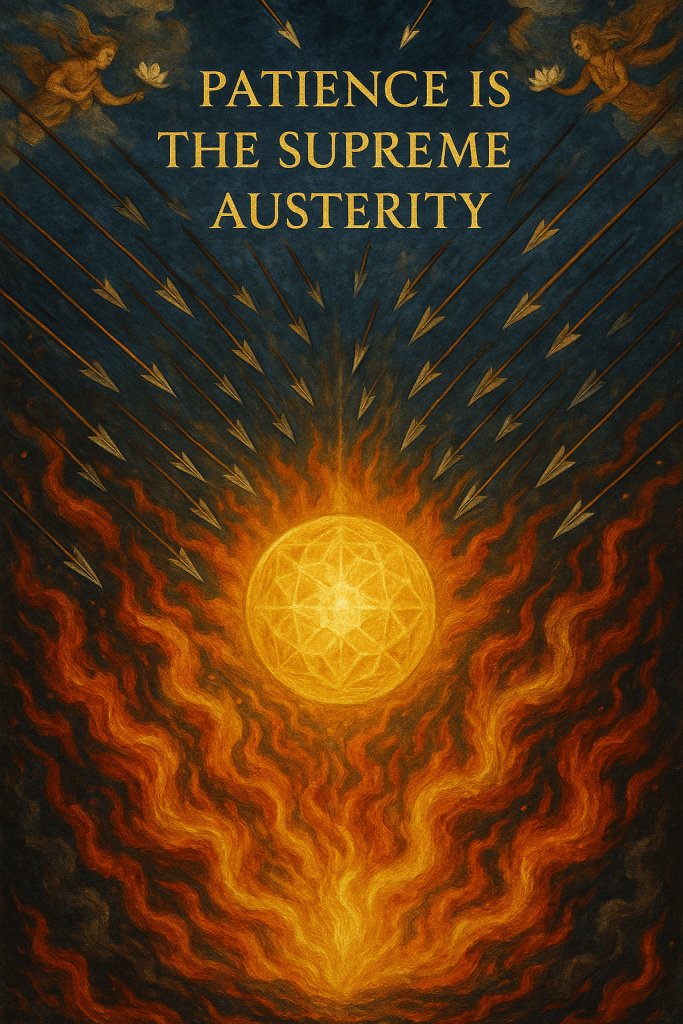
“Khanti paramaṃ tapo titikkhā.”
“Patience, endurance, is the supreme austerity.”
(Dhp 184)
Endurance means bearing heat and cold, hunger and thirst, insult and injury, without retaliation. Without khanti, even small discomforts make one retreat. With khanti, the mind is unshakable.
4). Upekkhā (Equanimity)
Equanimity steadies the mind against gain and loss, praise and blame, pleasure and pain. In MN 62 (Mahārāhulovāda Sutta), the Buddha instructs Rahula:
“Ākāsabhūtaṃ, rāhula, bhāvanaṃ bhāvehi; āpodhātuṃ, tejo-dhātuṃ, vāyo-dhātuṃ bhāvehi.”
“Develop a mind like earth, Rahula; develop a mind like water, like fire, like wind.”
Just as earth is unmoved by pure or impure things, so should the mind remain unshaken. Without upekkhā, the faint-hearted are tossed by the world’s winds. With upekkhā, one remains steady, moving toward the Deathless.
5). Cāga (Renunciation / Letting go)
Renunciation is the essence of courage. It is the ability to give up possessions, status, and even cherished views.
“Cāgo paṭinissaggo mutti anālayo.”
“Giving up, relinquishing, freedom, non-attachment.”
(AN 9.41)
The faint-hearted cling to security. The courageous renounce and find freedom.
5. Why the Faint-Hearted Turn Back
The Buddha knew that many begin the practice with enthusiasm but soon retreat when the difficulties arise. He warned of the dangers of delaying practice in the Aṅguttara Nikāya (AN 5.77), listing five reasons why those who procrastinate will later regret:
“Pañcime, bhikkhave, ādīnavā āyatiṃ kātu-kāmassa: Gilāno hoti, byādhi-pariyanto; jarādhammo hoti, jarāya samannāgato; addhānaṃ hoti, dīghaṃ addhānaṃ; āpadā uppajjati; maraṇaṃ vā āgacchati.”
“Bhikkhus, there are these five dangers for one who wishes to practice later: he may fall sick, he may grow old, a journey may take him away, a calamity may strike, or death may come.”
The faint-hearted say, “I will practice later, when it is convenient.” But the Buddha reminds us: sickness, aging, and death do not wait for convenience. The courageous practice now, knowing that tomorrow is not guaranteed.
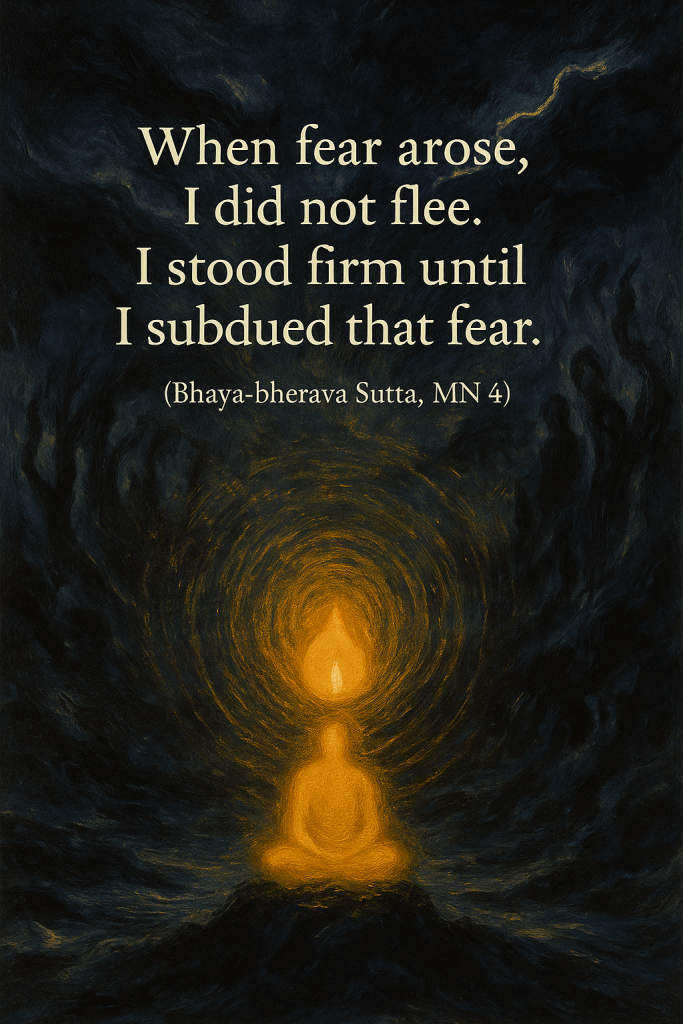
Another reason the faint-hearted turn back is fear of hardship. In the Bhaya-bherava Sutta (MN 4), the Buddha recounts how, before his awakening, he lived alone in forests at night. He faced terrifying sounds—leaves rustling, twigs snapping—and fear would arise. But he did not flee:
“Yato ca kho me taṃ bhayaṃ uppajjati, atha kho ahaṃ neva saṅkameyyam na ca piṭṭhito pakkameyyaṃ, yathābhūtaṃ taṃ bhayaṃ abhibhuyya ṭhassāmiyeva.”
“Whenever that fear arose, I would not walk away or flee, but I would stand firm until I had subdued that fear.”
The faint-hearted run from fear. The courageous confront it until it dissolves.
In the same way, the faint-hearted shrink from criticism, loss, or discomfort. They cling to reputation, comfort, and safety. But the Buddha’s path demands letting go of all worldly securities. That is why the faint-hearted turn back, and only the strong-hearted press forward.

6. The Heroic Mind (Dhamma-Warrior)
The Buddha often described the practitioner as a warrior (khattiya) or a lion. Liberation requires the resolve of a fighter who refuses to yield until victory is won.
The Lion’s Roar
The arahant’s confidence is compared to the roar of a lion in the wilderness, fearless and unshakable. In MN 35 (Cūḷasaccaka Sutta), the Buddha says:
“Sīhova, bhikkhu, nadati mahāsaddena…”
“Like a lion, he roars his great roar…”
The faint-hearted whisper apologies to the world, but the courageous roar with truth, unmoved by doubt or opposition.
The True Warrior
In the Sutta Nipāta (Sn 3.6, Padhāna Sutta), Māra confronts the Bodhisatta as he strives for awakening. The Bodhisatta replies:
“Appossukko anuttaraṃ yogakkhemaṃ anuttaraṃ santipadamajjhagā, Māra, jitaṃ me hoti.”
“At peace, I have attained the supreme security, the highest peace. Māra, you are defeated.”
The Bodhisatta describes himself as a warrior who does not rest until Māra is overcome. The faint-hearted yield to Māra’s whispers of comfort; the courageous fight on until victory.
One Day of Courage vs. a Hundred of Cowardice
The Dhammapada reminds us:
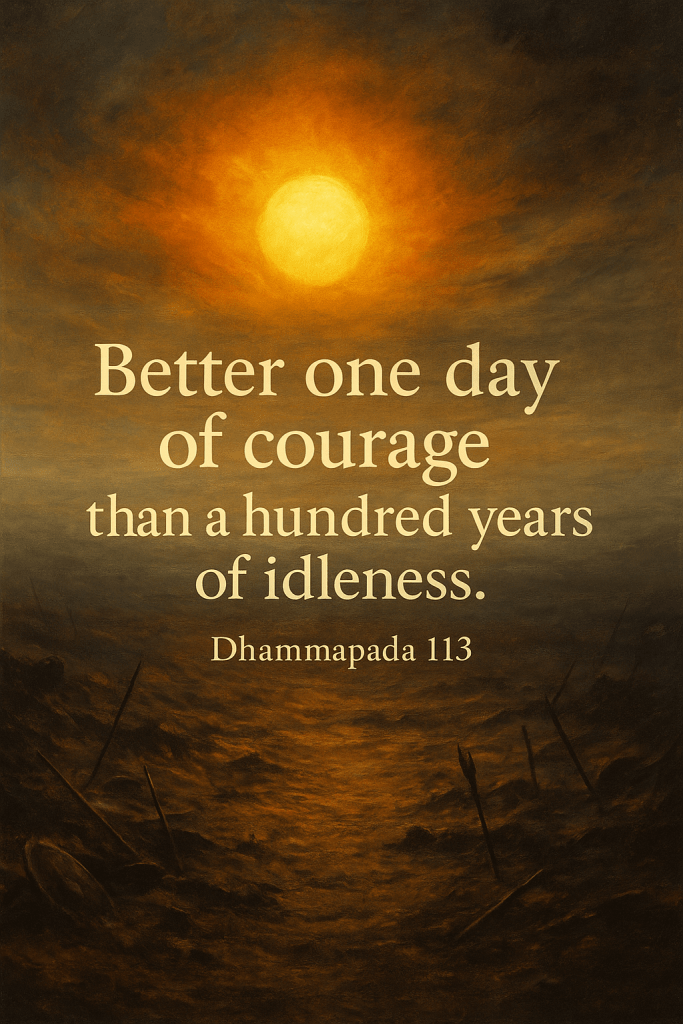
“Yo ca vassasataṃ jīve, kusīto hīnavīriyo; Ekāhaṃ jīvitaṃ seyyo, vīriyaṃ ārabhato daḷhaṃ.”
“Better it is to live one day with energy and strength than to live a hundred years lazy and weak.”
(Dhp 112)
The value of life is not in its length but in the courage with which it is lived.
The Battlefield Within
The true battlefield is not against others, but against one’s own greed, hatred, and delusion. The Buddha says:
“Attānaṃ ce piyaṃ jaññā, rakkheyya naṃ surakkhitaṃ. Tiṇṇaṃ aññataraṃ yāmaṃ, paṭijaggeyya paṇḍito.”
“If one holds oneself dear, let one guard oneself well. The wise should watch over themselves at least in one of the three watches of the night.”
(Dhp 157)
The heroic mind watches day and night, never laying down arms against the kilesas (defilements).
7. Conclusion: A Call to Courage
The Buddha never promised that the Path to Nibbāna would be easy. He promised it would be possible. But possibility is not comfort—it requires courage, patience, and unshakable resolve.
The faint-hearted turn back when hardships come. They seek consolation in the world, forgetting that the world itself is subject to aging, sickness, and death. But the courageous see the danger in clinging to what decays, and they set out on the Noble Quest, willing to endure whatever must be endured for the sake of freedom.
The suttas give us the map of this heroic mind:
- Saddhā (faith): The confidence to step forward into the unseen.
- Viriya (energy): The strength to keep striving without collapse.
- Khanti (patience): The endurance to bear hardship and insult without retreat.
- Upekkhā (equanimity): The balance to remain unmoved by the world’s storms.
- Cāga (renunciation): The courage to let go of all clinging.
These are not the qualities of the faint-hearted. They are the virtues of lions, warriors, and heroes of the Dhamma.
The Buddha himself was the supreme example. He faced fear alone in the forest, resisted Māra’s temptations, and endured austerities and hardships that would have broken the faint-hearted. By his courage, he attained the Deathless.
And he calls us to follow—not with faint hearts seeking ease, but with strong hearts seeking liberation.
As the Dhammapada reminds us:
“Appamādo amatapadaṃ, pamādo maccuno padaṃ.”
“Zeal is the path to the Deathless, Apathy the path to death.” (Dhp 21)
The faint-hearted fall into heedlessness, content with comfort. The courageous live in heedfulness, unshaken until the goal is won.
Therefore, let us remember:
The Path of Liberation is not for the faint-hearted. It is for the brave, the patient, the steadfast—those who dare to walk against the stream into the Deathless.
 Gautama Dhamma
Leave a comment