
The Samanera ordination ceremony is a beautiful and meaningful tradition that marks a significant step on the Buddhist path. This ceremony is not merely a change of robes and a shaving of the head; it marks a profound turning point, a new beginning on the path to liberation. It’s a commitment to a life of simplicity, discipline, and the pursuit of enlightenment. The Samanera precepts are the foundation of a Samanera’s training, guiding their conduct and supporting their spiritual development as they prepare for full ordination as a Bhikkhu (monk).
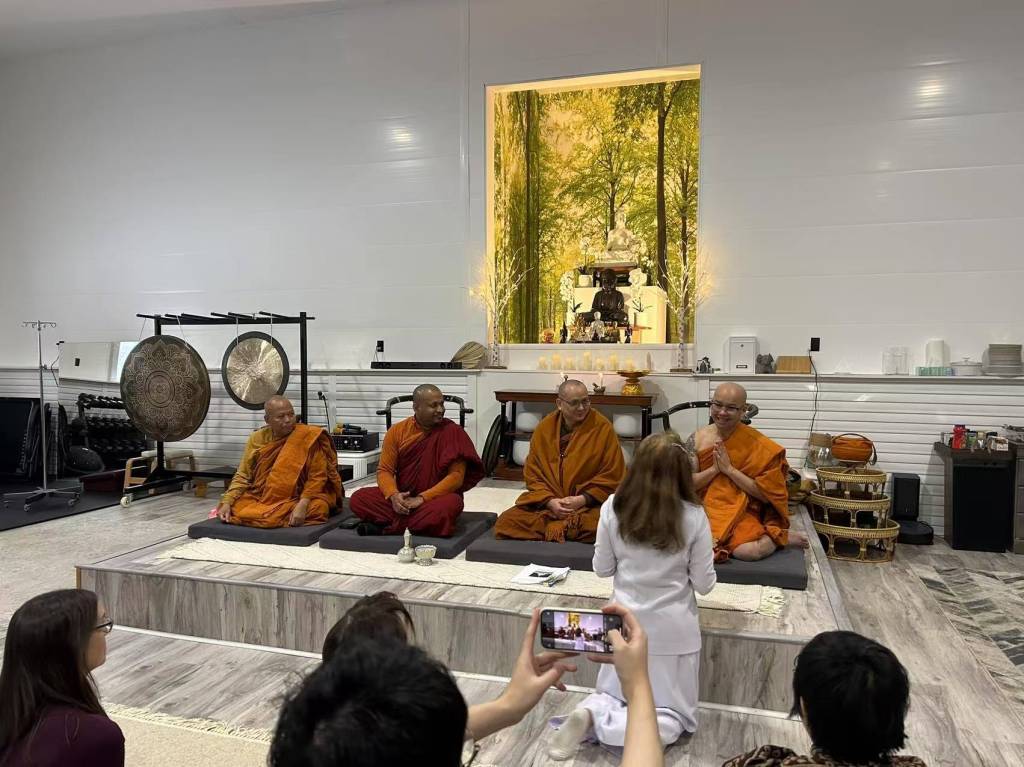
The world outside these monastery walls is a world of constant change, of fleeting pleasures and inevitable sufferings. It is a world driven by craving, aversion, and delusion – the three poisons that bind us to the cycle of rebirth. Today, our new Samanera has chosen to step away from this cycle, to embark on a journey of self-discovery and purification.
The act of “going forth” is deeply symbolic. It represents a departure from the familiar, a letting go of worldly attachments. The shaving of the head signifies the shedding of vanity and the acceptance of a simple, renunciate lifestyle. The wearing of the robes represents the adoption of a new identity, one dedicated to the pursuit of Dhamma.
The heart of the Samanera ordination lies in the taking of the Three Refuges and the Ten Precepts. By reciting “Buddhaṃ saraṇaṃ gacchāmi, Dhammaṃ saraṇaṃ gacchāmi, Saṅghaṃ saraṇaṃ gacchāmi,” our novice declares his trust in the Buddha as his guide, the Dhamma as his path, and the Sangha as his support. This is not blind faith, but a confident reliance on the wisdom of the enlightened ones, the truth of the teachings, and the strength of the community.
The Ten Precepts, which he has just undertaken, are the foundation of his ethical training. These precepts are not mere rules to be followed mechanically; they are guidelines for cultivating wholesome qualities and abandoning unwholesome ones. They are the training wheels on the path to liberation, helping our novice to develop self-discipline, mindfulness, and compassion.
This ceremony is not the end of a journey, but the beginning. The life of a Samanera is a life of learning, practice, and self-cultivation. It is a time for:
- Studying the Dhamma: To understand the Buddha’s teachings deeply and thoroughly.
- Practicing Meditation: To train the mind, develop concentration, and cultivate insight.
- Observing the Vinaya (Monastic Discipline): To live in harmony with the Sangha and create a supportive environment for practice.
- Serving the Sangha: To develop humility, compassion, and a sense of community.
The preceptor (Upajjhaya) plays a crucial role in this journey. The phrase “Upajjhāyo me bhante hohi” (“Bhante, be my preceptor”) expresses the novice’s acceptance of guidance and mentorship. The preceptor, in turn, responds with “Pāsādikena sampādehi” (“May you accomplish the practice in an inspiring way”), offering encouragement and support. This teacher-student relationship is built on trust, respect, and a shared commitment to the Dhamma.
The path ahead may not always be easy. There will be challenges, temptations, and moments of doubt. But by remembering the Three Refuges, by diligently observing the Ten Precepts, and by relying on the guidance of the preceptor and the support of the Sangha, our new Samanera will be able to navigate these challenges and progress on the path to liberation.
This ordination is a cause for celebration, not just for our new Samanera and his family and friends, but for the entire community. It is a reaffirmation of the enduring power of the Dhamma and the continued existence of the Sangha. May this new beginning bring great blessings to all beings.
In the Dhammapada, a summary of the Buddha’s original teachings, it describes the benefit of renunciation, of going forth, as:
- Pali: “Pabbajjā kusalaṃ mūlaṃ, sabba dukkha vināsanaṃ; Taṃ sevanto sukhaṃ eti, dukkha khaya gāmīnaṃ.”
- English: “Renunciation is the root of wholesomeness, the destroyer of all suffering; by cultivating it, one attains happiness, leading to the cessation of suffering.”
Sabba sattā sukhī hontu.
May all beings be happy.

 Gautama Dhamma
Leave a comment