
The First Three discourses given by Gautama Buddha at the beginning of his ministry: the Dhamma Cakka Pavattana Sutta 转法轮经 (SN 56:11), the Anatta Lakkhaṇa Sutta 五蕴-非我-相-经(旧译 无我相经)(SN 22:59), and the Āditta pariyāya Sutta 燃烧经(SN 35:28).
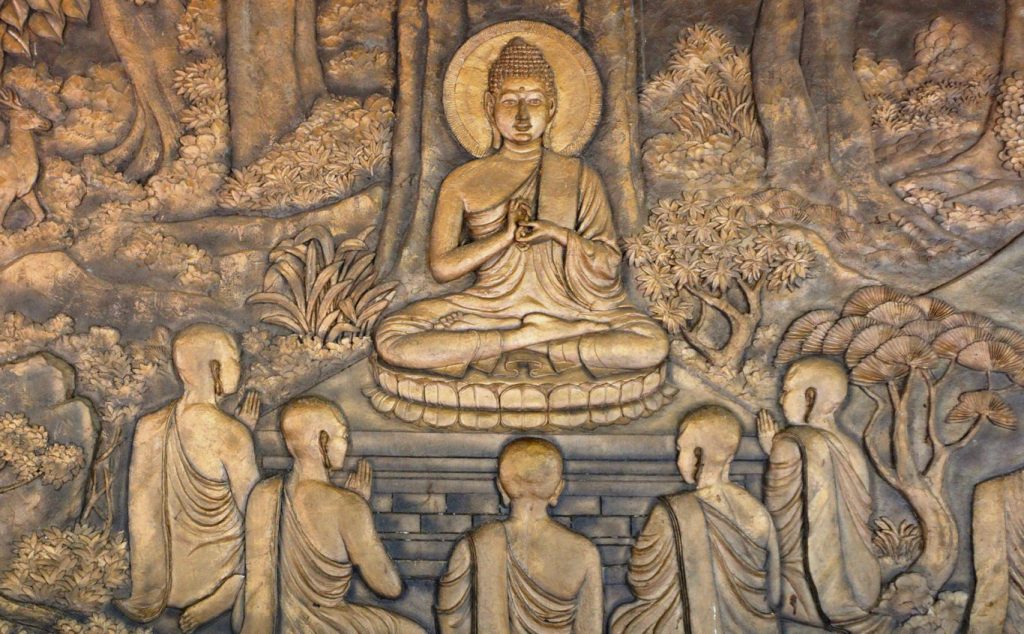
SN 56:11 Dhamma Cakka Pavattana Sutta 转法轮经
如是我闻。有一次,世尊住在波罗奈(Bārāṇasī)鹿野苑的仙人降临处(Isipatana)。在那裡,世尊对五比丘说:
「比丘们,有两个方式出家人不应该修行。哪两个呢?第一个是追求欲乐(kāmasukha, sensual pleasures)。因为这是低下的(hīna, low)、粗俗的(gamma, vulgar)、凡俗世间的(pothujjaniko, the way of worldlings)、非圣的(anariya, ignoble)、无益的(anattha saṃhita, unbeneficial)。第二个是自我折磨(atta kilamatha anuyaoga, self-torture):因为这是痛苦的 (dukkha, suffering)、非圣的(anariya, ignoble)、无益的(anattha saṃhita, unbeneficial)。比丘们,当心不导向这两个方向,Tathāgata(去往那里,追求那里,导向那里,彼岸(旧译 如来))已经觉悟超越的智慧(abhisambuddha):中道(majjhimā paṭipada),它能升起智眼(cakkhukaraṇī)、导向寂静(upasama)、神通(abhiññā)、觉悟(sambodha)、涅槃(Nibbāna)。
比丘们,那什么是被Tathāgata觉悟的超越智慧即中道呢?就是八圣道,即:正见、正思维、正语、正业、正命、正精进、正念、正定。比丘们,这就是被Tathāgata觉悟的超越智慧即中道,它能升起智眼(cakkhukaraṇī)、导向寂静(upasama)、神通(abhiññā)、觉悟(sambodha)、涅槃(Nibbāna)。
现在,比丘们,这是苦圣谛:生是苦,老是苦,病是苦,死是苦,得到不喜爱的是苦,与所喜爱的分离是苦,所求不得是苦;总之,五取蕴(upādānakkhandha)是苦。
现在,比丘们,这是苦之因圣谛:欲贪(taṇha, craving)导致在轮回世界的不断重生;欲贪伴随爱着(nandirāga),到处寻觅喜爱;共有三种即贪着欲乐(kāmataṇha)、渴望在轮回世界重生(bhavataṇha)和渴望断灭(vibhavataṇha)。
现在,比丘们,这是苦灭圣谛:欲贪的完全分离和灭尽(taṇhāya asesa virāga nirodha),捨弃(cāga)、拒绝(paṭinissagga)、释放(mutti)、不执着(anālaya)。
现在,比丘们,这是导向苦灭之道圣谛:就是八圣道,即:正见、正思维、正语、正业、正命、正精进、正念、正定。
‘这是苦圣谛’:比丘们,如此以前所未闻之法,在我心里升起眼(cakkhu)、智(ñāṇa)、慧(paññā)、明(vijjā)、光(āloka)。‘这苦圣谛应被圆满了知(pariññeyya)’:比丘们,如此以前所未闻之法,在我心里升起眼、智、慧、明、光。‘这苦圣谛已被圆满了知’:比丘们,如此以前所未闻之法,在我心里升起眼、智、慧、明、光。
‘这是苦之因圣谛’:比丘们,如此以前所未闻之法,在我心里升起眼、智、慧、明、光。‘这苦之因应被断除’:比丘们,如此以前所未闻之法,在我心里升起眼、智、慧、明、光。‘这苦之因已被断除’:比丘们,如此以前所未闻之法,在我心里升起眼、智、慧、明、光。
‘这是苦灭圣谛’:比丘们,如此以前所未闻之法,在我心里升起眼、智、慧、明、光。‘这苦之灭应被实现’:比丘们,如此以前所未闻之法,在我心里升起眼、智、慧、明、光。‘这苦之灭已被实现’:比丘们,如此以前所未闻之法,在我心里升起眼、智、慧、明、光。
‘这是苦灭之道圣谛’:比丘们,如此以前所未闻之法,在我心里升起眼、智、慧、明、光。‘这苦灭之道应被完善’:比丘们,如此以前所未闻之法,在我心里升起眼、智、慧、明、光。‘这苦灭之道已被完善’:比丘们,如此以前所未闻之法,在我心里升起眼、智、慧、明、光。
比丘们,如果我对四圣谛在三个阶段、十二方面的如实智见没有完全清净实践,在这包括天(Deva)、死神(Māra)、梵(Brahmā)的世界(loka);包括其后代(pajā)沙门/萨满(samāna)和梵人/婆罗门(brāhmana)、天(devā)和人族(manussa)的世界(loka)中,我不自称‘已经无上正觉’。但我对四圣谛在三个阶段、十二方面的如实智见已经完全清净实践,在这包括天(Deva)、死神(Māra)、梵(Brahmā)的世界(loka);包括其后代(pajā)沙门/萨满(samāna)和梵人/婆罗门(brāhmana)、天(devā)和人族(manussa)的世界(loka)中,我可以自称‘已经无上正觉’。我的心里升起智见:‘我的解脱不可动摇;这是我(在这个轮回世界)的最后一生;之后不再(在这个轮回世界)重生。(akuppā me vimutti, ayamantimā jāti, natthi dāni punabbhavo)’
这就是世尊所说。五比丘欢喜、愉悦世尊所说。当这个解说说完时,尊者憍陈如(Koṇḍañña)升起离染(viraja)、离垢(vītamala)之法眼(dhamma Cakkhu):‘所有的法(dhamma)有生就有灭(yaṃ kiñci samudaya dhammaṃ sabbaṃ taṃ nirodha dhamman)。’
于是,世尊说:“憍陈如确实已了知!憍陈如确实已了知。”因此,尊者憍陈如就获得这样的名号:阿若(Aññā)憍陈如,即憍陈如已经了知。
Thus have I heard. On one occasion the Blessed One was dwelling at Bārāṇasī in the Deer Park at Isipatana. There the Blessed One addressed the bhikkhus of the group of five thus:
“Bhikkhus, these two ways should not be followed by one who has gone forth into homelessness. What two? The constant attachment to sensual pleasures(kāmasukha likānuyoga), which is low(hīna), vulgar(gamma), the way of worldlings (pothujjaniko), ignoble(anariya), unbeneficial(anattha saṃhita); and the practice of self-torture(atta kilamatha anuyaoga), which is suffering(dukkha), ignoble(anariya), unbeneficial(anattha saṃhita).
Without veering towards either of these ways, the Tathāgata has gained the highest wisdom (abhisambuddha) to the middle way(majjhimā paṭipada), which gives rise to vision(cakkhukaraṇī), which gives rise to knowledge(ñāṇakaraṇī), which leads to peace(upasama), to direct knowledge(abhiññā), to enlightenment(sambodha), to Nibbāna.
“And what, bhikkhus, is that middle way awakened to by the Tathāgata, which gives rise to vision … which leads to Nibbāna? It is this Noble Eightfold Path; that is, right view, right intention, right speech, right action, right livelihood, right effort, right mindfulness, right concentration concentration (sammādiṭṭhi sammāsaṅkappo sammāvācā sammākammanto sammāājīvo sammāvāyāmo sammāsati sammāsamādhi). This, bhikkhus, is that middle way awakened to by the Tathāgata, which gives rise to vision, which gives rise to knowledge, which leads to peace, to direct knowledge, to enlightenment, to Nibbāna.
“Now this, bhikkhus, is the noble truth of suffering: birth is suffering, aging is suffering, illness is suffering, death is suffering; union with what is displeasing is suffering; separation from what is pleasing is suffering; not to get what one wants is suffering; in brief, the five aggregates subject to clinging(upādānakkhandha) are suffering.
“Now this, bhikkhus, is the noble truth of the origin of suffering: it is this craving(taṇha) which leads to renewed existence, accompanied by delight and lust(nandirāga), seeking delight here and there; that is, craving for sensual pleasures(kāmataṇha), craving for existence in this world(bhavataṇha), craving for extermination from this world(vibhavataṇha).
“Now this, bhikkhus, is the noble truth of the cessation of suffering: the cessation and completely detachment of that same craving(taṇhāya asesa virāga nirodha), the giving up(cāga) and relinquishing of it(paṭinissagga), freedom from it(mutti), nonreliance on it(anālaya).
“Now this, bhikkhus, is the noble truth of the way leading to the cessation of suffering: it is this Noble Eightfold Path; that is, right view … right concentration.
“‘This is the noble truth of suffering’, bhikkhus, such was the vision (cakkhu), knowledge(ñāṇa), wisdom(paññā), true knowledge (vijjā), and light(āloka) that arose in me regarding teachings not learned before from others.
“‘This noble truth of suffering is to be fully understood(pariññeyya)’: thus, bhikkhus, in regard to things unheard before, there arose in me vision, knowledge, wisdom, true knowledge, and light.
“‘This noble truth of suffering has been fully understood’: thus, bhikkhus, in regard to things unheard before, there arose in me vision, knowledge, wisdom, true knowledge, and light.
“‘This is the noble truth of the origin of suffering’: thus, bhikkhus, in regard to things unheard before, there arose in me vision, knowledge, wisdom, true knowledge, and light.
“‘This noble truth of the origin of suffering is to be abandoned’: thus, bhikkhus, in regard to things unheard before, there arose in me vision, knowledge, wisdom, true knowledge, and light.
“‘This noble truth of the origin of suffering has been abandoned’: thus, bhikkhus, in regard to things unheard before, there arose in me vision, knowledge, wisdom, true knowledge, and light.
“‘This is the noble truth of the cessation of suffering’: thus, bhikkhus, in regard to things unheard before, there arose in me vision, knowledge, wisdom, true knowledge, and light.
“‘This noble truth of the cessation of suffering is to be realized’: thus, bhikkhus, in regard to things unheard before, there arose in me vision, knowledge, wisdom, true knowledge, and light.
“‘This noble truth of the cessation of suffering has been realized’: thus, bhikkhus, in regard to things unheard before, there arose in me vision, knowledge, wisdom, true knowledge, and light.
“‘This is the noble truth of the way leading to the cessation of suffering’: thus, bhikkhus, in regard to things unheard before, there arose in me vision, knowledge, wisdom, true knowledge, and light.
“‘This noble truth of the way leading to the cessation of suffering is to be developed’: thus, bhikkhus, in regard to things unheard before, there arose in me vision, knowledge, wisdom, true knowledge, and light.
“‘This noble truth of the way leading to the cessation of suffering has been developed’: thus, bhikkhus, in regard to things unheard before, there arose in me vision, knowledge, wisdom, true knowledge, and light.
“So long, bhikkhus, as my knowledge and vision of these Four Noble Truths as they really are in their three phases and twelve aspects was not thoroughly purified in this way, I did not claim to have awakened to the unsurpassed perfect enlightenment in this world (loka) with all Devā, Māra, and Brahma, with their descendants (pajā) of samāna and brāhmana, devā and the race of Man(Manussa). But when my knowledge and vision of these Four Noble Truths as they really are in their three phases and twelve aspects was thoroughly purified in this way, then I claimed to have awakened to the unsurpassed perfect enlightenment in this world(loka) with all Devā, Māra, and Brahma, with their descendants (pajā) of samāna and brāhmana, devā and the race of Man(Manussa). The knowledge and vision arose in me: ‘Unshakable is the liberation of my mind. This is my last birth. Now there is no more renewed existence.(akuppā me vimutti, ayamantimā jāti, natthi dāni punabbhavo)’”
This is what the Blessed One said. Elated, the bhikkhus of the group of five delighted in the Blessed One’s statement. And while this discourse was being spoken, there arose in the Venerable Kondañña the defilement-free(viraja), stainless(vītamala) vision of the Dhamma(dhamma cakkhu): “All dhamma that has a beginning has an end (yaṃ kiñci samudaya dhammaṃ sabbaṃ taṃ nirodha dhamman).”
Then the Blessed One uttered this inspired utterance: “Koṇḍañña has indeed understood! Koṇḍañña has indeed understood!” In this way the Venerable Koṇḍañña acquired the name “Aññā Koṇḍañña—Koṇḍañña Who Has Understood.”
 Gautama Dhamma
Leave a comment