
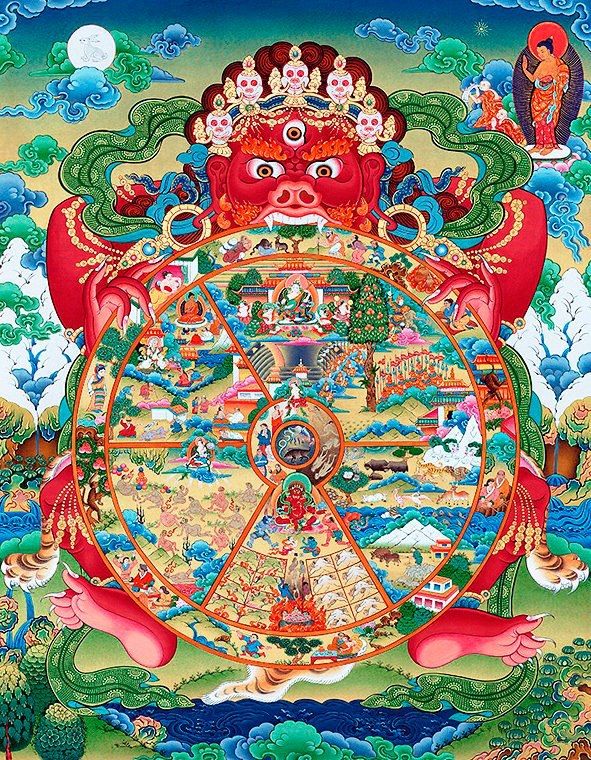
The Jataka tales are a collection of stories about the previous lives of the Buddha, both in human and animal forms. These tales illustrate the concept of reincarnation and the cycle of birth, death, and rebirth (samsara) in Buddhism. In the Jataka tales, the future Buddha (then Bodhisattva) is depicted as being reborn into various forms, including animals, to teach important moral lessons and develop virtues such as compassion, generosity, and wisdom. The stories often highlight the karmic consequences of actions and the importance of ethical behavior
Socrates, according to Plato, believes that the soul is immortal and undergoes a cycle of rebirth. Depending on the life choices and the moral quality of an individual’s actions, a soul could be reincarnated into different forms, including animals. In Plato’s “Phaedrus,” Socrates discusses the transmigration of souls. The idea is that a soul might be reborn into an animal form if it fails to live a virtuous and philosophical life. Essentially, the nature of one’s reincarnation reflects the moral and intellectual state of the soul.
In order for a soul to reincarnate into different forms of life, it must have a compatibility match of more than 50%. A higher match is preferable for a healthy reincarnation. Humans and animals on Earth possess a shared collective consciousness, facilitating easier reincarnation between different forms. This requirement presents a challenge for souls from outside Earth seeking to reincarnate here. Issues like autism can arise from a low level of compatibility between the soul and the body. The compatibility requirement also poses challenge for earth humans to reincarnate to other planets of higher dimensions. Recent research has revealed genetic similarity data between humans and animals on Earth.
When considering the whole genome, including inactive genes, humans and chimpanzees share about 96% of their DNA. This figure accounts for both the coding and non-coding regions of the genome, providing a comprehensive view of our genetic similarity. Despite this high level of similarity, the differences that do exist play a significant role in the distinct physical, cognitive, and behavioral traits observed between the two species.
| Animal | Genetic Similarity |
| Chimpanzee | 98.8% |
| Gorilla | 98.4% |
| Pig | 98% |
| Orangutan | 96.9% |
| Cat | 90% |
| Mouse | 85% |
| Dog | 84% |
| Cow | 80% |
| Zebrafish | 73% |
| Slug | 70% |
| Chicken | 65% |
| Fruit Fly | 61% |
| Banana | 60% |
| Tree | 50% |
| Cabbage | 45% |
| Honey Bee | 44% |
| Apple | 40% |
| Yeast | 26% |
| Daffodil | 25% |
The percentages are rough estimates and may vary slightly depending on the sources and methods used in different studies. These numbers generally include the whole genome, covering both coding (active) and non-coding (inactive) regions. However, it’s essential to note that different studies may use varying criteria and techniques to measure genetic similarity.
 Gautama Dhamma
Leave a comment