
斐多 – 苏格拉底 解脱轮回之道
In Plato’s Phaedo, Socrates outlines a path to escape the cycle of reincarnation 脱离轮回. Central to this concept is the distinction 区分between the soul 灵魂 and the body 身体. Socrates posits that the soul is imprisoned 束缚 within the body which is mortal and corrupting, a consequence of past actions and desires.
Socrates refers to bodily身体 desires 欲乐as “desires according to the body” and similarly refers to “affections according to the body”, in contrast to those things that are in accordance with the soul. These desires are not proper to the soul, but rather serve the body. The soul 灵魂 with such desires is, at best, itself according to the body, since it serves the body’s ends and undermines its own end, the grasp of truth 追求真理. Hence Socrates sees that bodily pleasures and desires make souls defiled 玷污 and impure 不纯洁 (μεμιασμένη καὶ ἀκάθαρτος) and that such a soul is not itself according to itself when it is separated from the body.
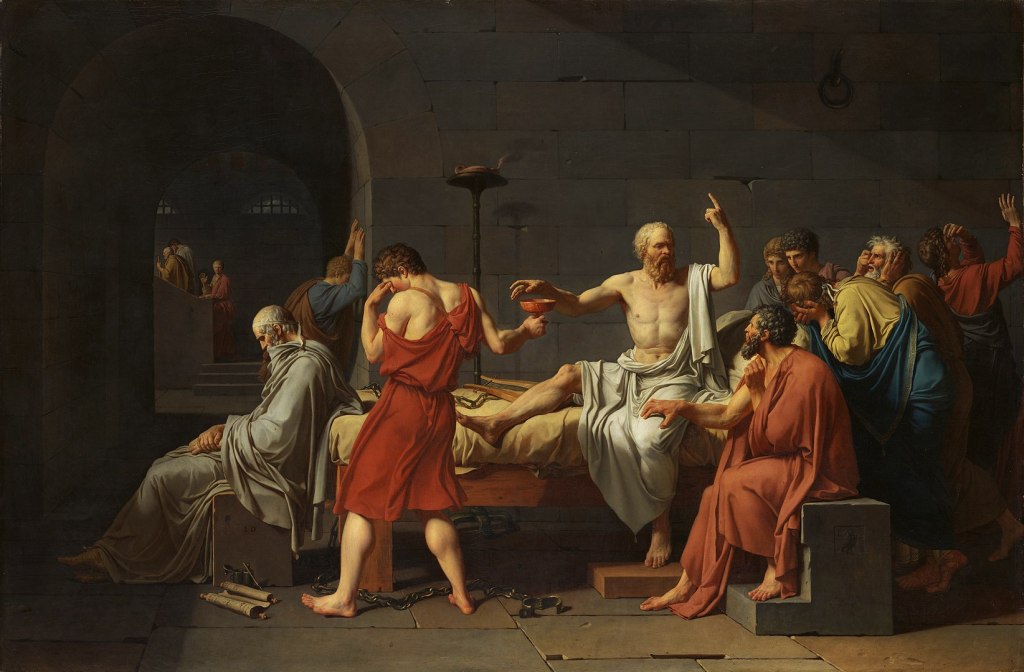
The key to escaping reincarnation lies in the pursuit of philosophical inquiry for the wisdom 慧 and the cultivation of virtue 美德. Through philosophical dialogue智慧省思, individuals can turn their attention away from the material world 出离世界 and towards the realm of eternal Forms, which are perfect and unchanging ideals 完美界. This intellectual pursuit not only purifies the soul 净化灵魂 but also prepares it for its eventual liberation 解脱.
Additionally, Socrates emphasizes the importance of living a virtuous life. By practicing justice, temperance, courage, and wisdom, individuals can align themselves with the divine order and avoid the negative consequences of immoral actions. A virtuous life not only contributes to a just society but also frees the soul from the burden of guilt and suffering, making it more likely to ascend to a higher plane of existence.
Socrates is proposing that we aspire to a life beyond mere human existence, one that transcends our earthly limitations. He asserts that our true essence lies in our souls, which are divine in nature, as opposed to our mortal bodies. Socrates believes that our souls are eternal and connected to the pure and eternal aspects of existence. Therefore, he suggests that we should focus on thoughts and actions that align with our soul’s divine nature.
According to Socrates, individuals should avoid bodily pleasures, pains, desires, and fears because they make us pursue other ends and hinder us from reaching this condition of wisdom, thereby undermining our happiness and leading to our reincarnation. By prioritizing the pursuit of wisdom and philosophical contemplation, individuals can break the cycle of reincarnation and achieve a state of true enlightenment.
Socrates distinguishes between those he refers to as wise souls, or philosophers, who are able to transcend the limitations of the body upon death and reunite with the divine. In contrast, ordinary individuals who are still attached to their bodily desires will continue to be reincarnated, perpetuating the cycle of life and death.
So the wise soul can break the cycle of reincarnation because when they reach death, they truly shed off their body, become truly dead. Their souls are as close as possible to being themselves according to themselves. When they separate from their bodies, they can think of being in the company of the divine, being with what they are akin to. They go to what is unseen, divine, and immortal, where it can be happy, spending time with the gods.
Ordinary people however, when they die, cannot completely leave the body because they are not themselves according to themselves. Their souls still desire the body and thus will be drawn back into bodies, resulting in their souls reincarnating. Reincarnation results from their desire for the bodily: “what is more, they wander until the time when they are bound again into a body by their desire for the bodily (τοῦ σωματοειδοῦς ἐπιθυμίᾳ) that follows them around”.
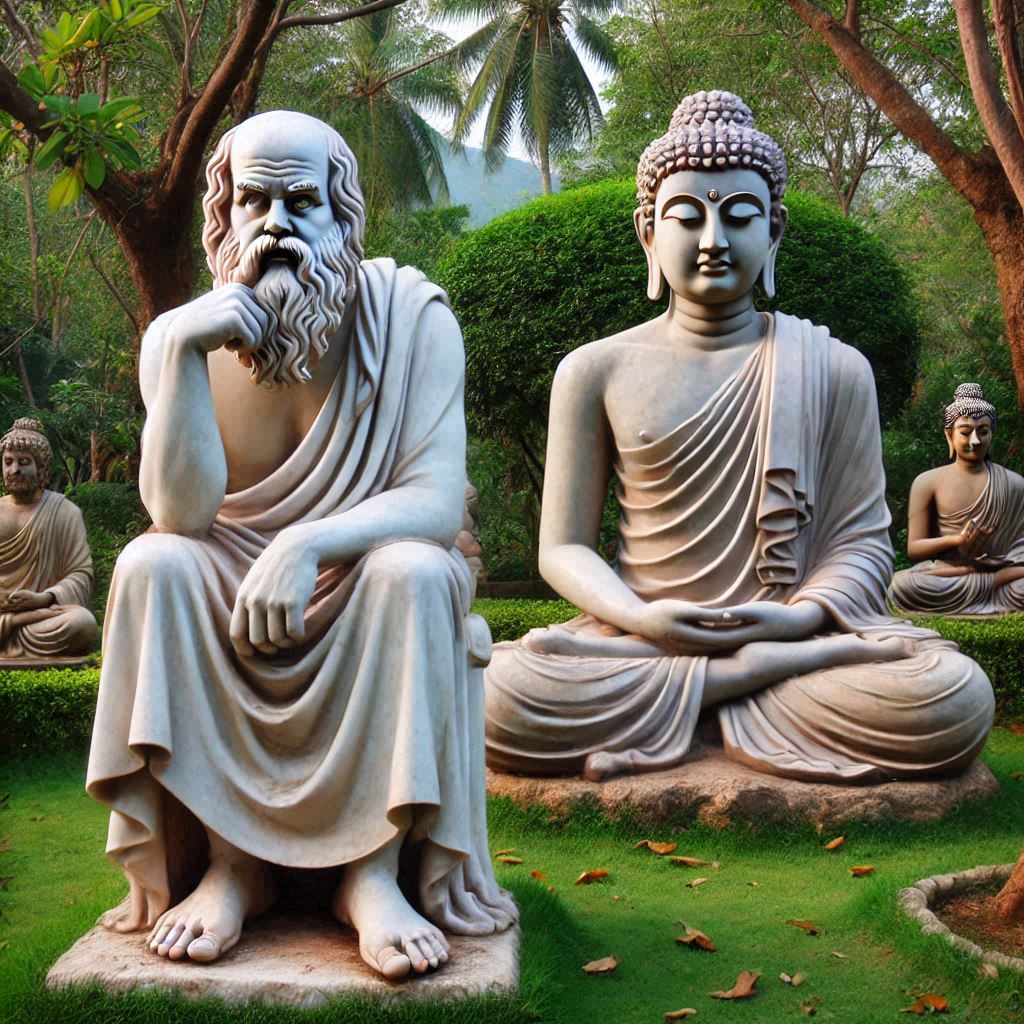
Major Figures in Context Per Timeline:
- Aristotle (384-322 BC)
- Plato (428-348 BC)
- Socrates (470-399 BC)
- Gautama (563-483 BC)
- Pythagoras (570-495 BC)
- Orpheus (~1650 BC)
Socrates’ perspective on the escape from reincarnation closely mirrors the original teachings of Gautama Buddha. This can be distilled into three key points:
- The soul 灵魂 is the essence of a person, more important than the physical body. The soul is immortal 不死长生 and it aspires for truth 真理 and wisdom 慧, a continuous process of self-examination and philosophical inquiry.
- The soul’s primary goal was to attain wisdom and knowledge智慧. He famously stated that “the unexamined life is not worth living,” implying that a life dedicated to understanding oneself and the world is essential for the soul’s development. This pursuit of wisdom was seen as a means to purify 净化 the soul and align it with the ultimate truths of the universe.
- Socrates also emphasized the importance of living an ethical伦理 life. He believed that virtue 美德was tied to knowledge, and that true knowledge 知识would naturally lead to virtuous actions. By living ethically and seeking to understand what is good 美好and just 公正, an individual could help purify their soul and prepare it for its next phase.
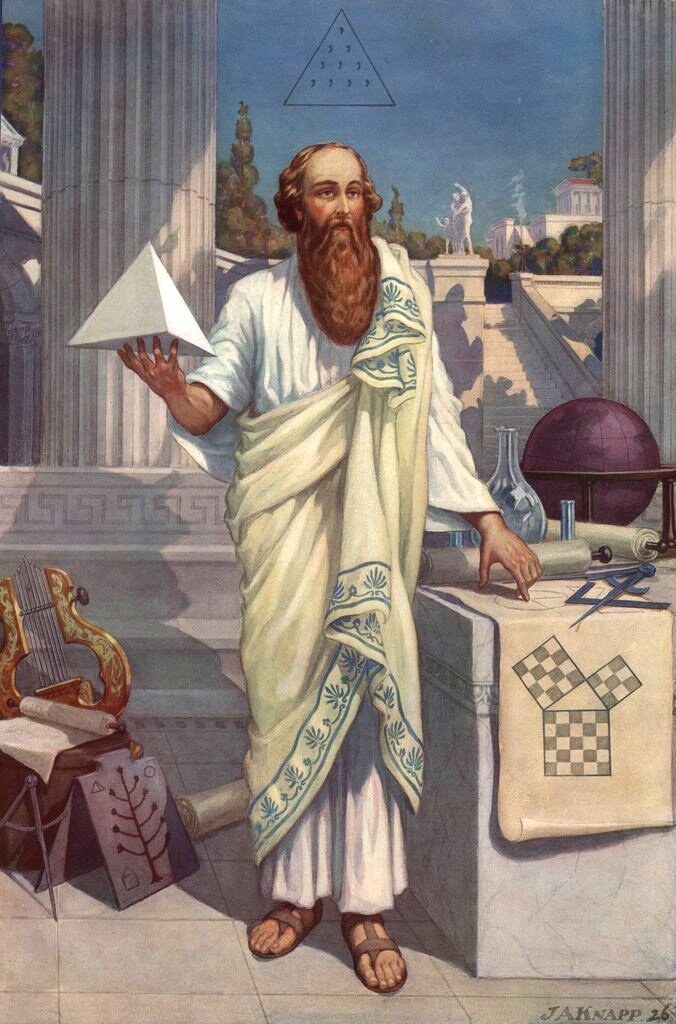
Socrates’ perspective shares similarities with Pythagoras毕达哥拉斯, who is Socrates’ grandfather’s generation, and who is also Gautama Buddha’s contemporary. Pythagoras, known for his belief in reincarnation 轮回and the immortality 永存 of souls, believed that souls would undergo multiple lifetimes until achieving purification and enlightenment.
In order to break free from the cycle of reincarnation and achieve spiritual liberation, Pythagoras proposed a strict ethical code, including:
- Emphasis on purity 清净 and asceticism禁欲: This involved adhering to a vegetarian diet素食, avoiding certain foods, and practicing self-discipline自律.
- Dedication to philosophical study and intellectual pursuits追求知识: Engaging in philosophical inquiry知识, mathematics数学, and music音乐 was seen as a means to purify 净化and elevate 提升the soul.
- Commitment to moral virtue美德: Living a virtuous life, practicing justice公正, temperance自我克制, courage勇气, and wisdom 慧were considered essential for spiritual growth.
By adhering to these principles, Pythagoras believed that individuals could purify 净化their souls, break free from the cycle of reincarnation解脱轮回, and ultimately attain a higher state of existence更高等存在方式.
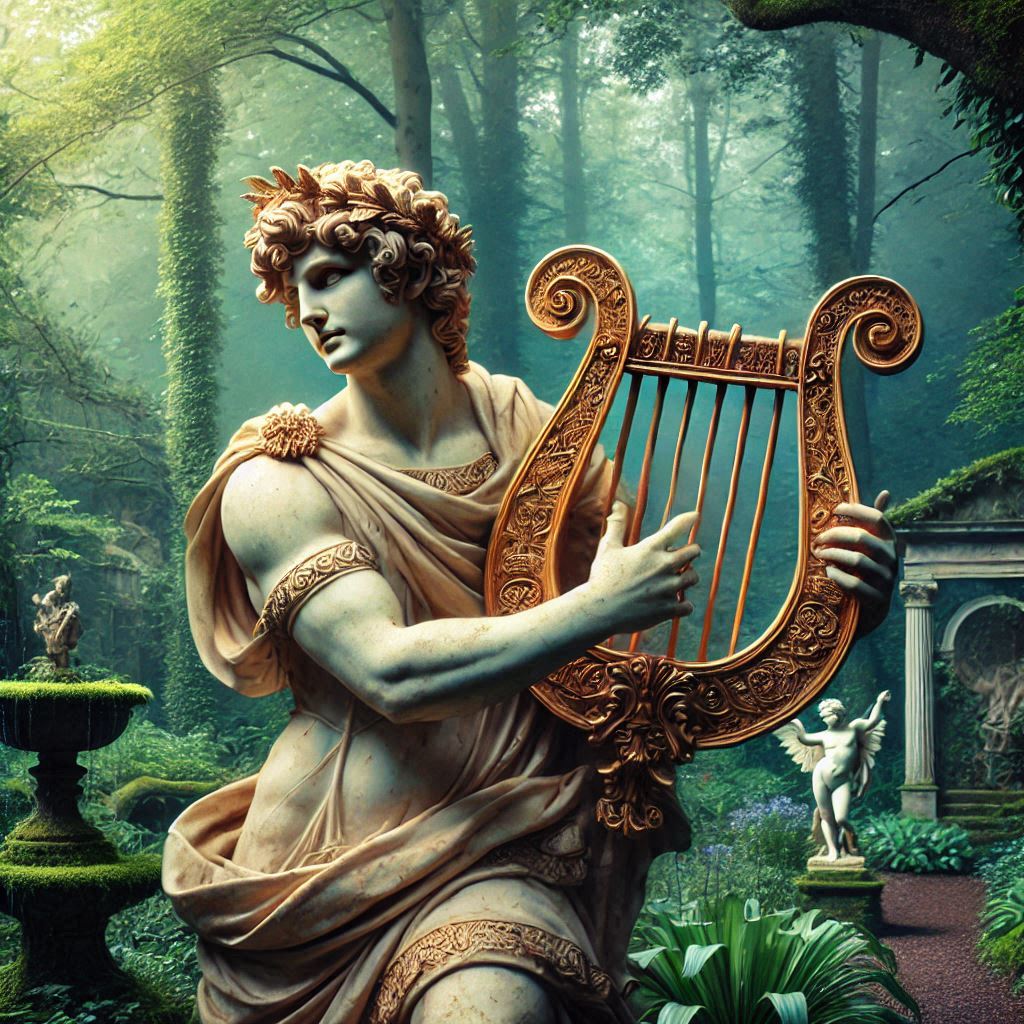
Within the Greek tradition, there lies a deep-rooted belief in escaping reincarnation, stemming back to the demigod Orpheus奥菲士, a demigod 半神 who was roughly estimated to have lived around 1600 BC. Born to the Muse Calliope and a mortal king, Orpheus was believed to have lineage from the sun god Apollo, who gifted him with a lyre.
Orpheus maintained that the body 身体 acted as a prison 监狱 for the soul 灵魂, leading him to pursue purification 净化 through practices like abstaining from meat 戒肉食 and engaging in sacred rituals神圣仪式. The Orphic way of a pure life involved strict asceticism严格禁欲, characterized by vegetarianism 素食, ritual purification 净化仪式, and a focus on achieving spiritual liberation through ethical living 合乎伦理的生活 and avoiding soul contamination 避免灵魂污染. The ultimate goal was to break free from the cycle of reincarnation 脱离轮回 and achieve a blissful afterlife 极乐来世.
Key aspects of Orphic beliefs:
- Orphics believed the human soul was divine 灵魂神圣 and trapped 受困 in a mortal body 肉体 due to a primordial sin人类最初的过失. Orphics believed in the transmigration of souls 轮回 and the possibility of spiritual liberation 解脱. To achieve this, they practiced a strict form of asceticism, which involved abstaining from certain foods戒食, particularly meat, and engaging in ritual purification 仪式净化.
- Orphic practices often included vows of celibacy 禁欲 or chastity 贞洁, as sexual activity was seen as a source of impurity and a hindrance to spiritual progress.
- Orphics were generally vegetarians素食, believing that consuming meat would contaminate the soul and hinder its journey to the afterlife.
- Orphic rituals emphasized purity 纯净 and cleanliness 洁净, both physical 物理 and spiritual 精神. This involved strict adherence to dietary 饮食restrictions , regular bathing沐浴, and the avoidance of certain activities行为.
By adhering to these practices, Orphics sought to cleanse their souls洁净灵魂, break free from reincarnation脱离轮回, and reach a higher spiritual plane更高等位面. The influence of Orphic beliefs and practices can be seen in later philosophical and religious traditions, such as the monkhood tradition and the practice of baptism in water.
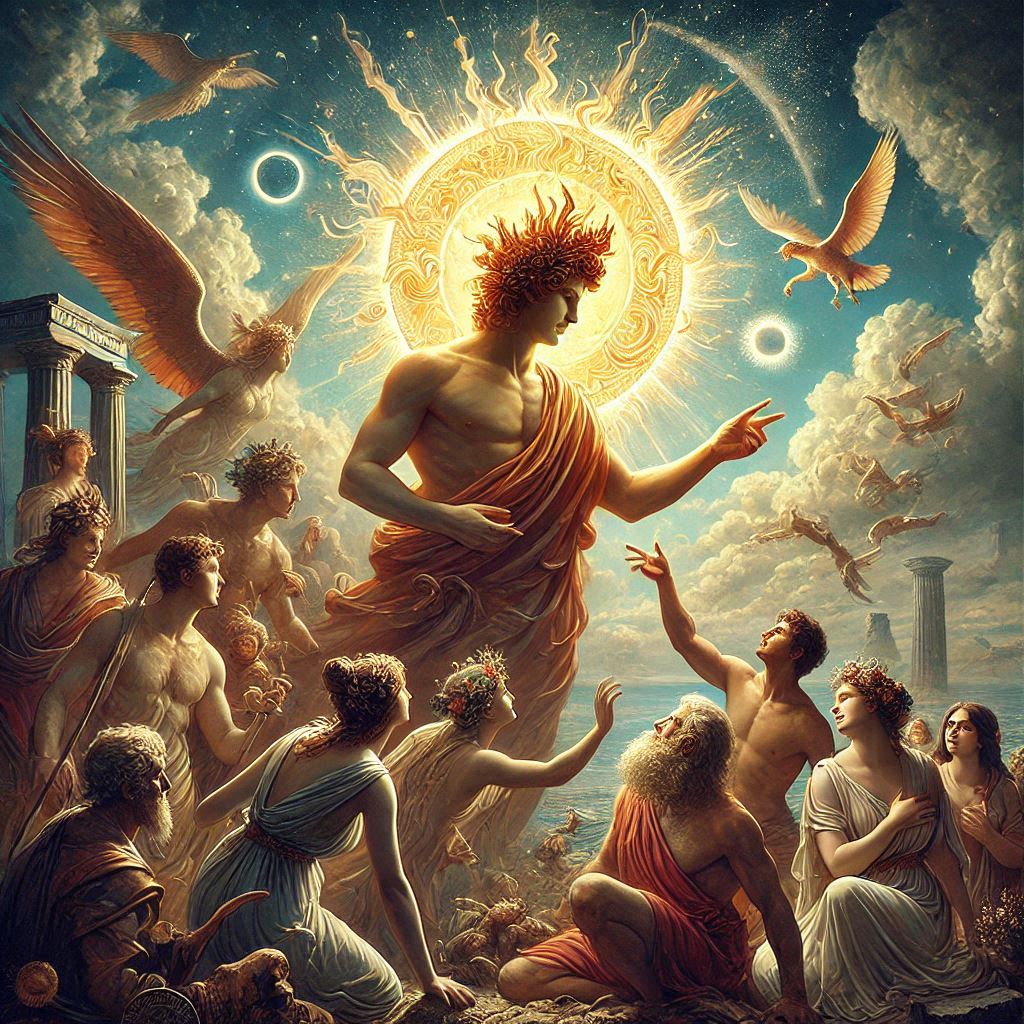
Apollo阿波罗, the sun god is associated with the Sun, light, and healing.
- Artistic 艺术and Intellectual 智力Pursuits: linked to music音乐, poetry诗歌, and the arts艺术.
- Prophecy 预言 and Divination占卜: associated with the ability to foresee the future and interpret divine signs.
- Healing Powers疗愈: considered to possess healing abilities.
The Apollonian Spirit embodies qualities such as:
Rationality 理性 and Order 秩序: The Apollonian spirit is associated with reason, logic, and the pursuit of order and structure. It emphasizes clarity, form, and the creation of boundaries.
Individuality 个体性 and Self-Control 自制: It values individuality, self-control, and discipline. The Apollonian force encourages the development of personal identity and the mastery of one’s impulses.
Art 艺术 and Beauty 美: In the realm of art, the Apollonian spirit is reflected in works that prioritize harmony 和谐, balance 平衡, and aesthetic beauty 典雅. Classical Greek sculpture and architecture are prime examples.

Robert Edward Grant
Are Crystals (舍利) Found in the Ashes of Buddhist Masters Evidence of the Philosopher’s Stone
 Gautama Dhamma
Leave a comment